Japanese And Trident Maple Fall Pruning Decisions
Here are several Maples that need attention with a pruner. We’ll talk through each set of decisions, with both old and young examples of Japanese and Trident.
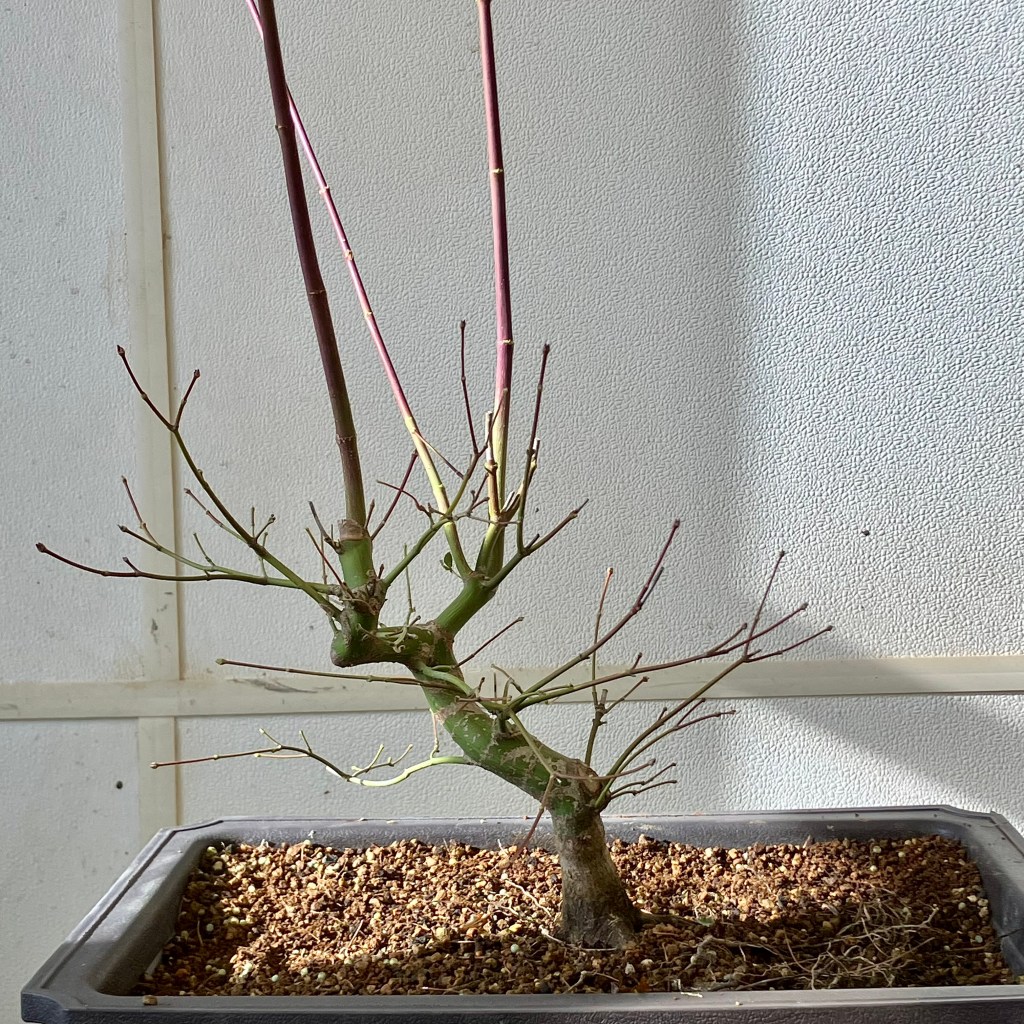
Here’s a Japanese Maple, several years old. Strong, coltish growth is apparent.
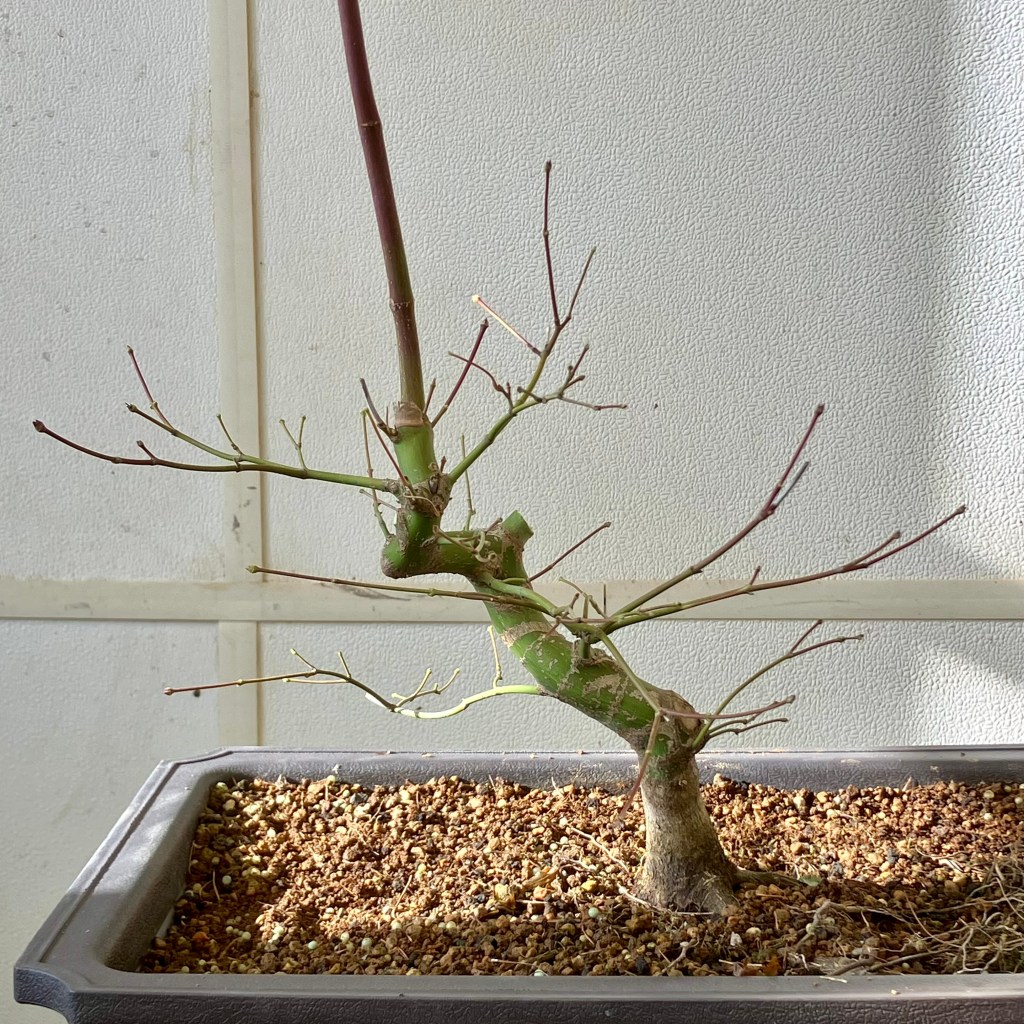
For this tree, a single cut can be enough. The continuation of the trunk line may be up this leader, or a smaller shoot may be chosen where the leader originates. The small shoots on the trunk’s lower part are left to encourage this young plant to develop structure.
If you leave a strong leader on maple, you may find the internodes on the lower branchlets will remain shorter. Which gives more options and more ramification in the future older tree.
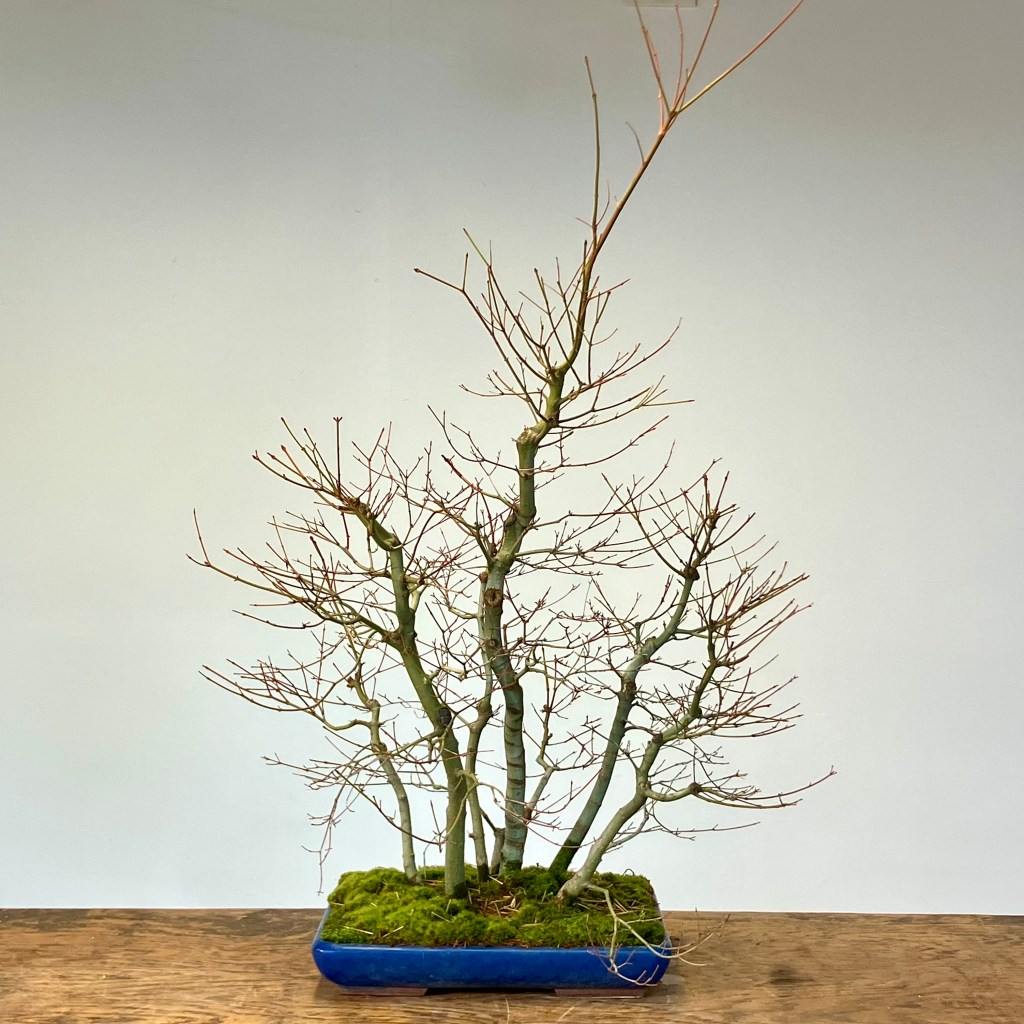
A young Japanese Maple forest. The leader off the main tree is beginning to make a size difference. We’re still working on structure with this tree.
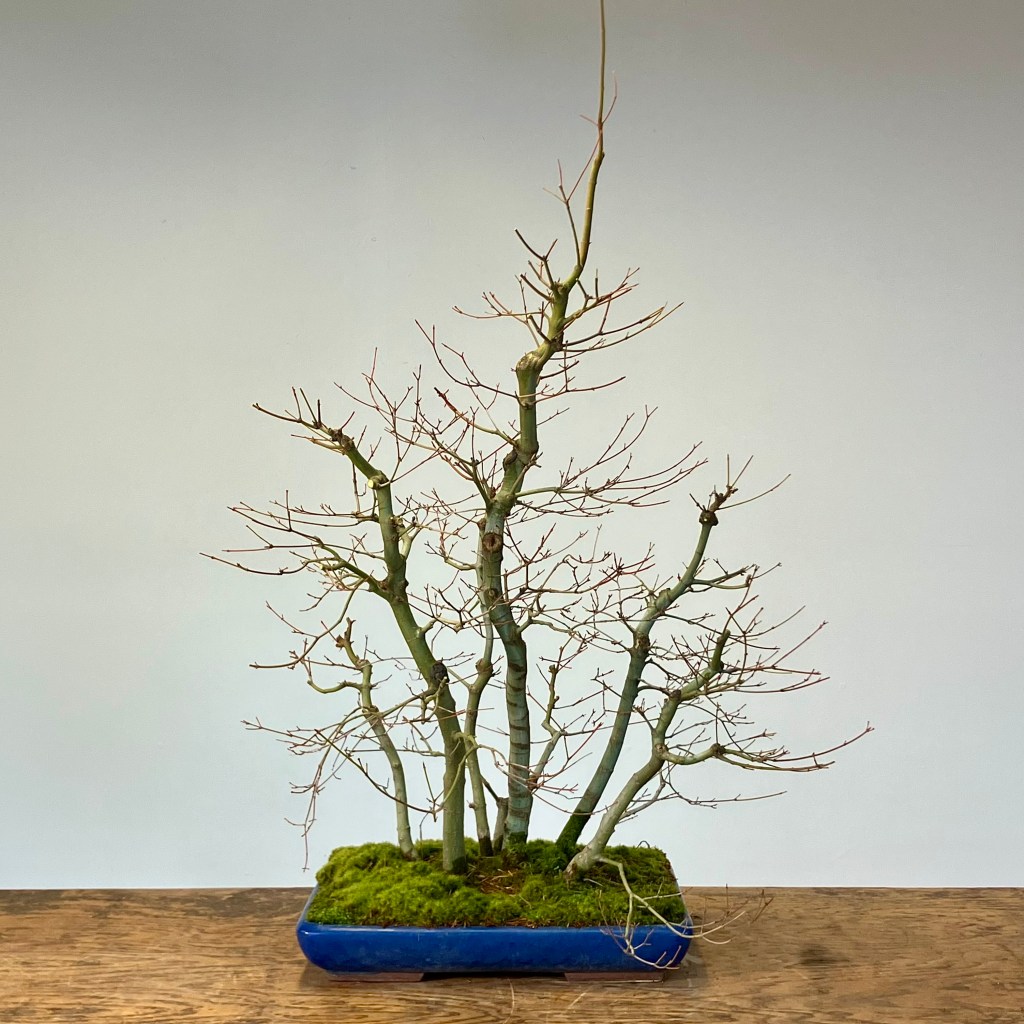
Some of the strong areas were cut off, the rest left to continue development to be removed later. There are still some strange branches in there. But we leave them for now to continue structure.
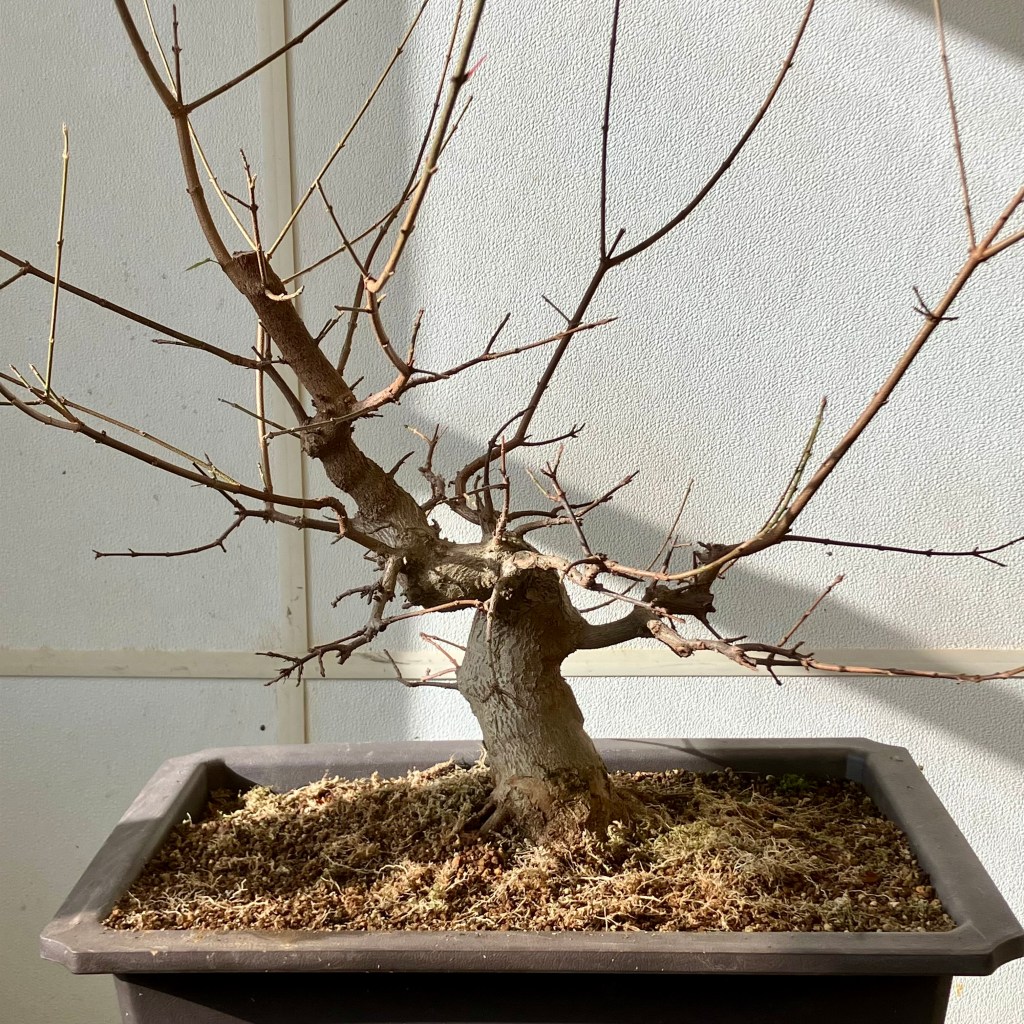
A Trident Maple, also youngish. Good early work by the grower to create worthy bones of the future bonsai.
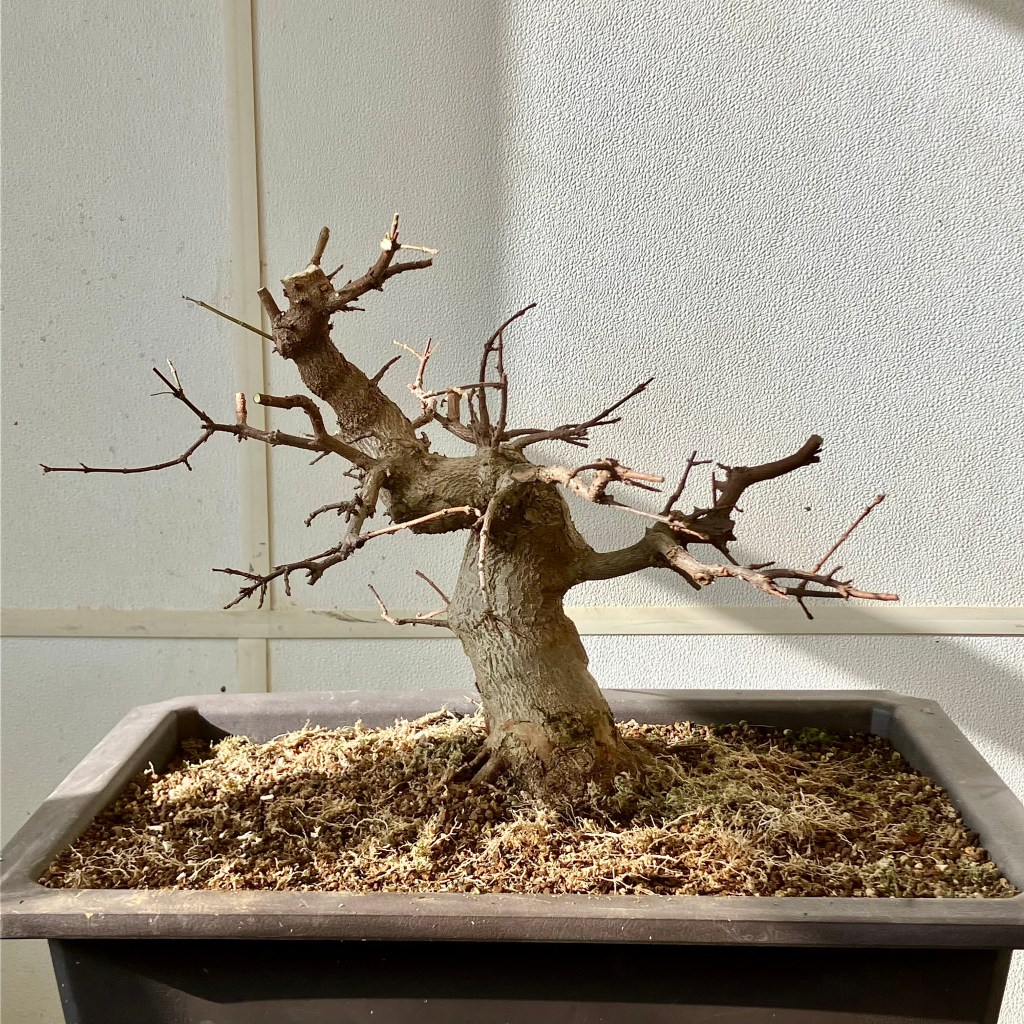
One option of how to push the tree down the road. Here we cut back thick branches and left those we might eventually remove. We left the thin stuff long, like a bad hair day. At this point you could wire it. But cutting more to make it look pretty would make the tree push with longer internodes.
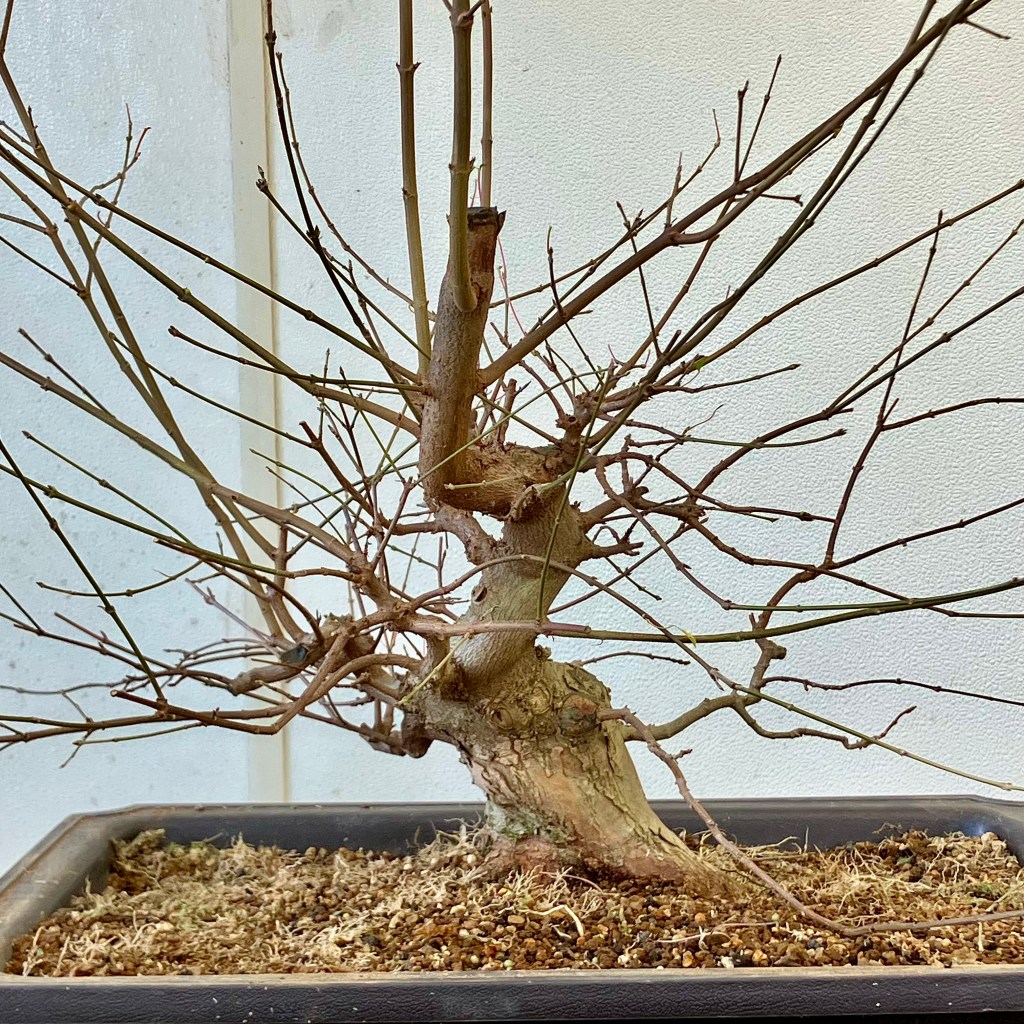
Here’s another promising Trident, with an emphatic snout for a leader. Perhaps there’s another one we can swap it with.
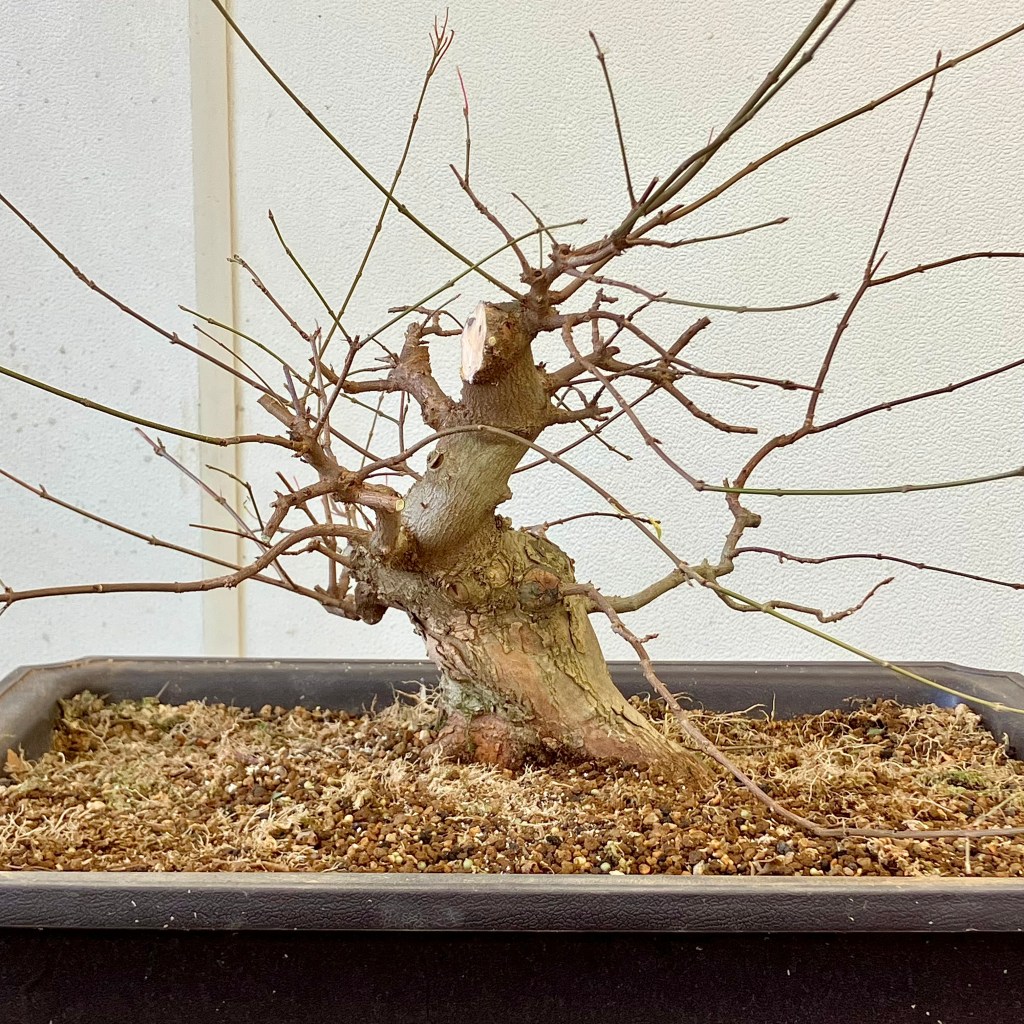
The large cut on top is a taper cut, to keep the tree short with that lovely powerful taper. Also good early work by the practitioner. The branching on this tree is young, so we leave the remaining extensions long to thicken the branches. Next year some of those can be cut shorter. You could cut back in late spring, after growth hardens off, or, next fall if you want fatter branches, especially that low right branch. The high thick one to the left can be cut eventually.
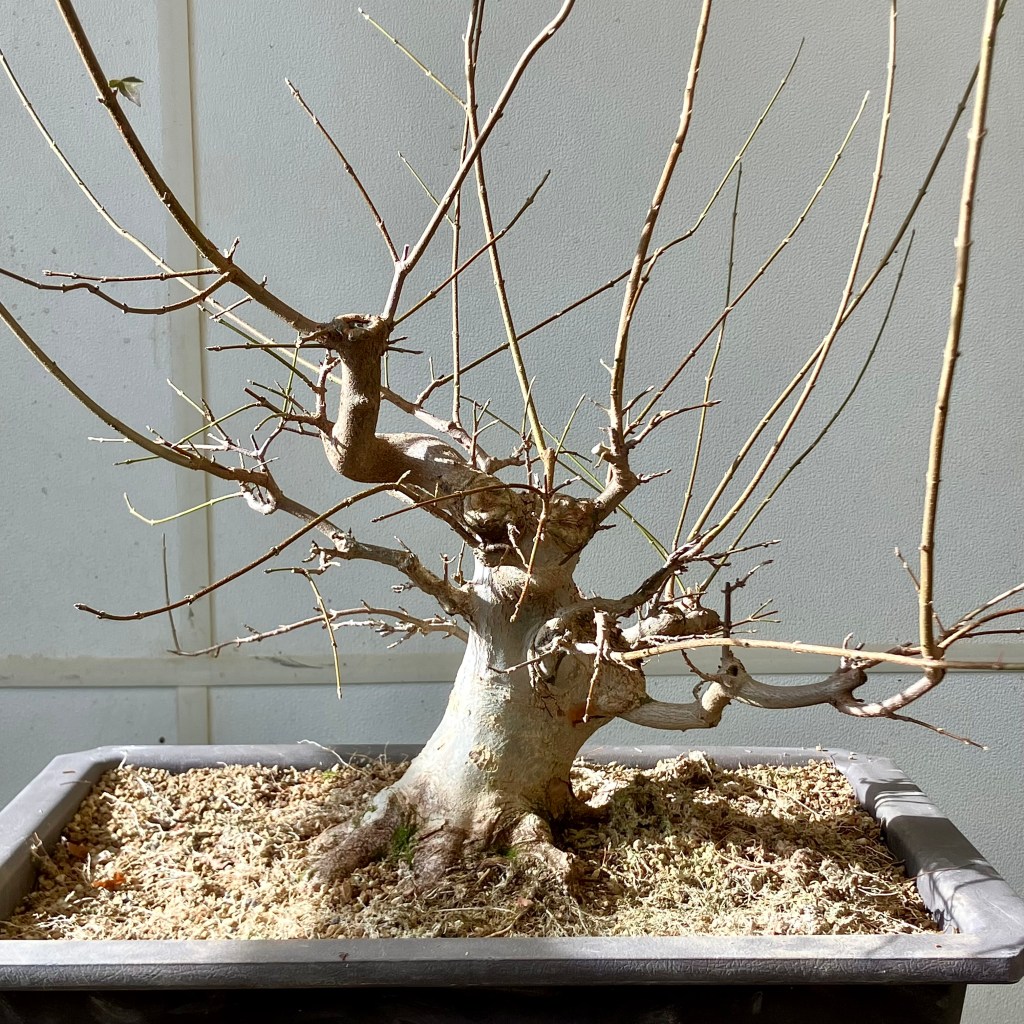
How about this one? Lots of strong growth, but where to cut?
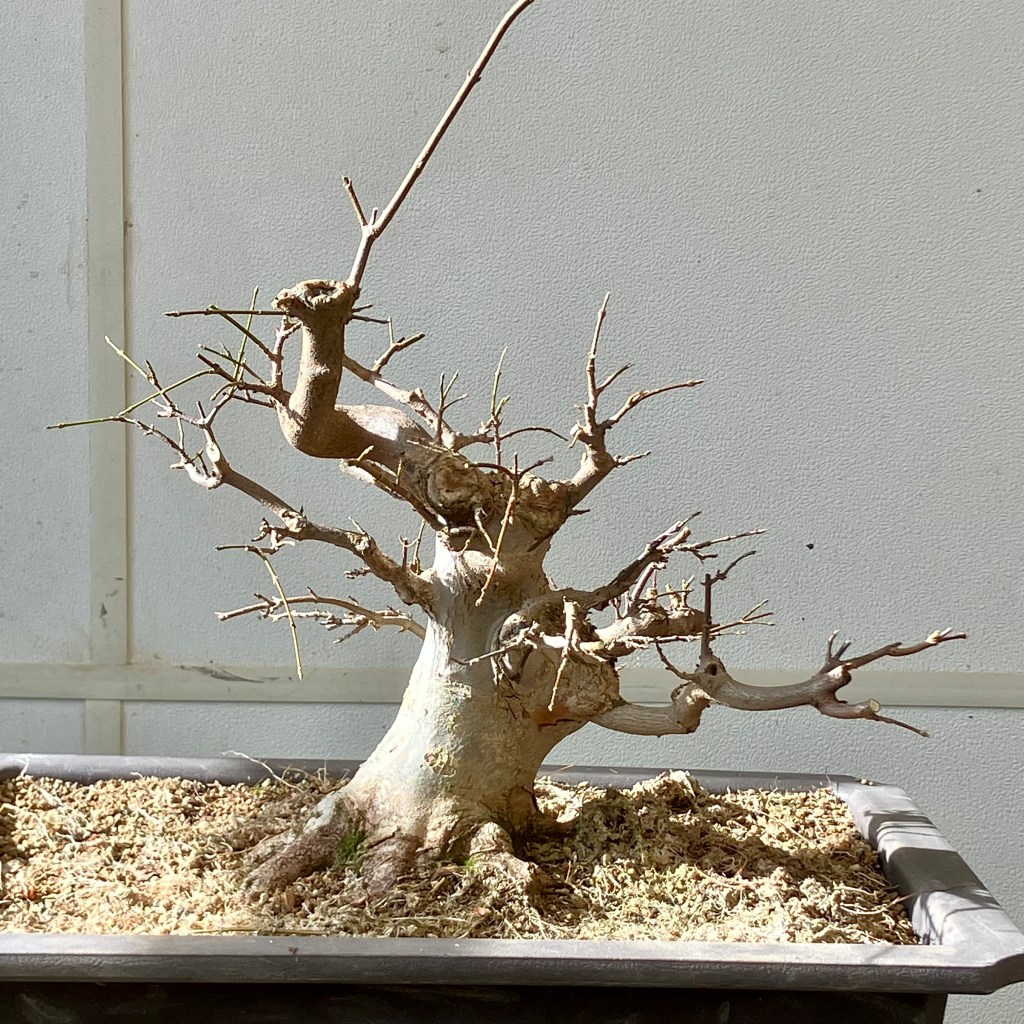
Assuming this will be a larger tree someday to smooth out (or perhaps make more convincing) its grumpy personality, we left the angular turn near the top in place, and an extension off the top for the next leader / trunk line. The low right branch needs shortening or removal soon.
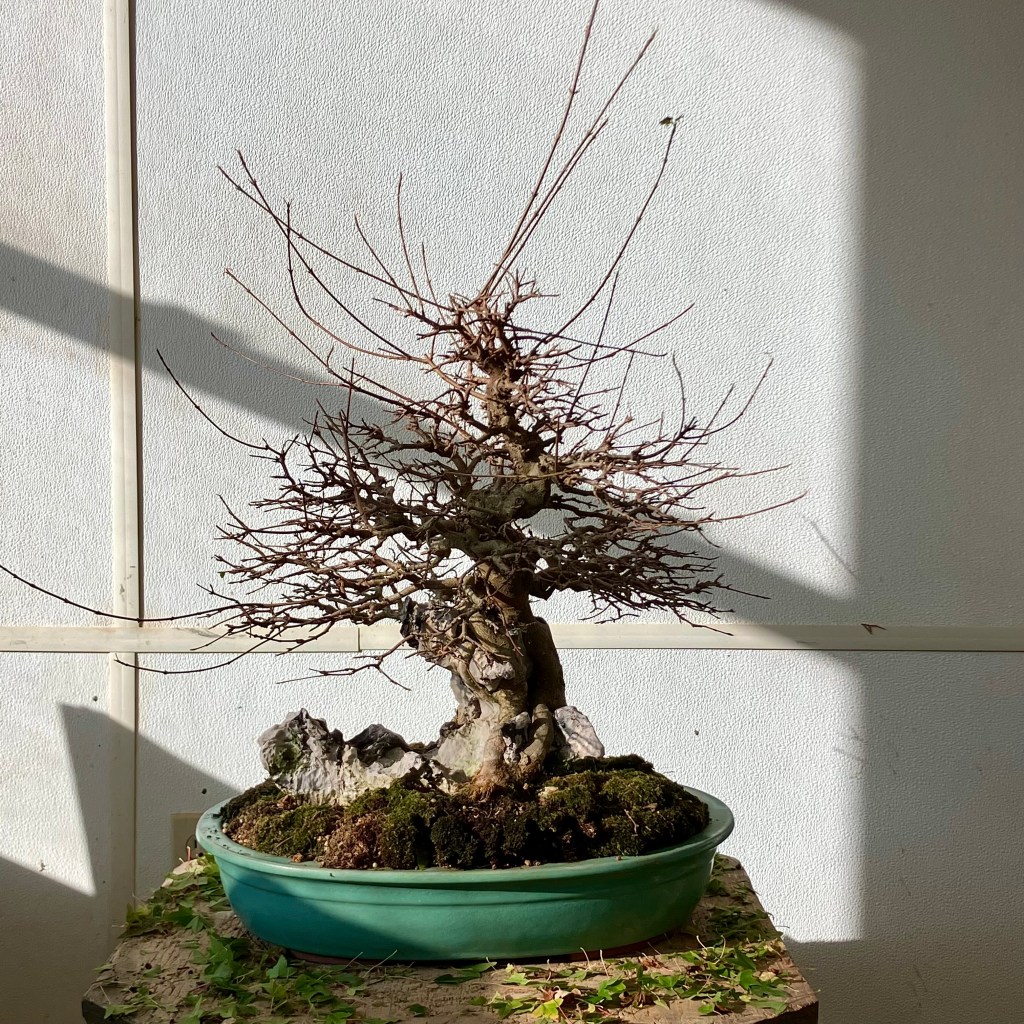
A more refined, older Trident. Very twiggy.
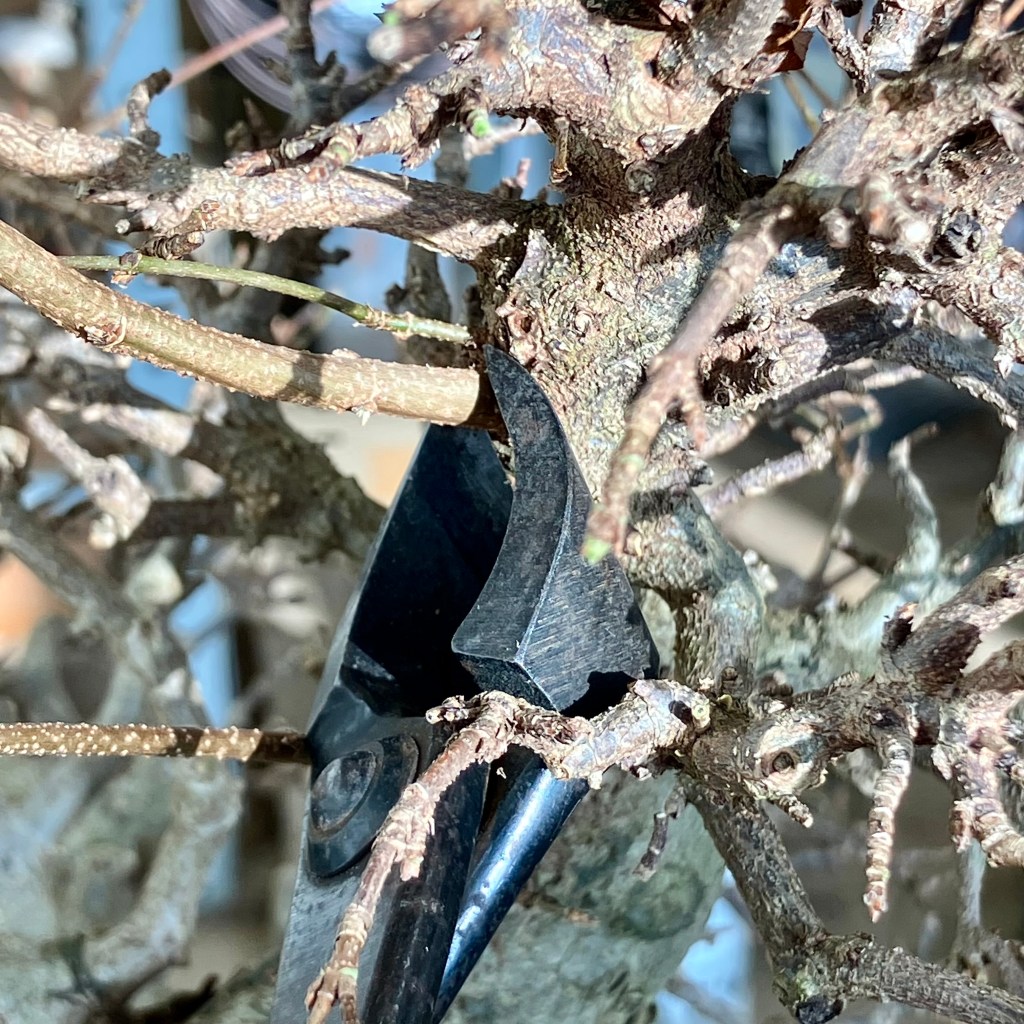
Strong straight shoots in the middle of old, craggy branches—these we cut off.
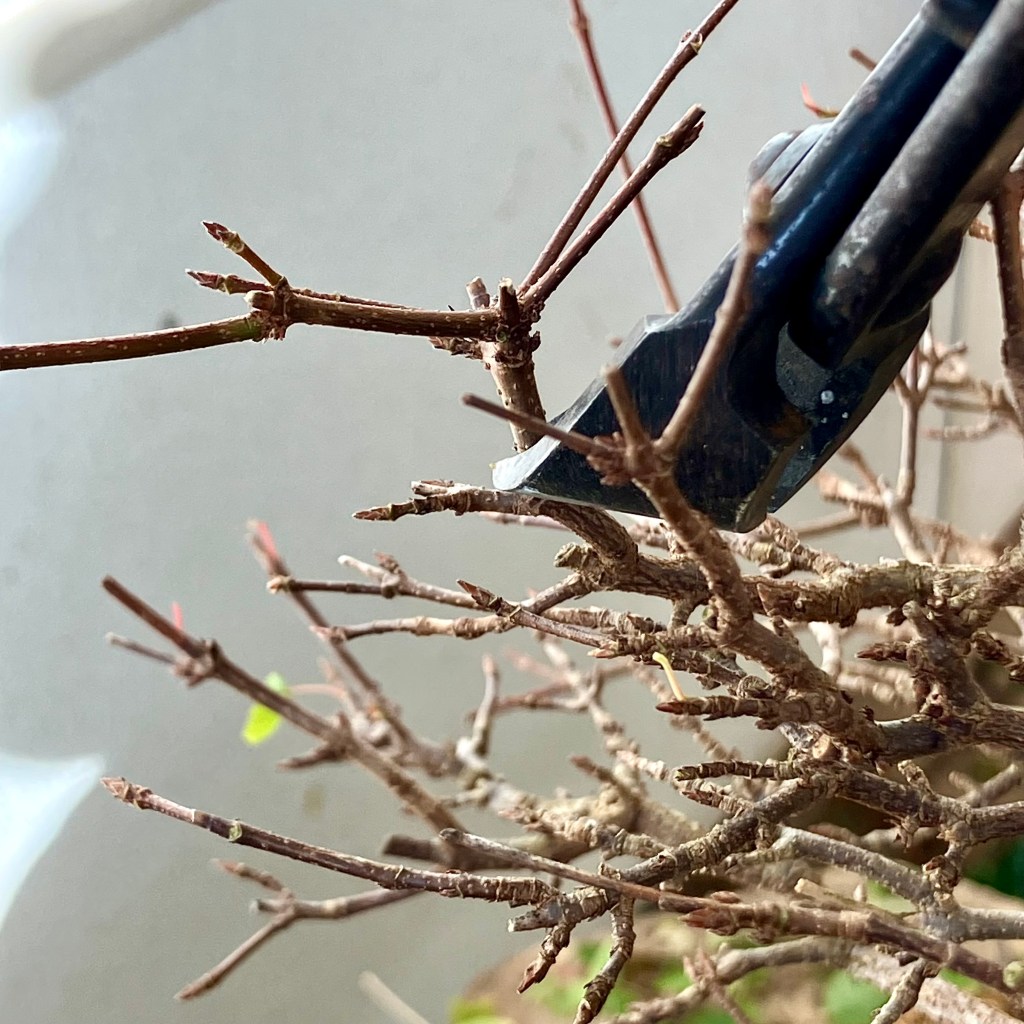
A rambunctious, fat set of shoots off the top of a sedate, old set of short shoots—these also come off.
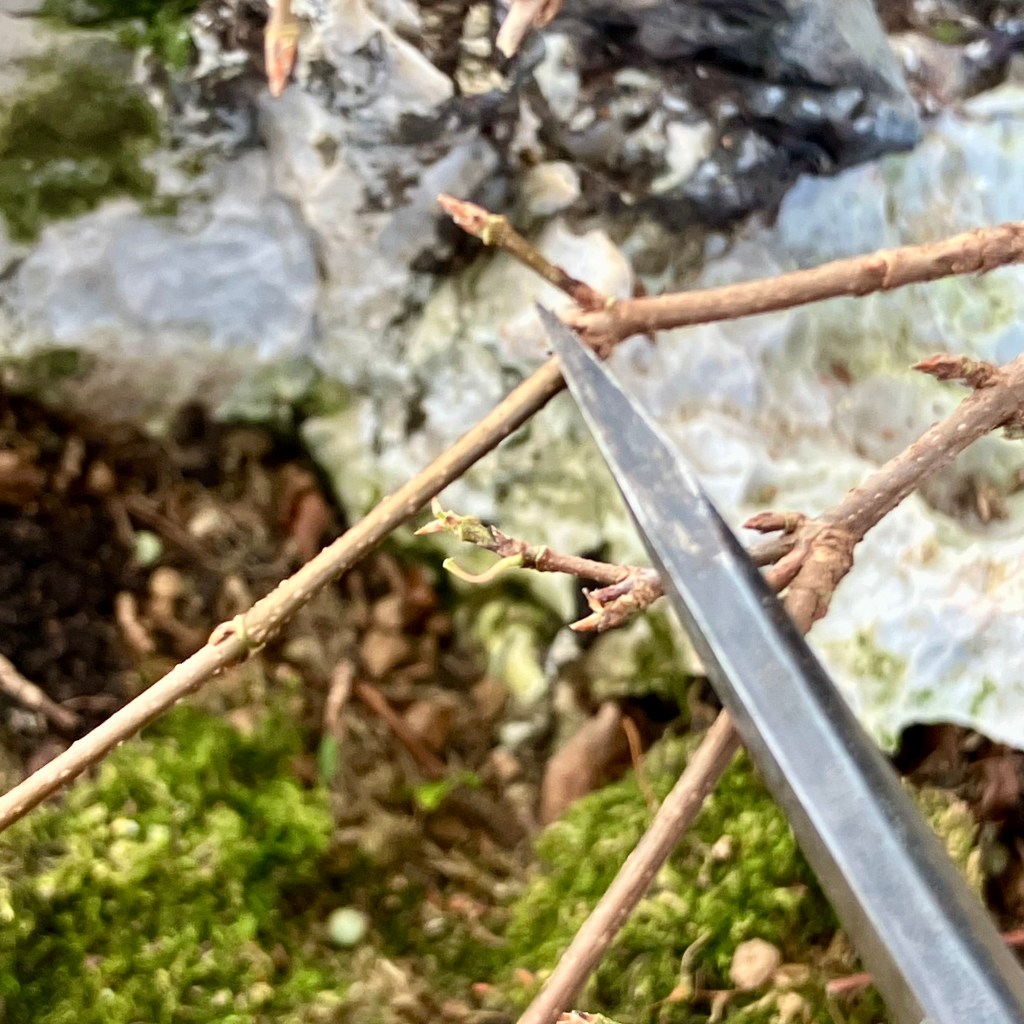
A common growth type: a bifurcation with one short internode shoot paired with one charging off at the speed of light—cut the fast one.
Speaking entirely off the subject for a few sentences, if you missed it, our intrepid creation Voyager 1 just passed a big milestone this week—after being launched in 1977, it is now fully one light day away. Meaning, light, which is relatively swift all things considered, would take a full 24 hours to reach us. Incredible.
To bring this back to bonsai, Voyager 1 was launched around the time John Naka finished his two-decade creation of Goshin. Almost fifty years ago.
OK now back to maples.
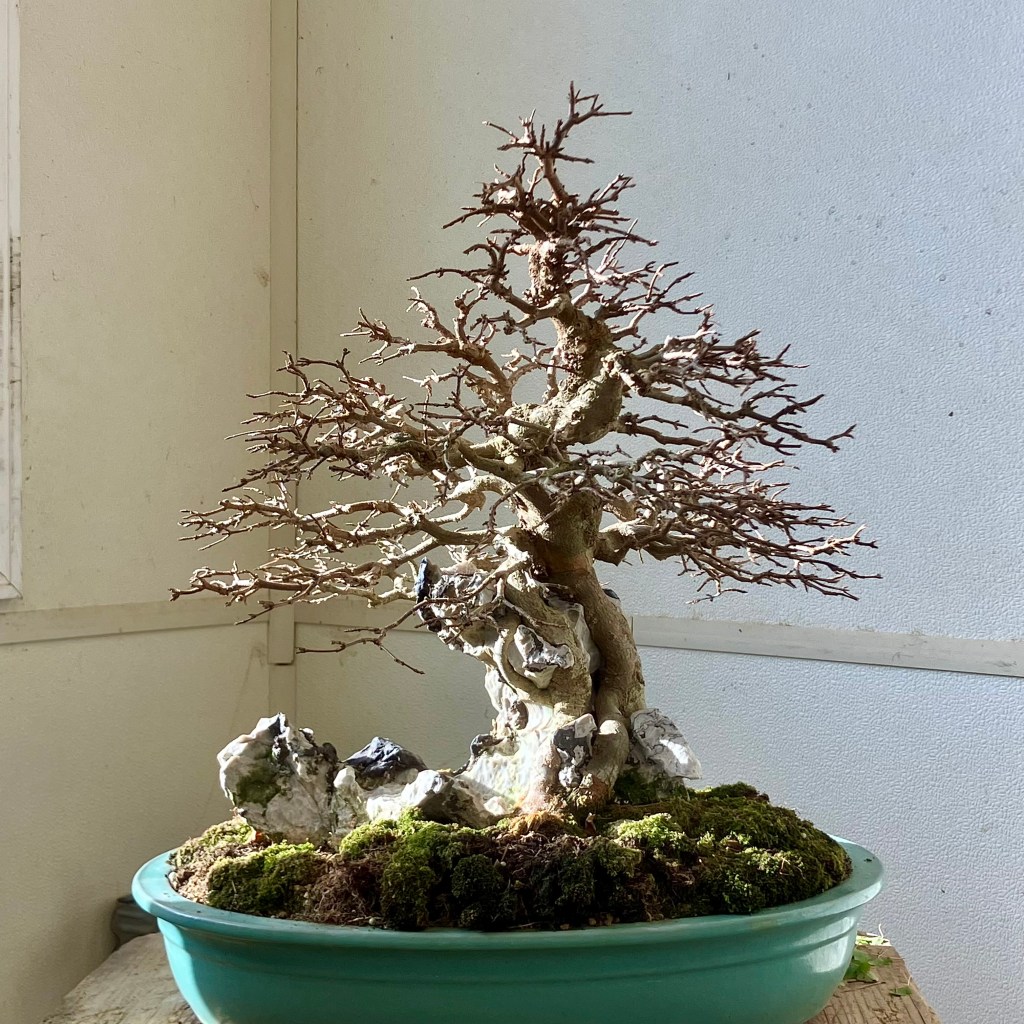
Retaining as much twigginess as possible, the extensions were cut. This tree’s canopy will round with time, so the pointy look is temporary, though in retrospect it’s a bit too high. Should be shorter by an inch or two. The trees up above with the fast, aggressive tapers should be kept quite short, but this one has a more natural taper and can be comparatively a hair taller.
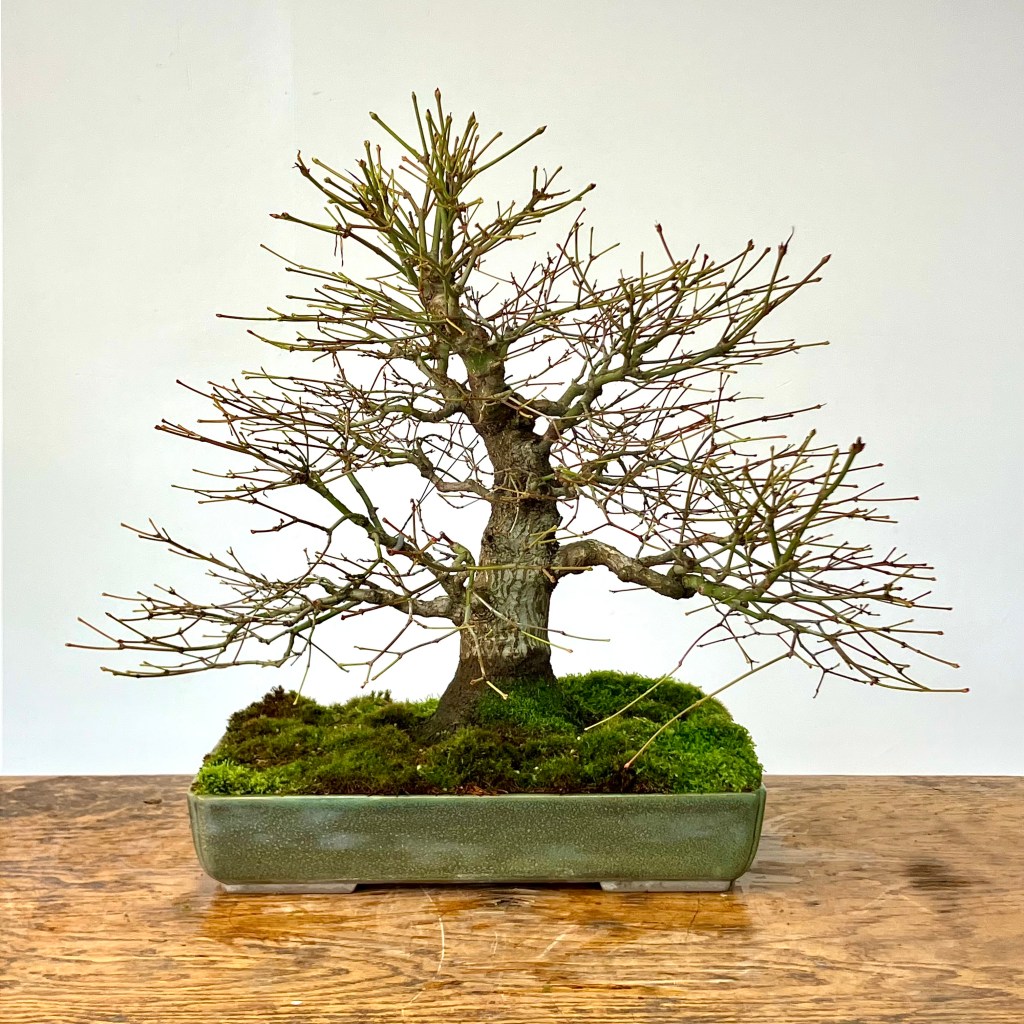
Continuing with older Maples, here’s a Japanese Maple, chuhin size. This tree is very strong, likely a mix of problems: timing the spring pinch too late, and / or too much fertilizer. It’s so strong that next year it might do OK with no fertilizer, which will help shorten internodes.
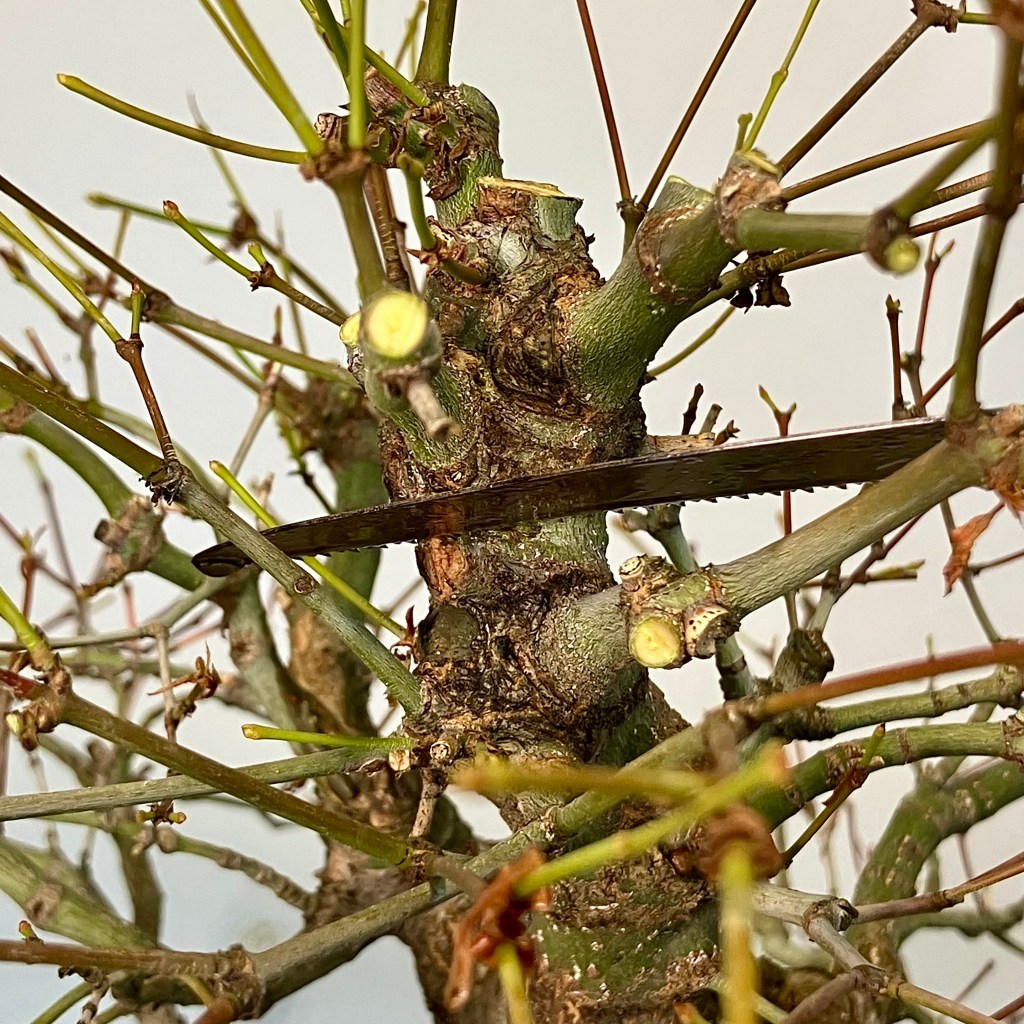
The top of this Japanese Maple is claustrophobic with strong big shoots. A full top cut is in order, as we want to keep a small tree, and we’ll get better taper in the bargain.
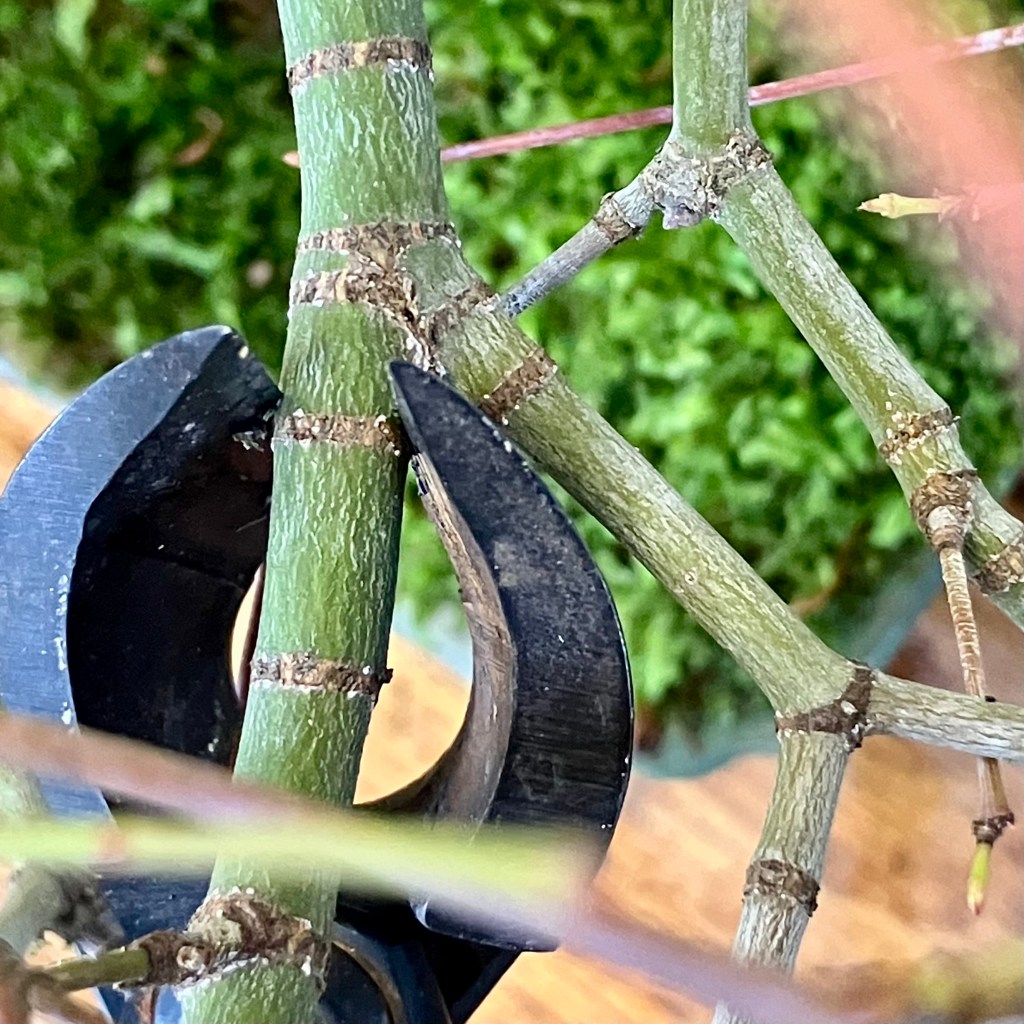
The strong growth at the ends of the branches has thickened them. Here we cut to an intermediate branch to regain branch taper, which enhances the tree’s look of age.
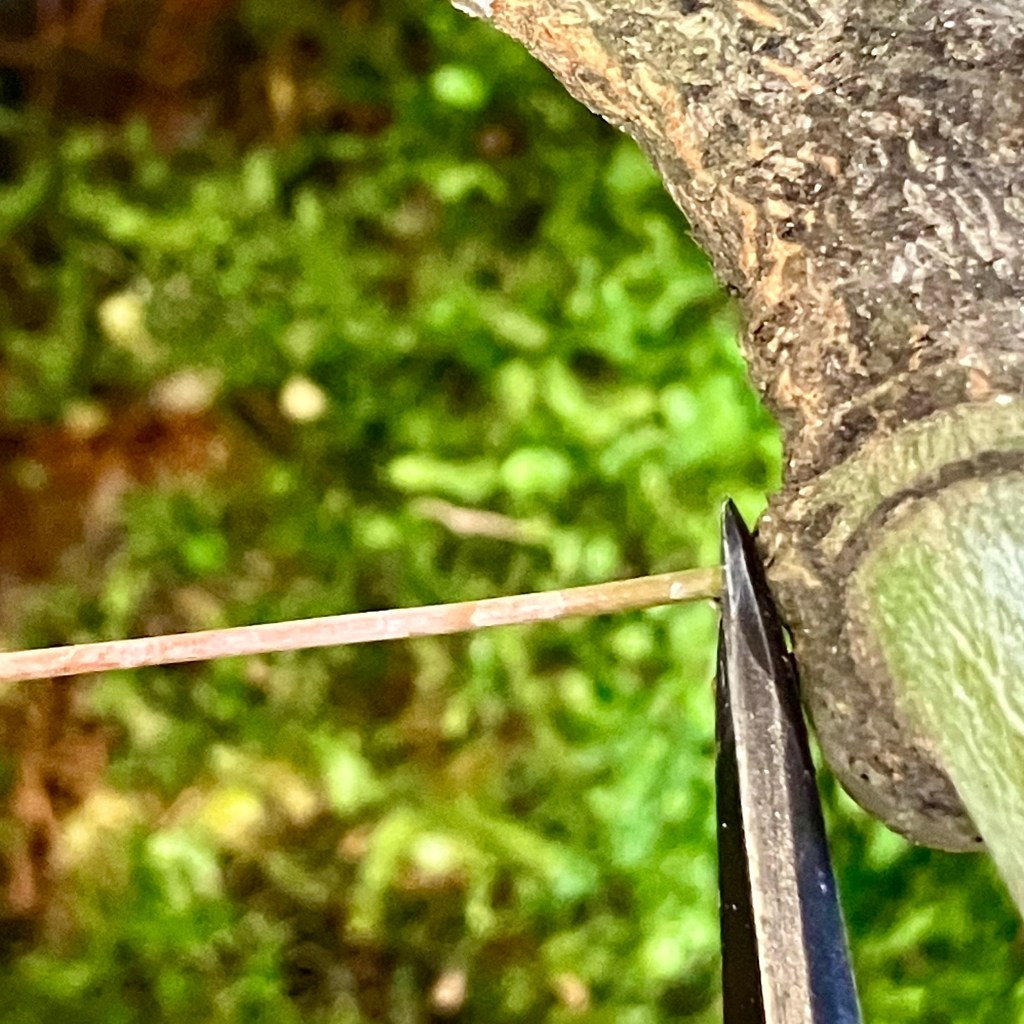
An odd small shoot with a long internode.
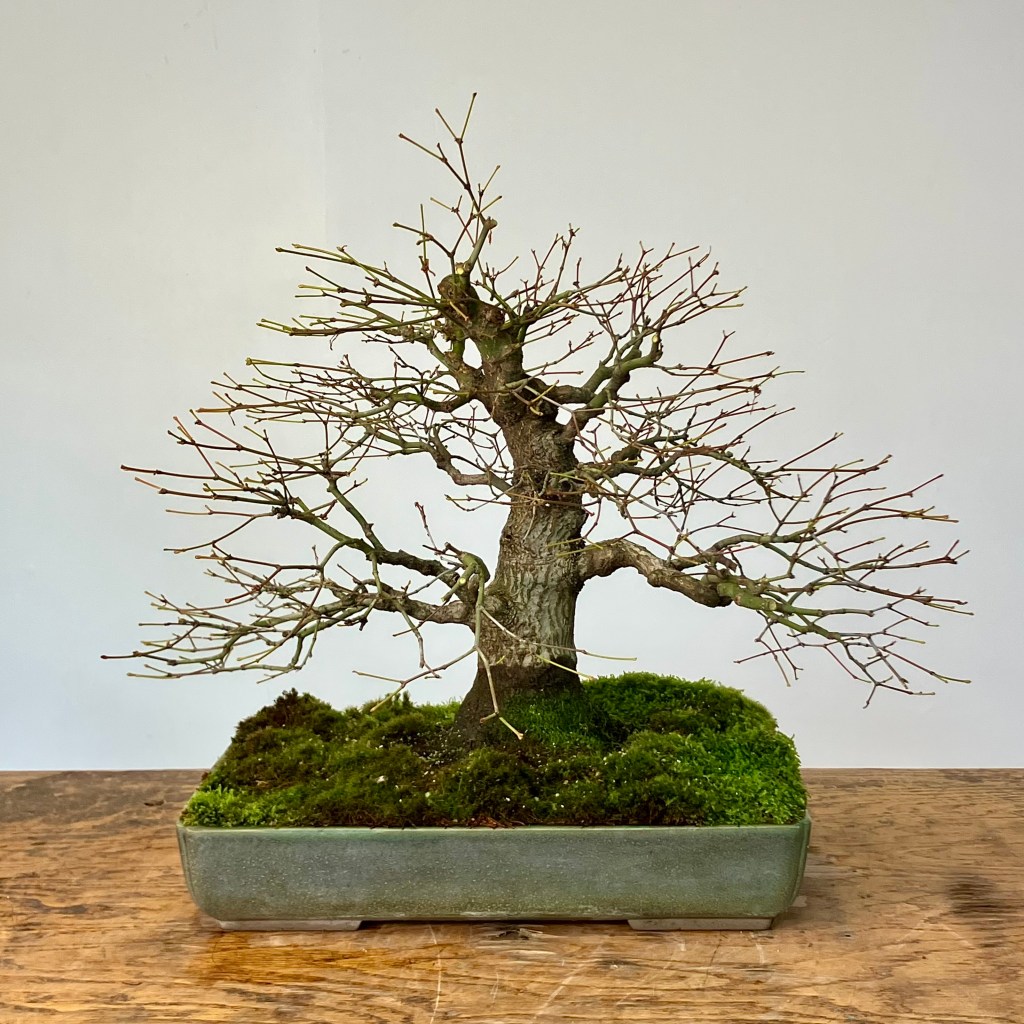
Correctional pruning finished for better taper, in the trunk and the branching. If you do this every year, the plant will bolt and ramification will be slow to come. When you can, leave as much as you can. This will help slow a tree down, bring down internode length, and begin the magical shift to golly, that looks like an old tree.
All the trees in this post were created with minimal wiring, and the older ones were maintained with none. It takes longer to do, but the results may not look like a typical bonsai. Which is a benefit or not, depending on preference.
Wiring a maple will develop it faster. Not wiring it may introduce a quirky element.
If you would like to try to create maple bonsai without much wiring, try to keep fertilizer low, pots smaller, and possibly even pinch in the development phase. It’s not easy to do, and it takes longer, but might be something worth trying.
Leave a Reply