Moss: A Plant With…Three Types Of Reproduction?
Moss is a bryophyte, an old group of terrestrial plants. The first ones grew 460 million years ago in the Ordovician Period, when trilobites scuttled around and early fish were getting their bearings. And some point along the way, bryophytes began to do it like no other things did.
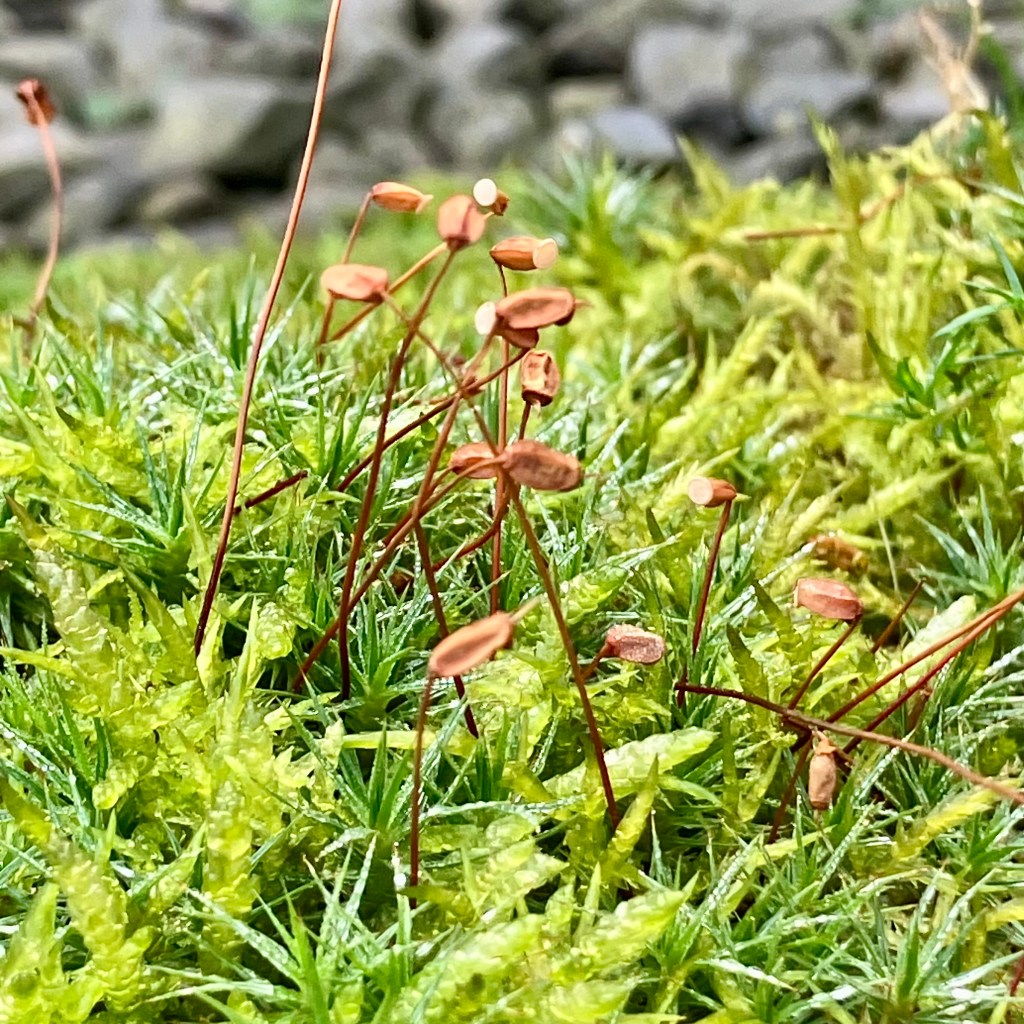
In moss sexual reproduction a sperm fertilizes an egg which makes a sporophyte, the nodding stalks that rise above a bed of moss, as shown above. Spores are released from the sporophytes, which begin new moss plants.
Moss doesn’t rely on this way of making botanists blush, they can also asexually reproduce. Asexual reproduction makes clones of the parent moss. And they have two methods of doing this.
Most asexual reproduction in plants is when a part of the plant snaps off and viola, a kid plant. Examples of this are the keiki (a Hawaiian word meaning “baby”) of orchids which can separate, and a Christmas cactus leaf that can grow roots, and then a new plant.
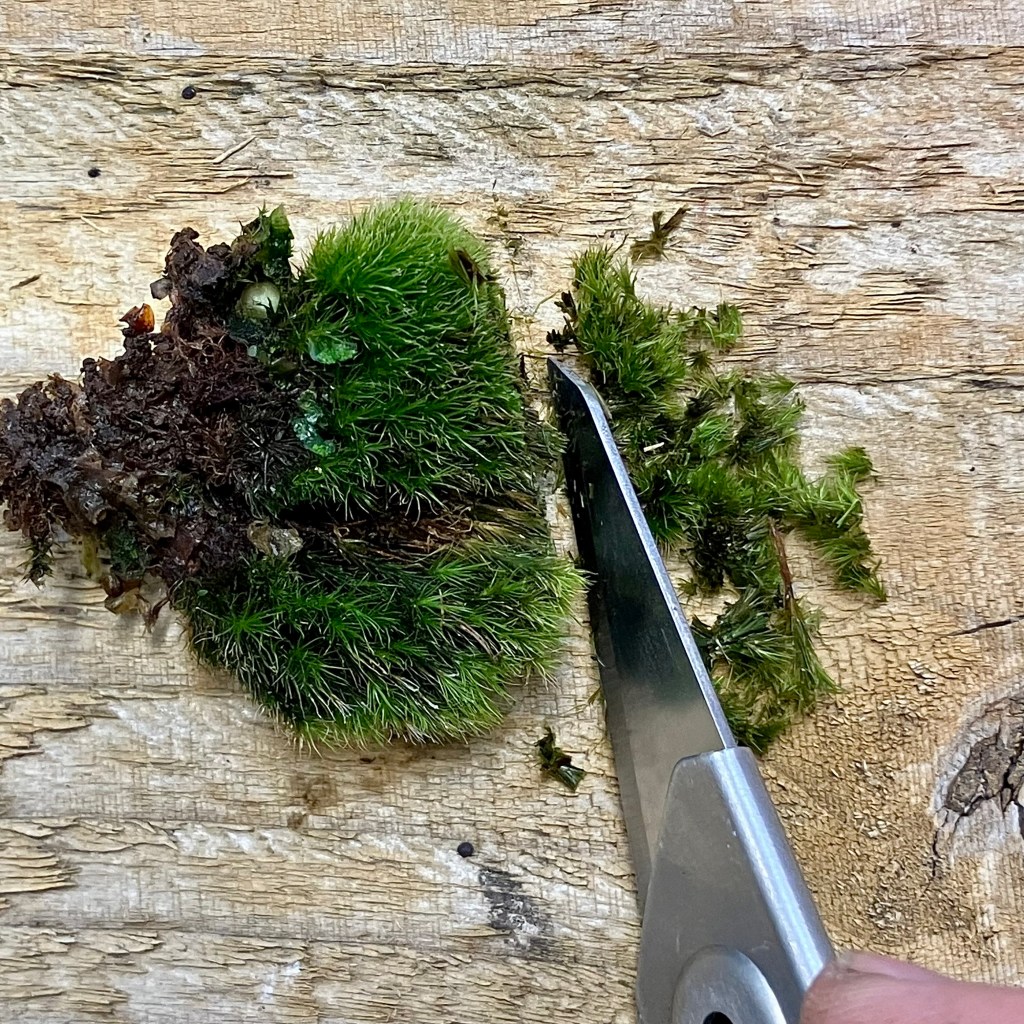
If you cut up moss or rub it between your fingers to break it up, the smaller bits can grow into a full-sized moss plant. Fragmentation is asexual reproduction in a moss plant, and are, along with spores, the two most common ways for moss to reproduce.
But some species of moss have a third way to reproduce.
Unique groups of cells grow on moss leaves and stems that can detach and, on finding suitable substrate, grow into another moss plant. These propagules are called gemmae. Gemmae may be a single cell or a mass of cells.
Although moss can make gemmae, liverworts are the most common gemmae-producing bryophyte. The small circular dishes on a liverwort’s flat thallus are where the gemmae grow.
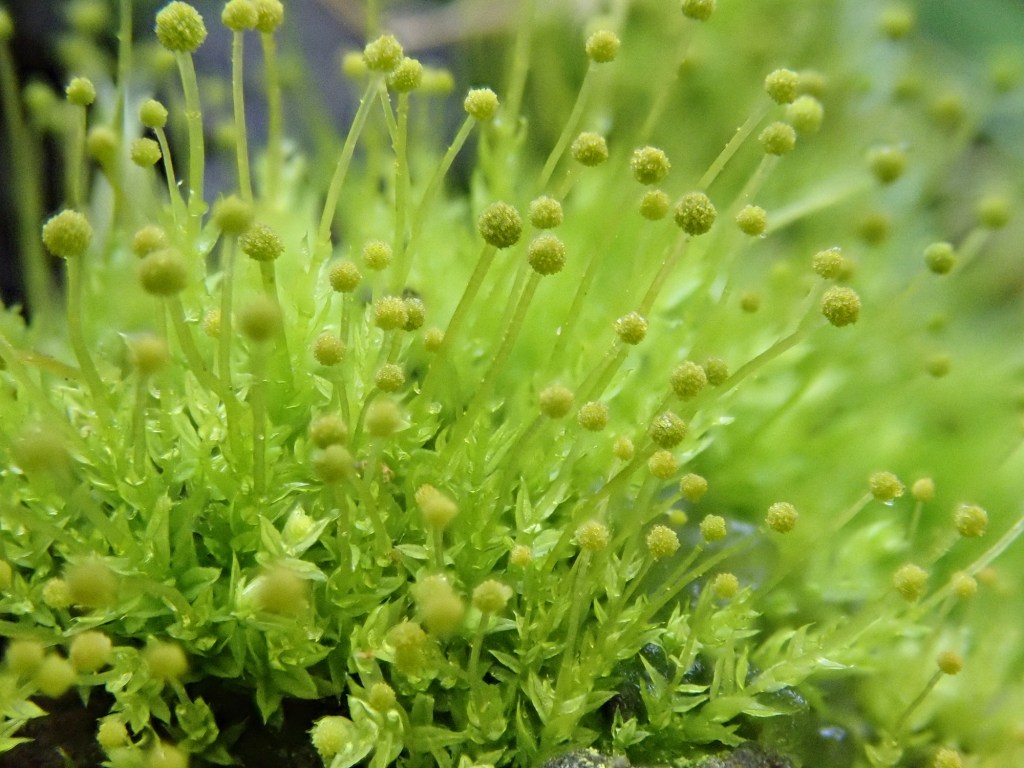
Gemmae stalks on the end of modified moss leaf structures in Aulacomnium androgynum (Bud-headed Groove-moss). Photo courtesy of The British and Irish Bryological Society
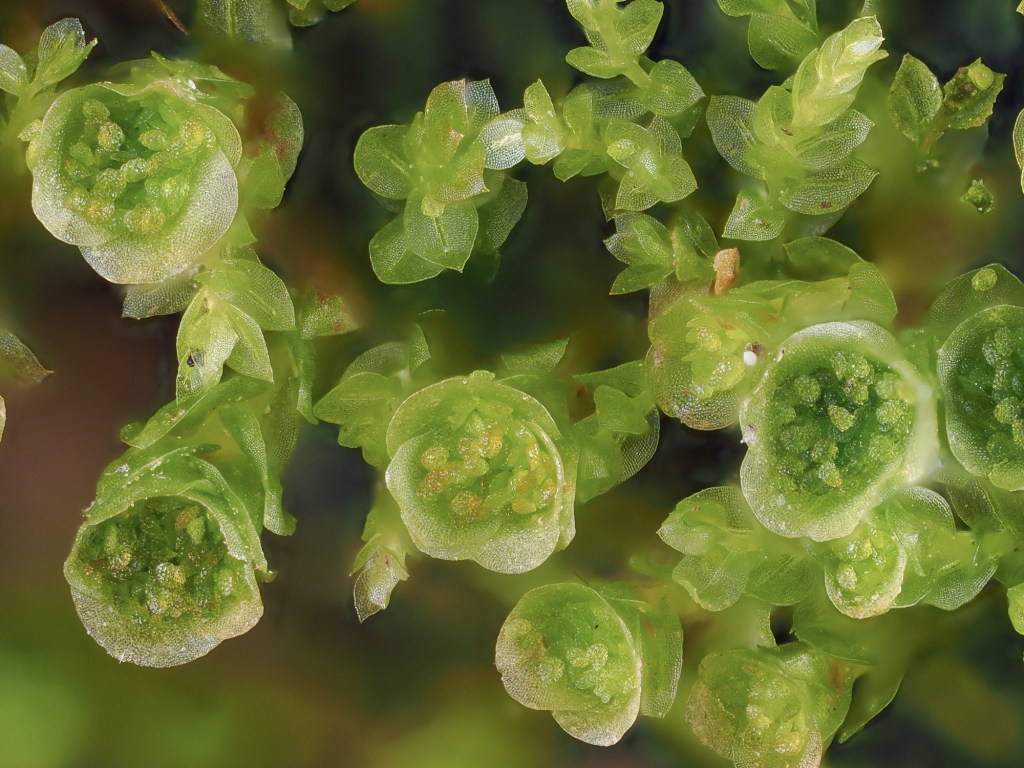
Tetraphis pellucida (Four-tooth moss), showing gemmae cups, and within them, the small gemmae ready to evacuate. When it rains, gemmae are splashed out to form a clone of the parent plant. Photo courtesy of The British and Irish Bryological Society
So the next time you sprinkle water on a moss-covered bonsai pot, perhaps spreading around gemmae, you might think, aha! You’re at it again. And in not the usual way.
Leave a Reply