Finding Deadwood Beneath Bark
Deadwood on bonsai often sits there under the bark, waiting for us to discover it.
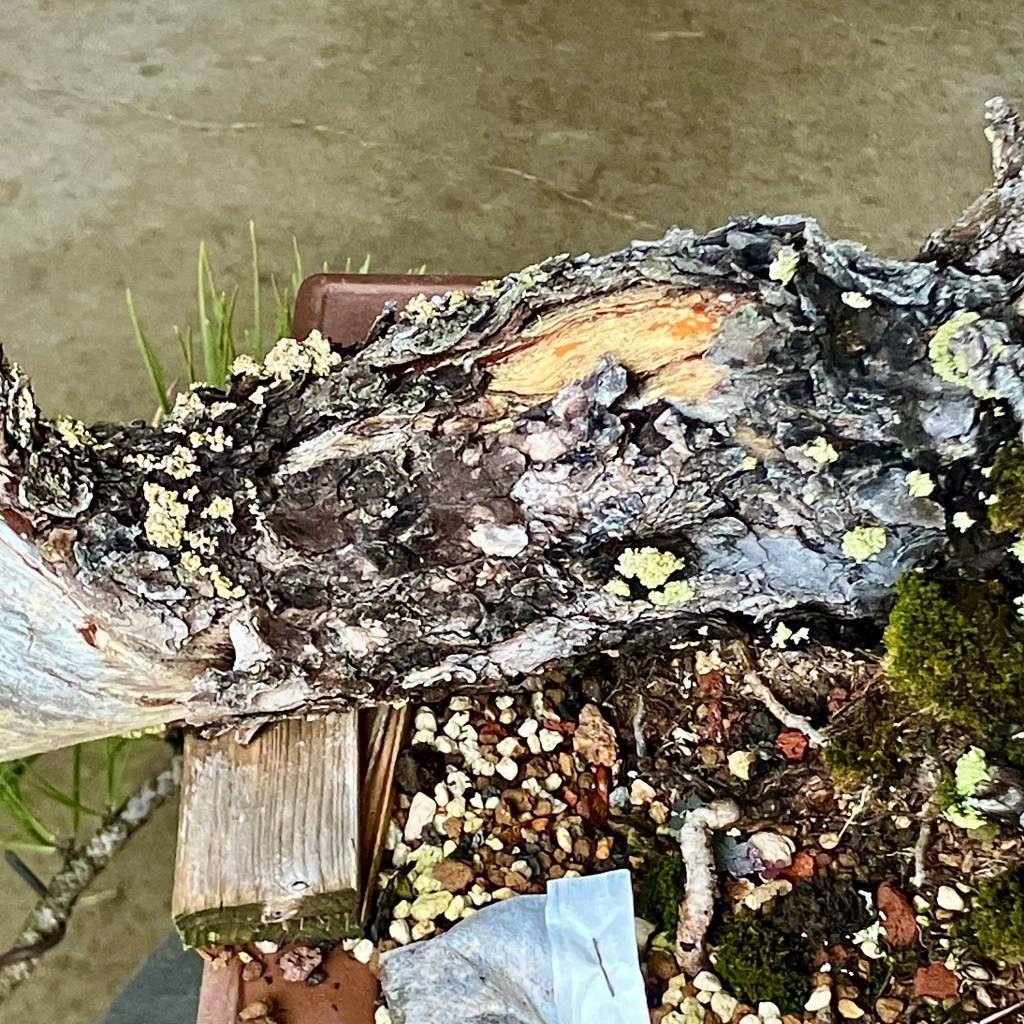
Here’s a Ponderosa Pine, Pinus ponderosa. You might think this small patch of yellow deadwood is all there is.
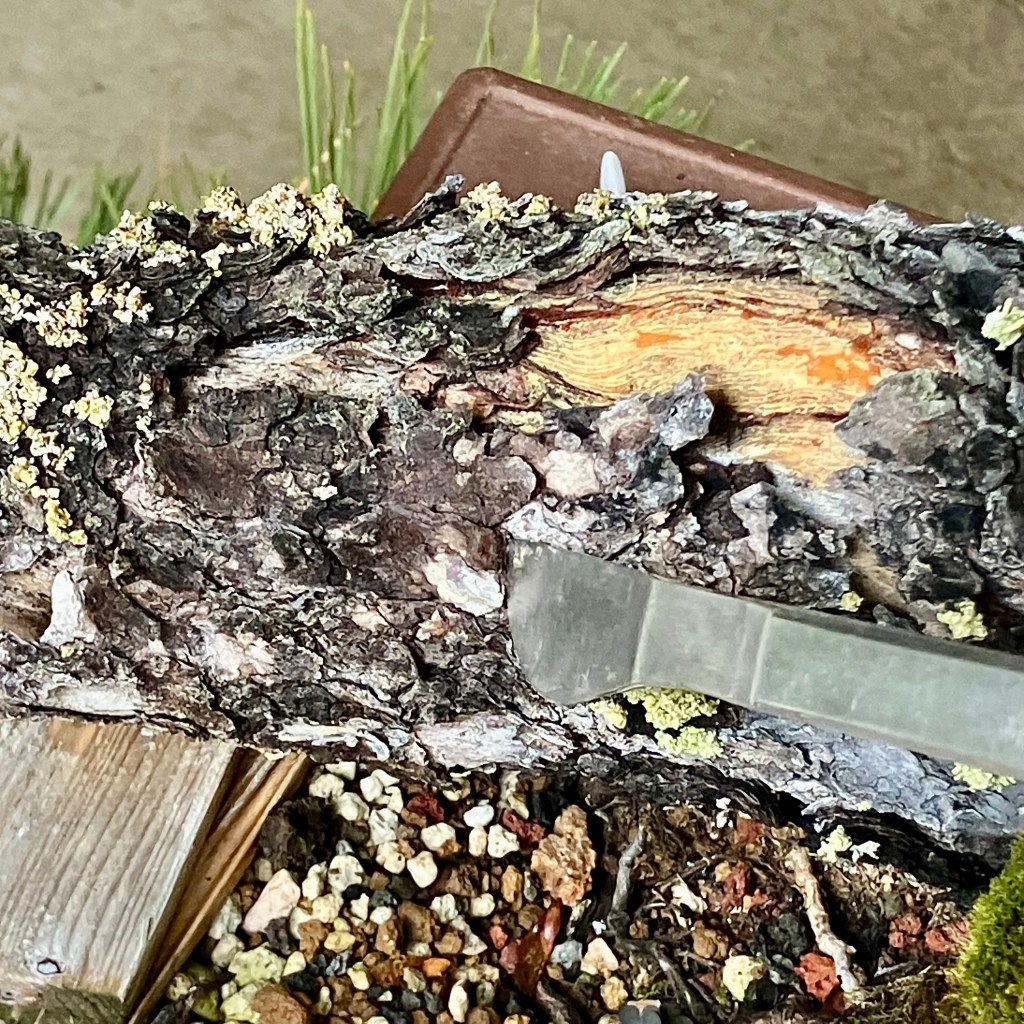
Tapping the bark around the deadwood sounds hollow, and suggests airspace beneath.
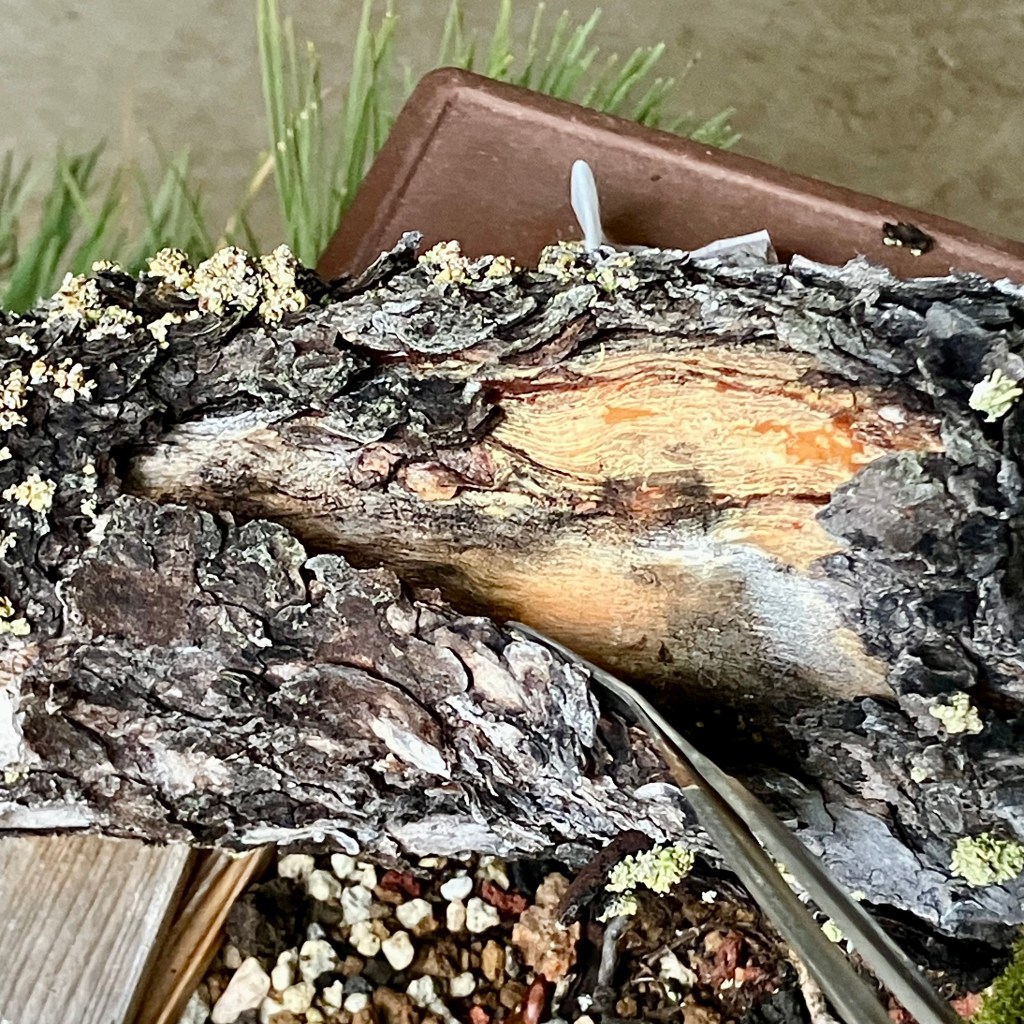
Slipping the tool beneath the bark uncovers a large area that has been dead for some time.
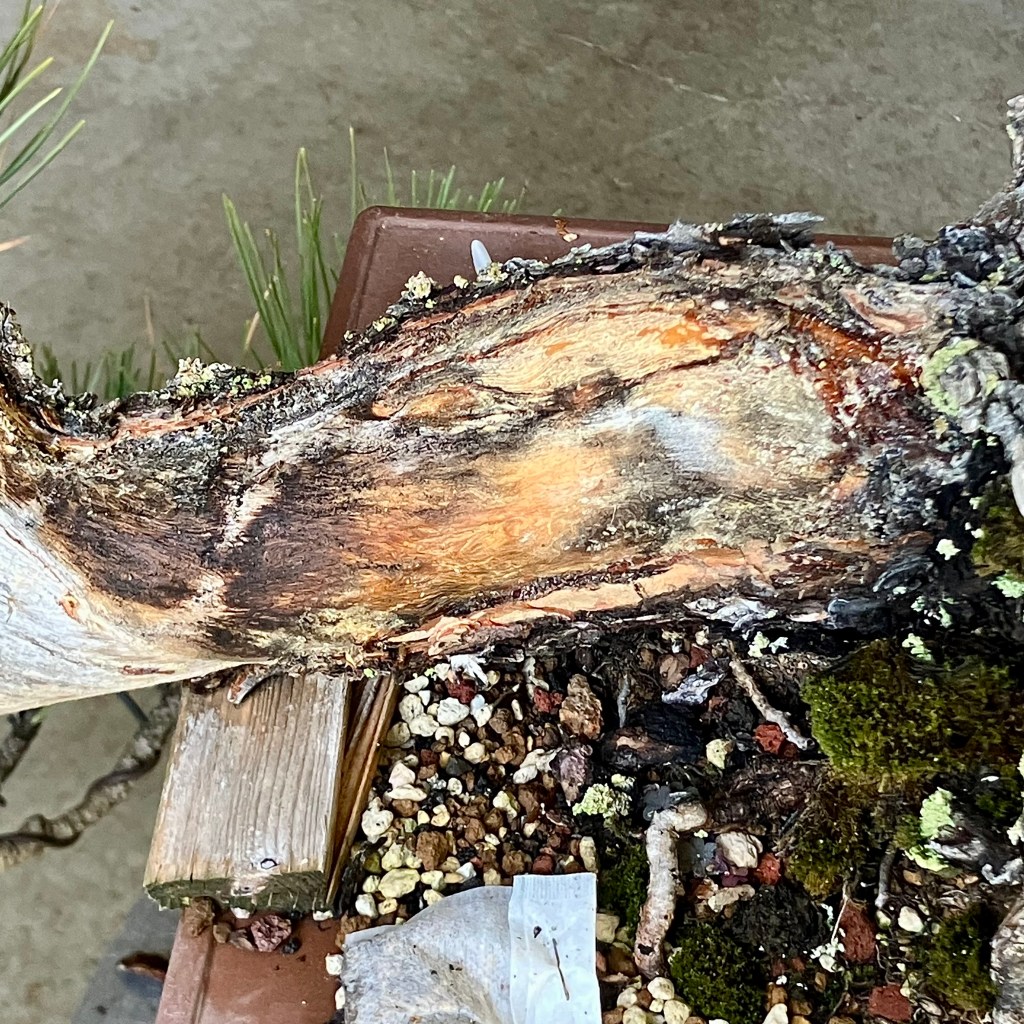
The bark removed up to the living edge.
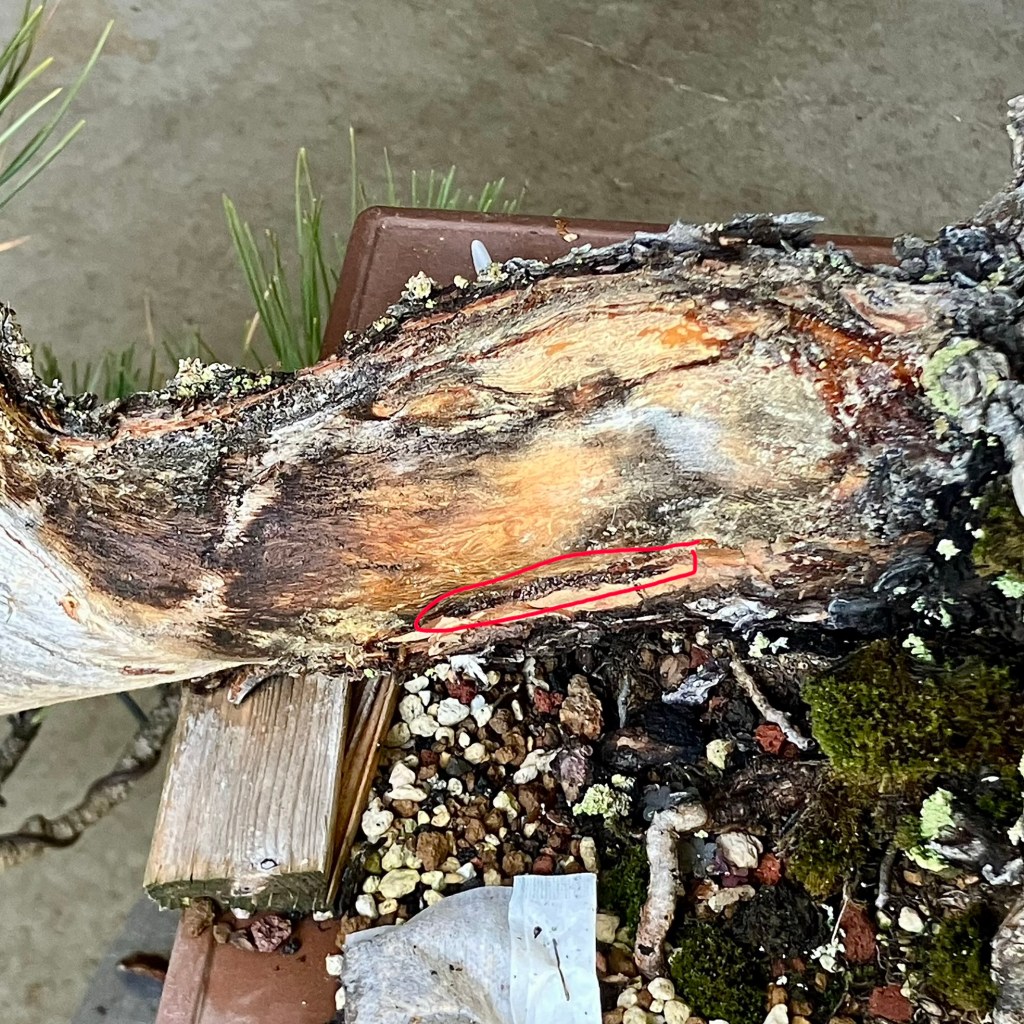
The area circled in red shows an area of dark, hardened sap, one of the signs on a pine or spruce that you are close to the living tissue. A good place to stop bark removal.
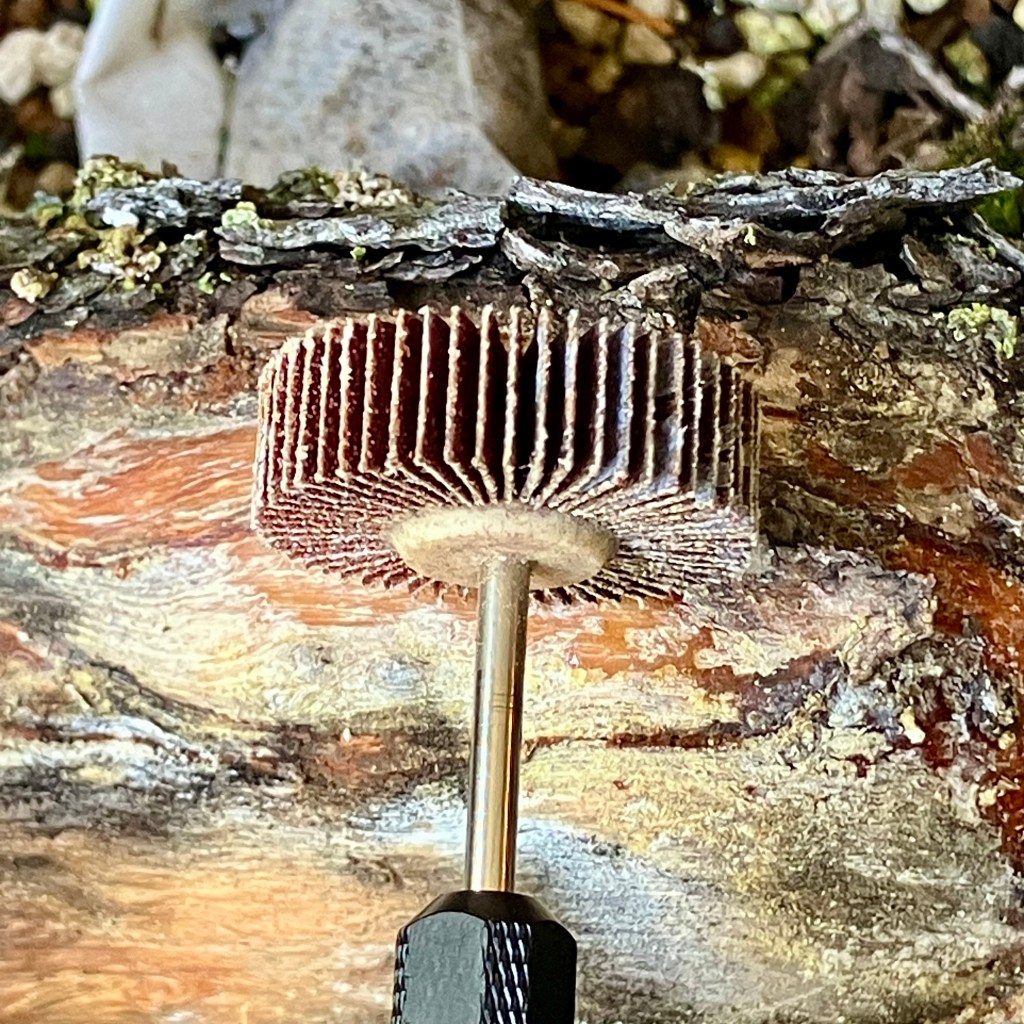
There’s a lot of dried sap on this deadwood, which is good as this will resist decomposition. But it is gummy and hard. To clean it up lightly, this sanding wheel in a Dremel is a handy tool.
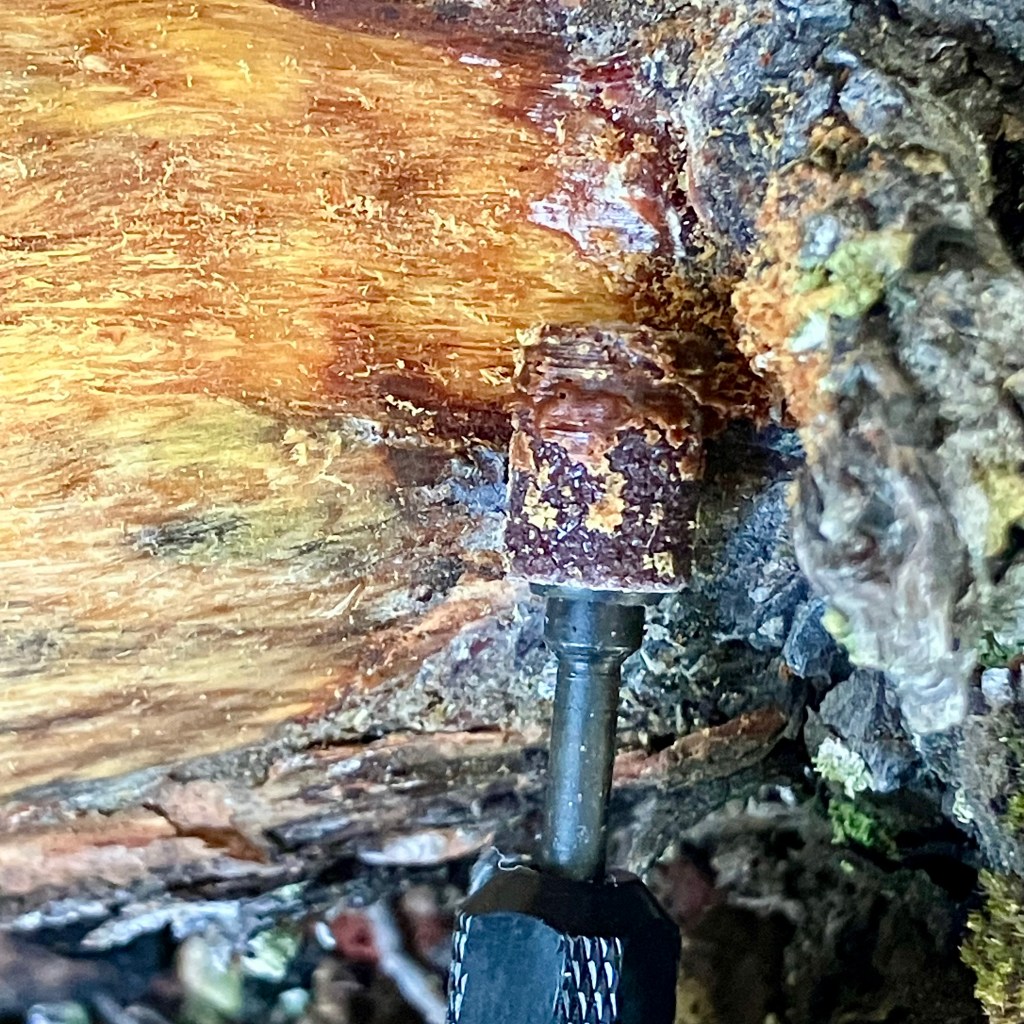
Try another tool, like this bit, for tighter areas. If you have large areas to do, a metal bit may be better so you can burn off the accumulated sap with a butane torch (light passes only, to protect the temper of the metal).
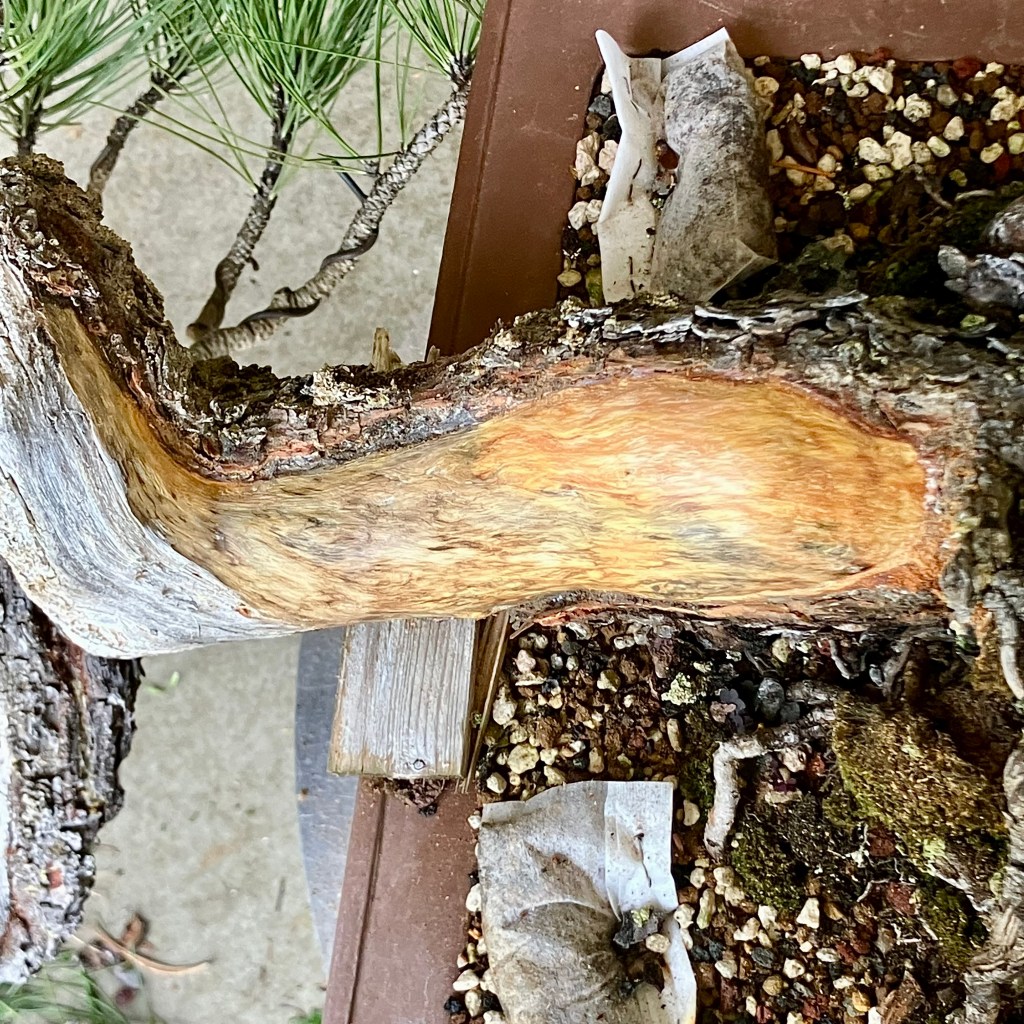
The cleaning finished. You might do carving at this point, if you wish. Then to blend this new, yellow area with the rest of the deadwood takes some doing. With wood so heavily saturated with dried sap, it won’t silver easily. Lime sulfur doesn’t hide the sap very well, so adding a touch of white, or white mixed with black, can help.
Commonly this is acrylic paint, but a friend, Jose Luis Rodriguez, has suggested using alcohol ink instead of acrylic, which he says soaks into the wood rather than leaving a film on the surface. (Perhaps something to try with open-pore wood, not this sap-impregnated example.)
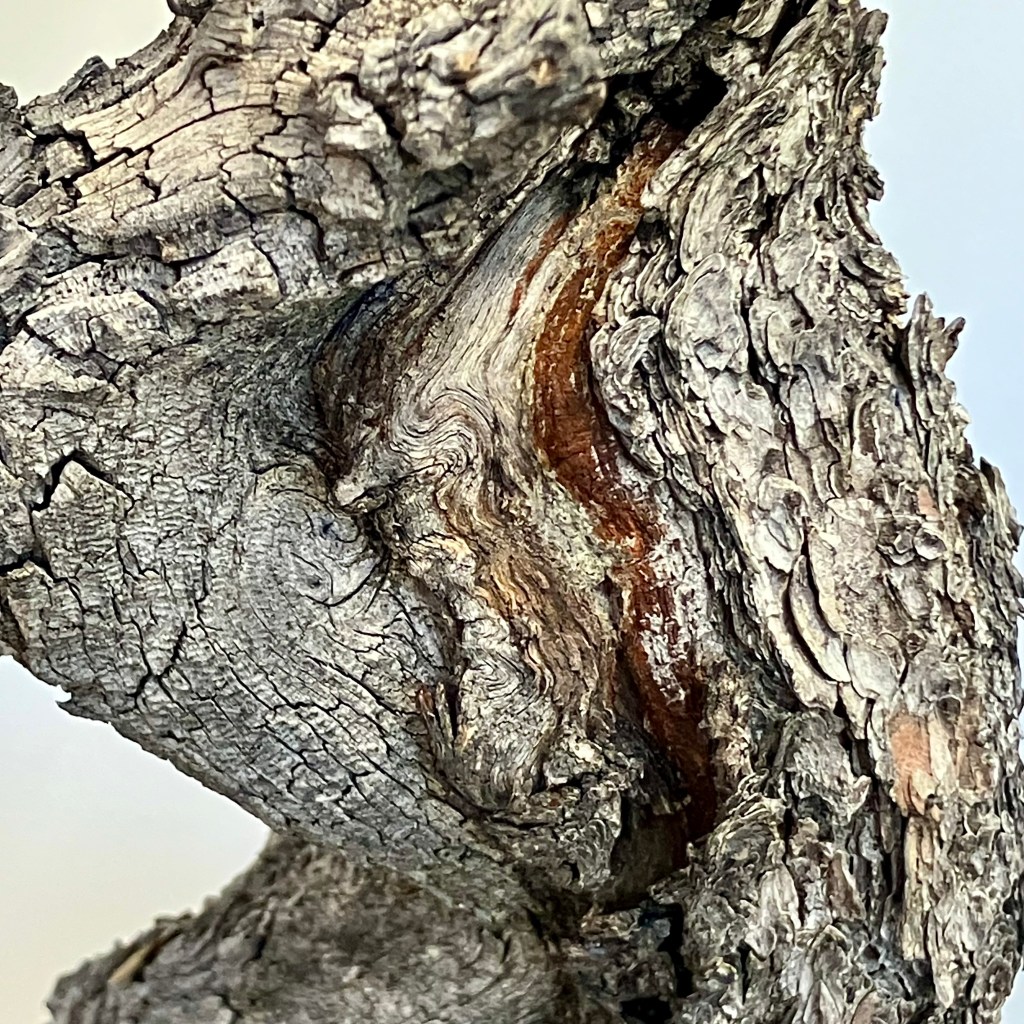
Rather than coloring the wood, some prefer to let the wood weather naturally, like the deadwood on this Limber Pine, Pinus flexis. This takes time, but is an option for conifer wood like the sap-impregnated yellow wood in the beginning photos. If you’re not in any rush, leaving such wood alone will weather it naturally.
The brownish line in the above image is the edge of an old live vein. In a few years, the area we cleaned in the earlier photos will be ringed by a brown edge of dried sap like this one, which shows where the living tissue begins.
For more about deadwood, try Does Extreme Heat Create Deadwood?
Leave a Reply