Tight Wire vs. Tight Raffia
It doesn’t take more than a year or two in bonsai to learn that wire can cause damage to branches. If left too long the wire can disappear beneath the bark, leaving bulges and sometimes weakened branches.
But there’s another thing often wrapped around branches: raffia. And left on too long, raffia can resemble forgotten wire.
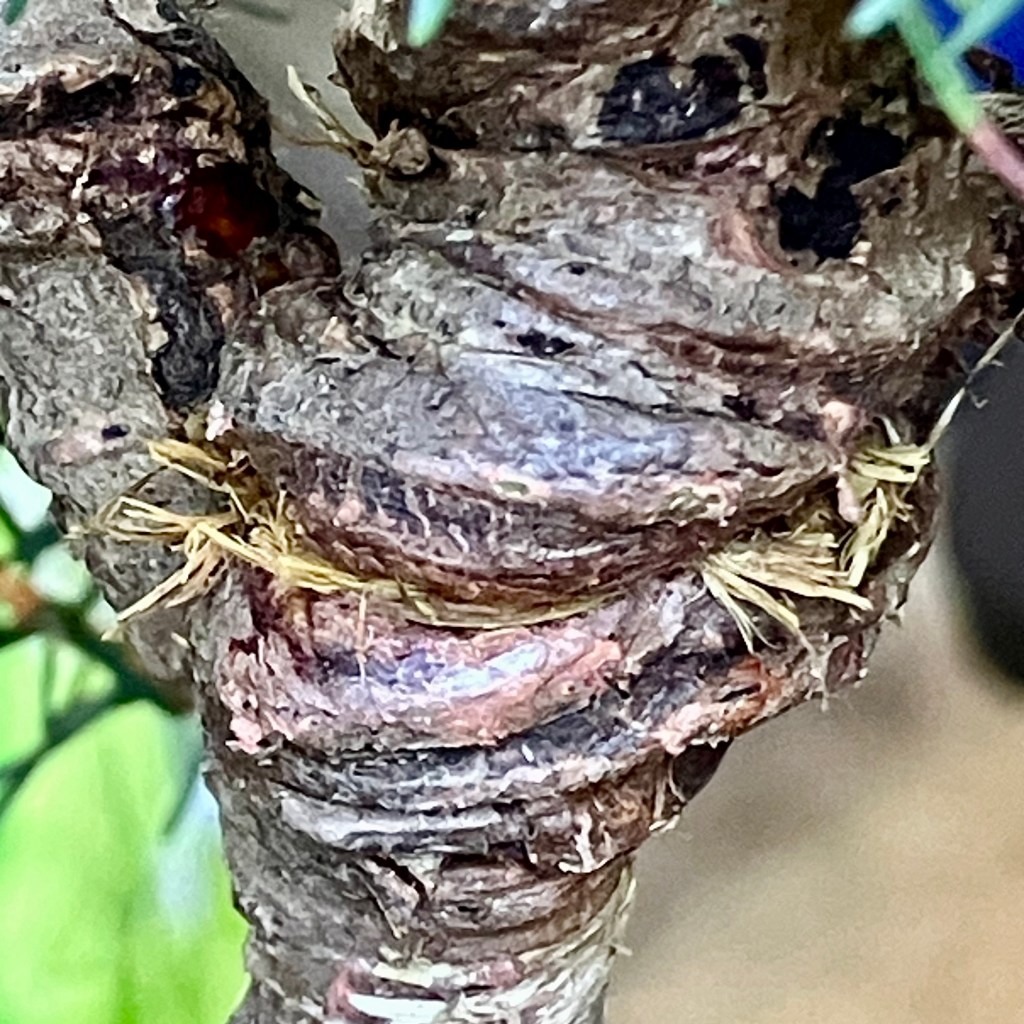
Here’s a typical raffia bite-in on a branch, with the raffia embedded in a deep crevice.
Raffia, like wire, does not stretch. Which may give it an initial advantage in being a splint to prevent breakage when bending large branches, and yet that same advantage may become a liability after a year or two.
In some climates—like mine in the Pacific Northwest which is moist and mold-laden—after a year the raffia can rot, break, and fall away. Unfortunately we can get used to that, and then be surprised when it doesn’t rot, retaining its binding strength. Then raffia is as troublesome as wire.
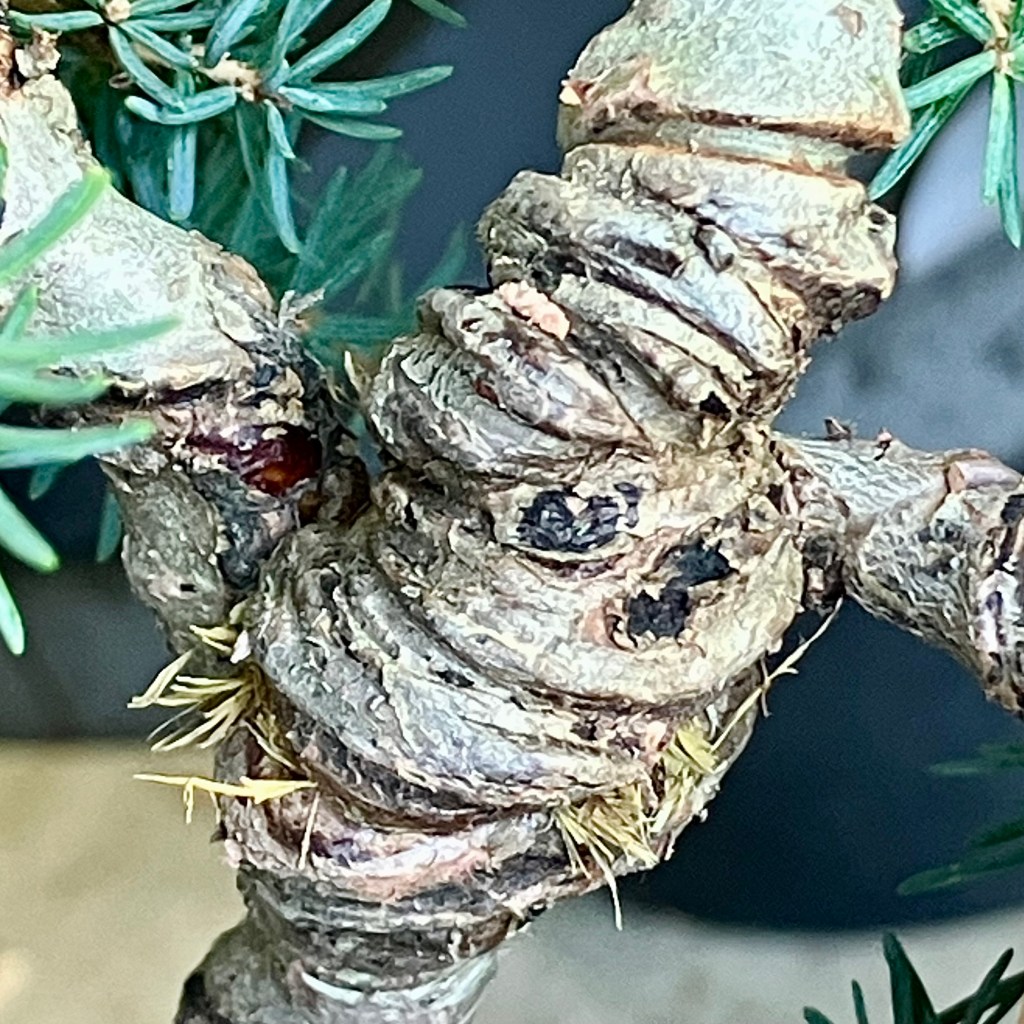
Old wire marks above the raffia bulge. In some cases old raffia is hard to see against the bark, especially when discolored by mold, or if you’ve darkened the raffia with India ink, as is popular, to make it disappear somewhat.
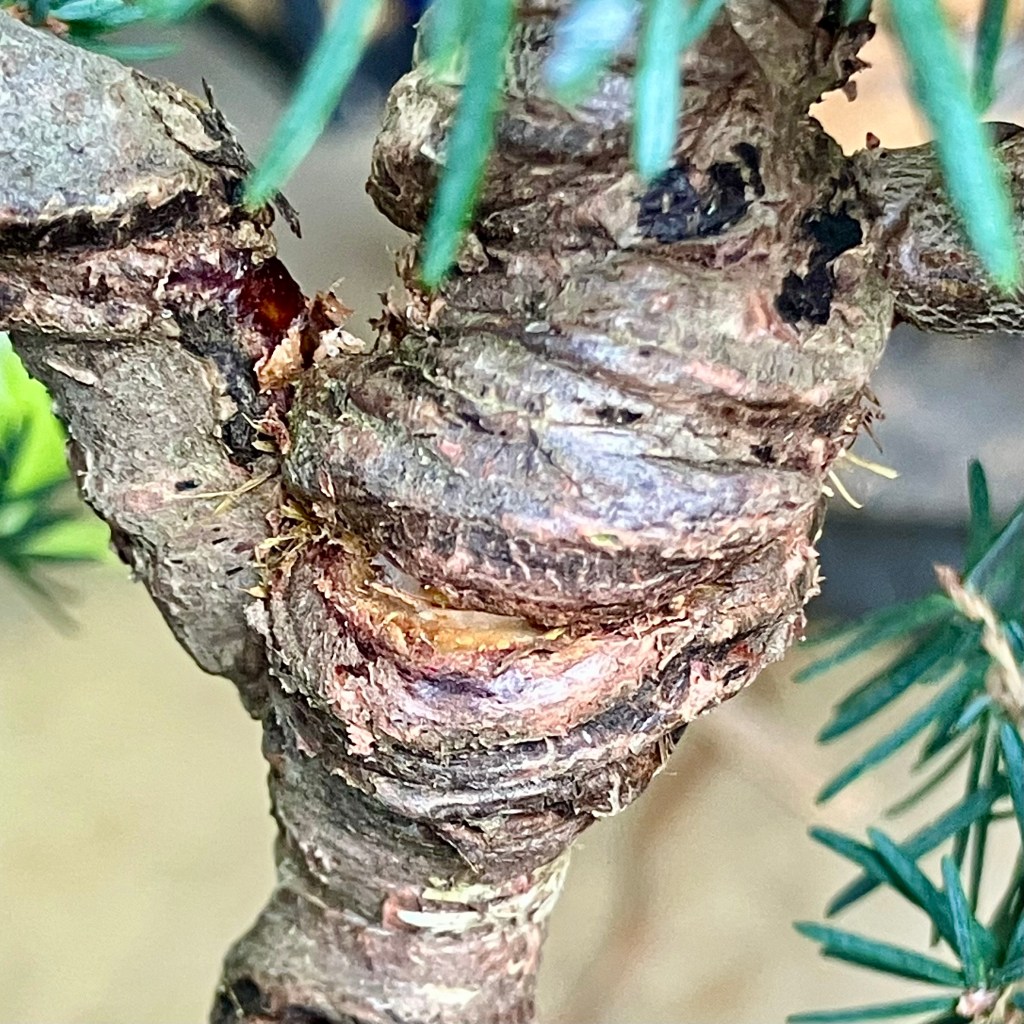
A buried wrap of raffia has a problem that wire does not. When you try to pull out embedded raffia, it often breaks. Which can make you wistful for a wire bite-in.
Catching bitten-in raffia early is fortunate. With a late catch you may need to lightly carve the edges of the swelling to get some space to extract the fibers, which otherwise break if you pull them. This is a delicate surgery. An X-Acto knife or similar is a good tool.
Raffia, like wire, should be taken off before much branch swelling happens. One benefit to the rubber and other stretchy materials used as raffia substitutes is that they may not bite in as fast. The exploration of stretchier raffia substitutes are worth it for this one quirk of raffia, which might give us more leeway in removal.

-leave a tip-
Leave a Reply