How To Drill Holes In Bonsai Pots For Better Drainage
Due to warping in firing, or poor planning, some bonsai pot drainage holes don’t do their jobs. A pot that doesn’t drain well may make bottom roots sit in water, which isn’t ideal for species like pines. A willow or wisteria wouldn’t mind.
You might also wish to address antique pots, which often have tiny holes. You can drill holes where there are none, and enlarge small ones which can clog easier and impede drainage. With an antique pot, you might hesitate for worry of breaking it. With pots of less provenance the decision to drill is easier.
If you find a pot with poor drainage—meaning, when the pot is sitting flat and water pools in a corner—you may wonder how best to drill the holes.
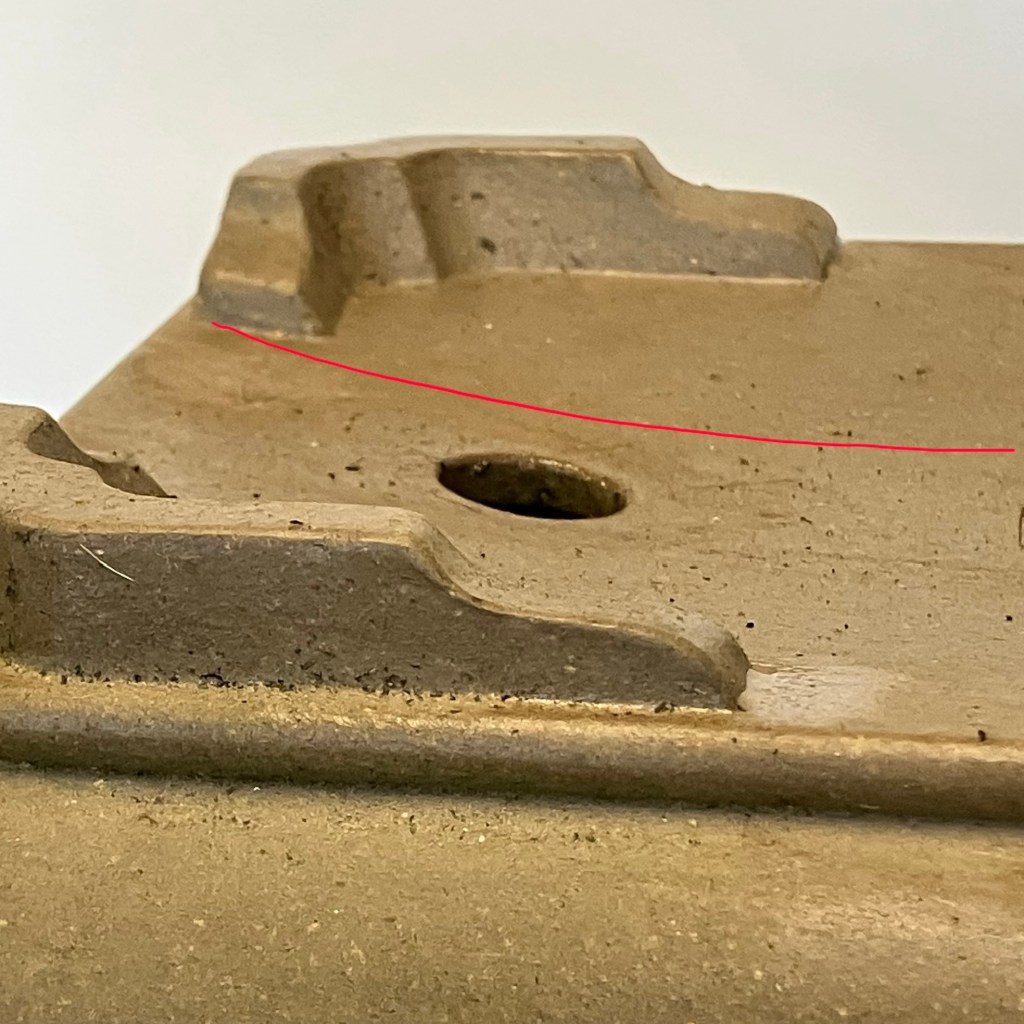
This pot will have a drainage problem. The red line describes the belly of this upside-down pot. Given where the drain hole is, water will pool in the corners. If the drainage hole were further to the left, it might be fine.
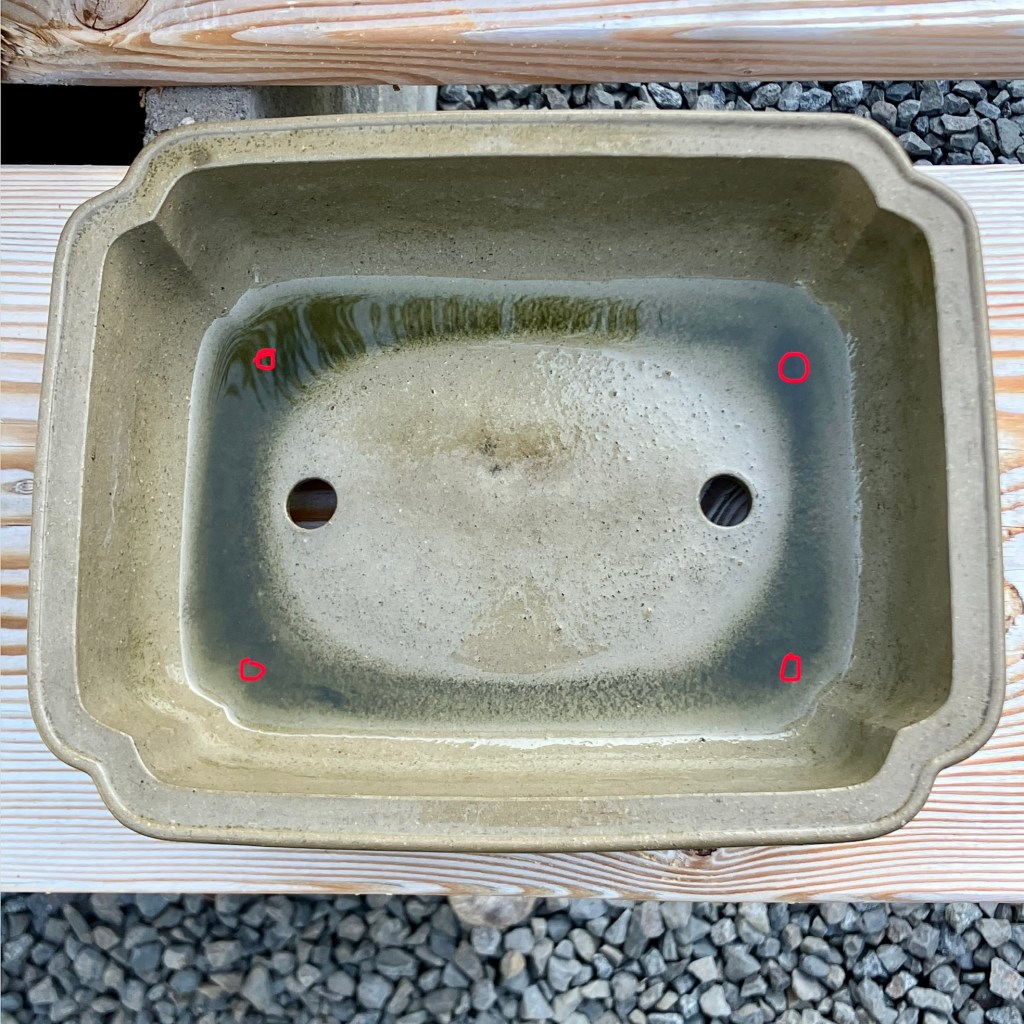
Same pot, showing water pooling along the edges of the bottom. Pines will be grumpy with this sort of drainage, as they like dry feet. The correction? Drill holes where the red circles are.
To make the holes, try a diamond hole saw.
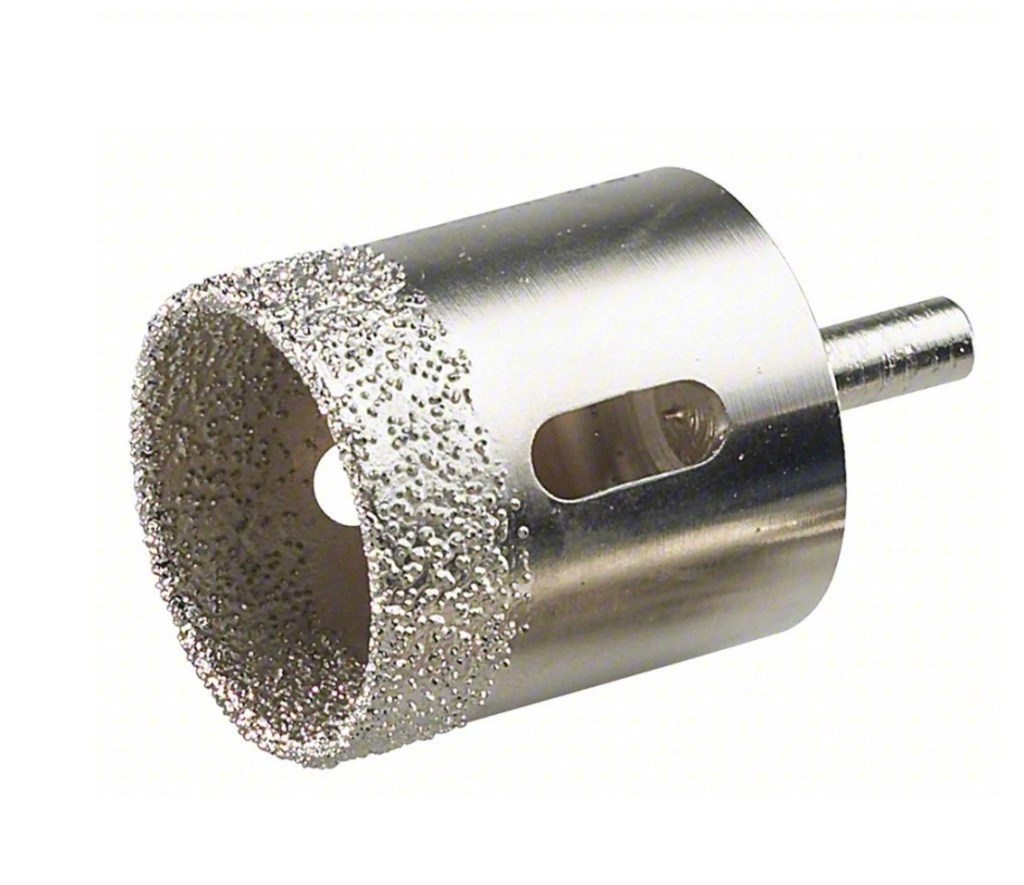
This hole saw has diamond dust on it. It fits on a drill and cuts through ceramic easily. Tips: go slowly, keep a low RPM, not much pressure (especially for antiques), and make sure there’s always a puddle of water to cool the bit.
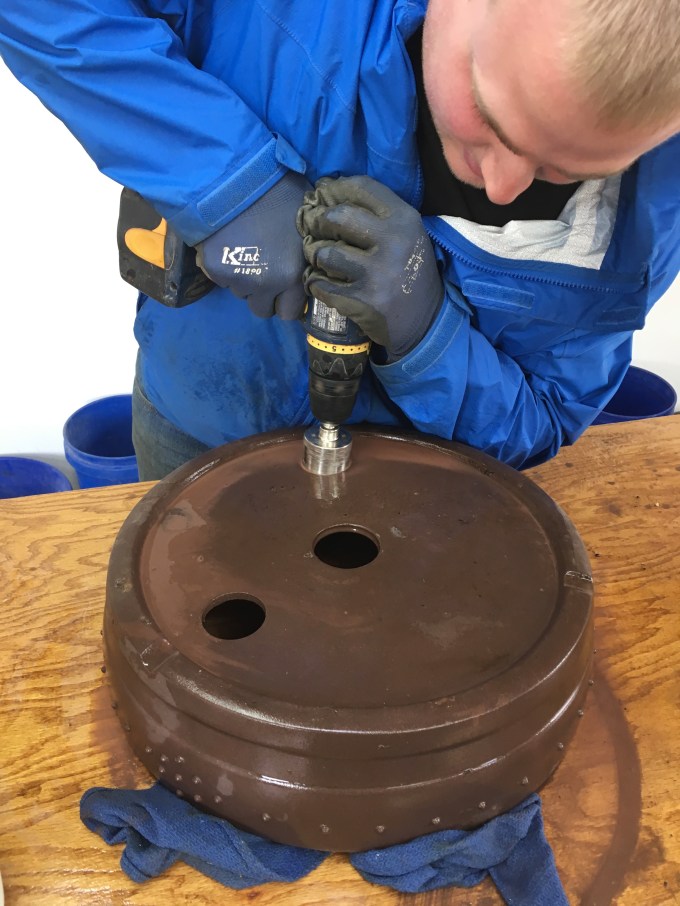
At the time of this photo, Andrew Robson was my apprentice, here making holes in a one-hole pot. You don’t need holes this large, smaller ones will work to drain pooled water.
Notice that Andrew has tipped the pot so that a cooling puddle stays where the bit is. To start the hole, he’s angled the drill slightly so the bit doesn’t go skittering over the surface, but digs into one place. Then the bit can be leveled out to complete the hole.
17 Comments
So true and a great way to add anchor points. If I could add one thing support the pot. If your pushing down you don’t want the pot to crack. I drill pots the other way (from inside out and support the base on a bed of mulch. One last thing as you get towards the end or breaking through to the other side don’t push to hard so you avoid “chipping/cracking” the other side.
Michael as always such great advice!
Yes, thanks for the comment, very important to ease up on the pressure near the end. The bit will start sounding differently when you’re going through.
Good morning Michael, and Happy Valentines Day, This is great advise and Terry said he would help me add more hole to some of my pots. Annette
What size diamond hole drill do you use. I bought an 1.25″ on eBay from Hong Kong for about $8.00 delivered about 5 years ago and have used it since. Great Buy.
It’s best to have several different sizes, according to need. 1/2″ holes are fine for the little spots in the pot that don’t drain well, larger ones for the interior.
light oil is also good for the cutting as opposed to water… and it doesnt hurt to masking tape the drill area to help reduce chipping, along with a firm surface under, and in contact with, the drill area…
Does the oil have to be continually dripped?
no, not really… as long as a small puddle is maintained.
Water is actually a bit better for most ceramics since it is slightly corrosive to the glassy phase that bonds the particles together and is lower viscosity than than most oils I am familiar with so it removes the debris faster. Cutting oils are far better with most metal cutting since we are looking to reduce friction as the tool cuts the metal. In ceramics it is more of a grinding action so lubrication is less of an issue, flushing the debris and cooling of the cutting are critical.
right on, marty… your science trumps my lack there of 😉
Great refresher!!
Holy Pot Batman! Thank you for making my pot more holy at our last study group, Michael. Andrew should be wearing safety glasses. Best wishes, Joyce
Apprentices must use the force or go blind.
Yes I do this also with different size diamond drills
I have used this technique for years and have never broke a pot! It works great.
For fragile pots you could set the whole pot in a shallow tray of water so the drill site is submerged. As long as the contact point with the bit is under water and not the drill. The water dampens vibrations greatly. You could probably drive a nail through a pot if the whole thing were under water, although I wouldn’t try this on an antique pot.
Interesting—-thanks for sharing!