Another Way To Think About “Helmet Heads”
For many, the large domes of foliage on bonsai that are popular around the world are ridiculous. The “helmet head” label is accurate enough—they look not unlike the impressive headgear of Lord Dark Helmet in the movie Spaceballs. Rather intimidating. And, top heavy.
To give the critique credit, such large domes are often out of sync with the thickness of the trunk. Large crowns are usually—if we can make a general styling statement—linked with a thick trunk. Small crowns work well with a trunk as skinny as a rope.
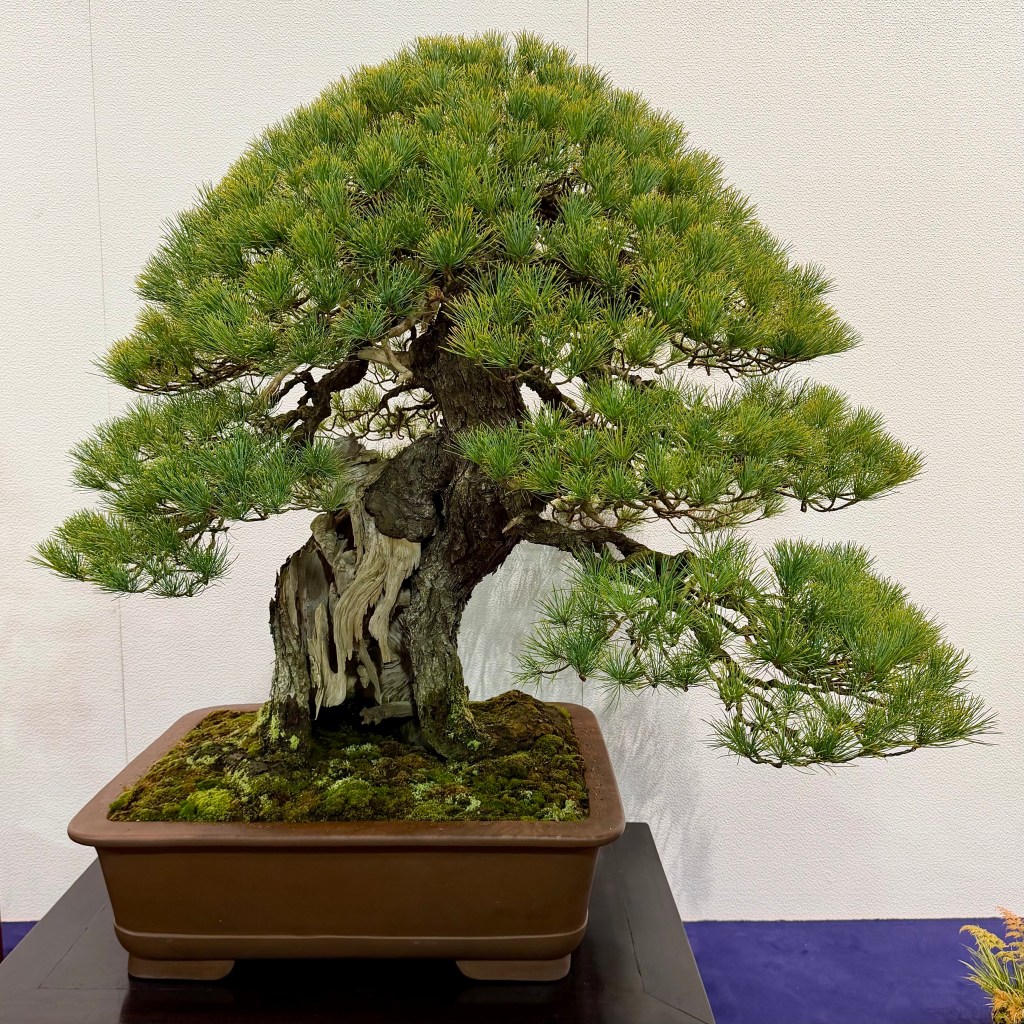
Japanese White Pine at the 2026 Kokufu Show, with a large crown.
I have an observation about these large masses of foliage. It might not change our artistic preferences, but is perhaps something to consider.
What I’ve noticed is that trees with a lot of foliage have just that much more ballast against disease and pest. In other words, trees with more foliage are better equipped to resist an attack, and might win their way to another year.
If the above pine does get hit by a pathogen, and loses half its branches, it might still have a future. If the pine below loses half its branches, it might die.
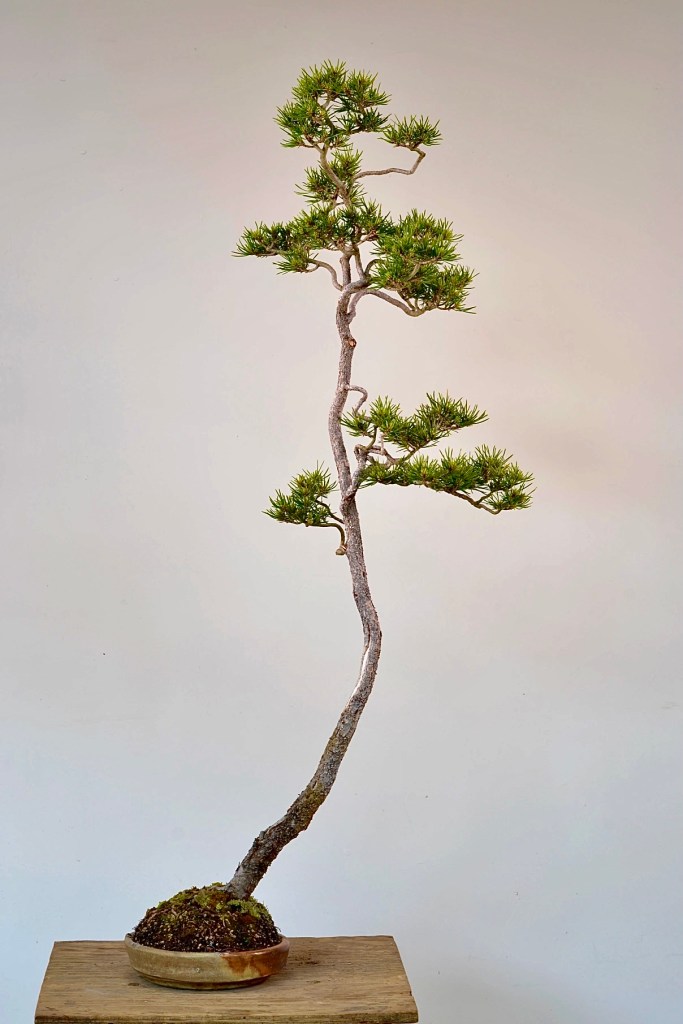
This a tree is in my garden, a Lodgepole Pine. It takes careful management. A tree without much of a sugar engine is an unwitting liability, even under good care.
These two examples are extreme. And not a reason to avoid bunjin. Just something perhaps to consider. In my own garden I have seen the benefit swing in favor of trees with more foliage on them often enough to notice.
Fencing over the artistic right or wrong of the helmet head is another conversation (feel free to express your thoughts in the comments below).
And for those who have wondered, here is a related post: What Do We Call The Top Of A Bonsai?
2 Comments
Although one try to avoid comparisons I though the Japanese were inspired by samurai helmets, but perhaps is just a practical way of keeping ramification and the whole tree under control = balance?
I think the less broken up the dome is (broken up by layers or foliage “pads), the greater the sense of age you get (obviously this only really works when it’s balanced by a thick trunk as you said). Visually I tend to prefer trees with more breaks / layers in the trunk, but I’ve found that if they continue too high toward the apex that it gives the tree a younger feel. Finding the right balance, but erroring toward what fits best with the trunk has been what I’ve gone with when faced by this styling challenge (I’ve only had a few trees that were mature enough to require this consideration – one was a 40ish yr old female shimpaku with a thin trunk and foliage pads extending up to the last 20% or so of foliage in a domed top with only two minor breaks in the dome; and another was a 120+ yr old JWP on a thick JBP base with very old looking bark which I had styled so that the top 50+% of the foliage was a relatively uniform dome because layering any higher up, while looking good, didn’t convey the age of the tree as well. The latter is now on a bench in Michael’s garden, and I look forward to seeing how it evolves under his care and vision :).