How Hard Water Can Limit Plant Growth
Do you have white buildup on your faucets? If so, you have hard water, which can cause yellowish foliage, few blooms, and lack of vigor in your bonsai.
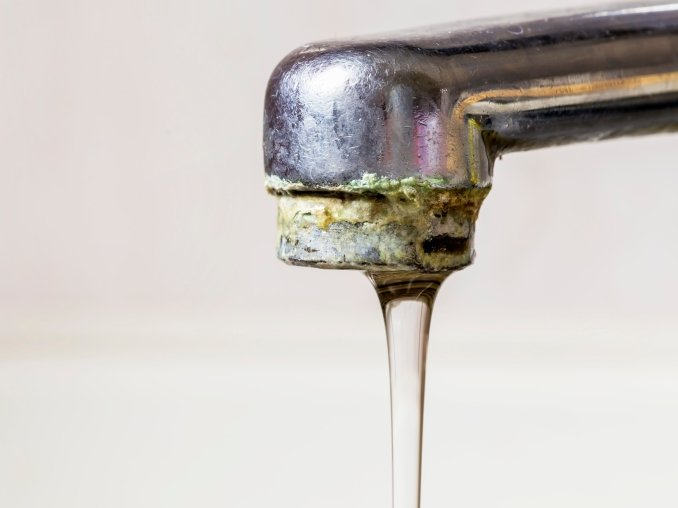
If you see whitish stains on sinks and leaves, the problem is hard water from dissolved salts. This isn’t table salt, sodium chloride, but rather calcium and magnesium. Both of those are essential to plant health, and yet high amounts are a liability.
Hardness is easily tested with inexpensive, digital units, which can also test for pH and alkalinity. Be sure to clean the tester nib, as they can misread if dirty.
Hardness and pH are closely related. They generally move in the same direction: as hardness rises, the pH will rise.
If you have high pH and low dissolved salts (which isn’t that common), you may be in OK shape to grow bonsai. It is high dissolved salts that create the worst problems for plants, with the worst case being high pH with high salts.
We see high hardness most often in drier climates, or when municipal sources or private wells come from aquifers surrounded by limestone. Some dissolved salts are good for plant growth, with between 30 and 60 ppm (parts per million) considered optimum. High hardness, above 120 ppm, is where the fun begins.
High hardness (and therefore, usually, alkalinity) causes several problems:
- Hard water may limit the root’s ability to draw in water—an osmotic issue
- Even moderately hard water limits the uptake of nutrients—nitrogen (causing chlorosis), and zinc, manganese and copper
- Phosphorus binds to the calcium in the soil—a macronutrient needed for many plant processes
- Stunted leaves and leaf damage may result from these nutrient lockouts
- Poor root growth is another factor
These are serious issues that add layers of stress to bonsai, which are already stressed by being in a small pot. In moderate situations of high hardness an acid injection into your hose system can work to mitigate these bad effects. This is an industry standard way of combating high pH and high hardness (and I’ll cover this shortly in another blog post).
If your electronic test kit shows much higher hardness, 400 ppm or higher, consider these solutions:
- Collect and use rainwater
- Set up a reverse osmosis (RO) system
- Do not use a water softener, which introduces sodium into your water and can weaken your bonsai
Collecting rainwater: In some areas the rain might be suspect, and in other areas it’s better than the municipal or well water for plant growth. Collection tanks may be set up, and then pumped or gravity-fed into a hose for watering. Years ago I set up a gravity-fed rainwater tank when I lived up in the mountains of Arizona, and I’ve fond memories of it as my most efficient and low-cost watering system. Since then my collection has swelled beyond the practicality of this otherwise excellent solution.
Reverse osmosis systems: While not cheap to set up, and needing electricity to run, they do work well for extremely hard water. We get high quality water out of these units which can almost magically change the health of bonsai in tough water situations.

Water coming out of a properly functioning RO system should have a pH of 7 or slightly lower, with almost no dissolved salts. Rainwater will be slightly acidic and similarly soft. Because of this nearly complete lack of minerals in both rainwater and RO systems, we do need to be consistent with fertilizing.
It’s worth investigating what’s coming out of our faucets. Good water quality is a game changer in growing bonsai. Next post will cover acid injection into your watering hose to bring down pH, which can, with moderately hard water, correct many hard water challenges.
Note: Definitely educate yourself on RO systems if you choose to use them. They will need frequent filter changing, more often if the water is very hard. Be wary of low end units as they may not give high quality water.
6 Comments
When we moved to our present property, we were on well water and still are. The bedrock in our area is predominately limestone and we drilled 120 feet right thru it. I slowly noticed the bonsai were not doing well here. I started to see yellowish, stunted leaves and needles. Then branch deaths and God forbid tree death. Cruelly it hit the oldest specimens the most and in particular the Japanese white pines and azaleas. Being dense, it took me awhile to figure out the source of my problem. Eventually the hard water came to light. Very bad on the water system in our house which got better with a water softener. I used an electronic meter and found our TDS (total dissolved solutes) to be extremely high i.e. hard water. I had miraculous results when I put in an elaborate RO System although the worst trees took a long time to recover or still perished. My water first goes thru two different 20 inch filters; a granular carbon filter and a pleated filter. Conveniently I can get replacement filters at Menards. Then it goes thru a 40 inch RO membrane. Then I have a TDS monitor in line and finally it empties into a 400 gallon collection tank that shuts off when full. When I water there is an automatic pump and air bladder tank to keep a constant water pressure. It is the only reason I can still have a large bonsai collection today. My wife says It’s amazing what extremes us bonsaists nuts will go thru to keep our bonsai addiction going. No problem.
I totally agree about using rainwater. I have collection stations. I also use a dehumifier as a water source when the rain dries up.
Robert Carrell
Two things; one, I always use softened water to feed my RO system. This, I understand, reduces the filtration load on my RO systemconsiderably, do you concurr?Two, is there a long term negitive consequence to providing RO water to bonsai such as oddball deficiencies or imbalances?
One thing I do is to use softened water to feed my RO system. My understanding and experience is the filtration load on my RO (specifically the prefilters) is much less and any salts from the softner are pulled out. Is this correct?
Hi Michael! Thanks for sharing articles like this, which are really important for cultivation.
Are you (or someone else) aware of salts retention type of filters? This filter works with an ion-exchange resin, that swaps Magnesium and Calcium ions (limescale) for Sodium ions. Supposedly, as the description says, “Sodium ions are much more soluble than magnesium and calcium, preventing solid deposits”.
Sounds like a good solution to me, where the hard water is more of an issue than pH.
Any thoughts?
All best
Hell Manos—- yes good question! As I understand it, water softeners such as are used for home use introduce sodium (not table salt) to our water. It’s a small amount, so you can find online that it doesn’t make your water taste ‘salty’. And yet horticulturists do not use water softeners. They use acidification or reverse osmosis to control the salt buildup of calcium or magnesium. Water softeners swap the calcium and magnesium salts for sodium and potassium salts. It’s ion exchange, and still not good for plants.
Great question—