Bonsai Integration
A couple weeks ago I posted about a Yellow Cedar, and got a few comments which said it wasn’t integrated. Which is a great critique. Because it isn’t. And I teach integration.
Let’s use this Cedar as a sacrificial example, and compare it to others that are well-integrated. And then I’ll explain why I’ve not integrated this one.
But first let’s set the board, and talk about balance versus integration.
A balanced tree has an organization where foliage on one side of the trunk is “negated” by a similar weight foliage on the other. Because of this parity in weighting, the tree doesn’t visually fall over. A leaning tree without a balance branch going in the opposite direction often feels like it will fall over.
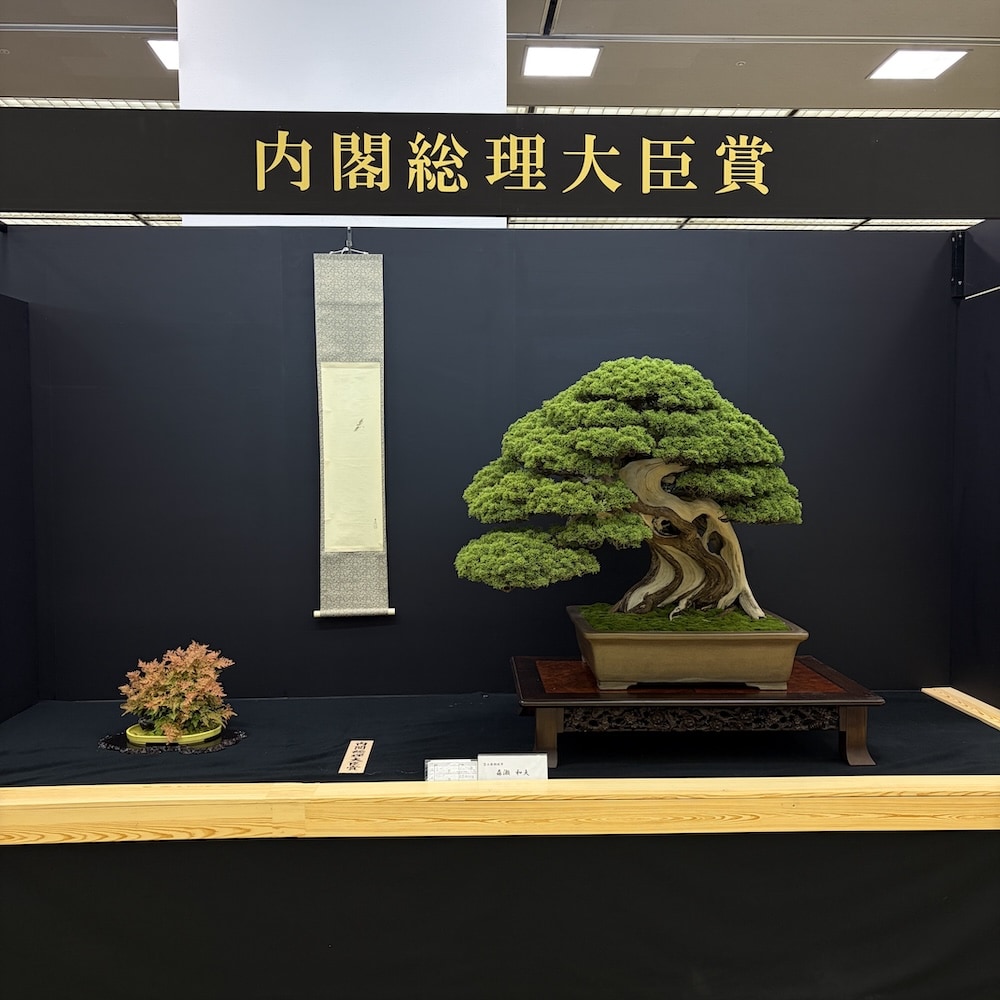
A well-balanced tree. Even though the key branch on the lower left is significant and carries a heft of visual weight, the moyogi doesn’t feel like it’s going to fall over. Sufficient foliage—and trunk weight—on the right side prevents this. (Photo courtesy Bonsai Empire)
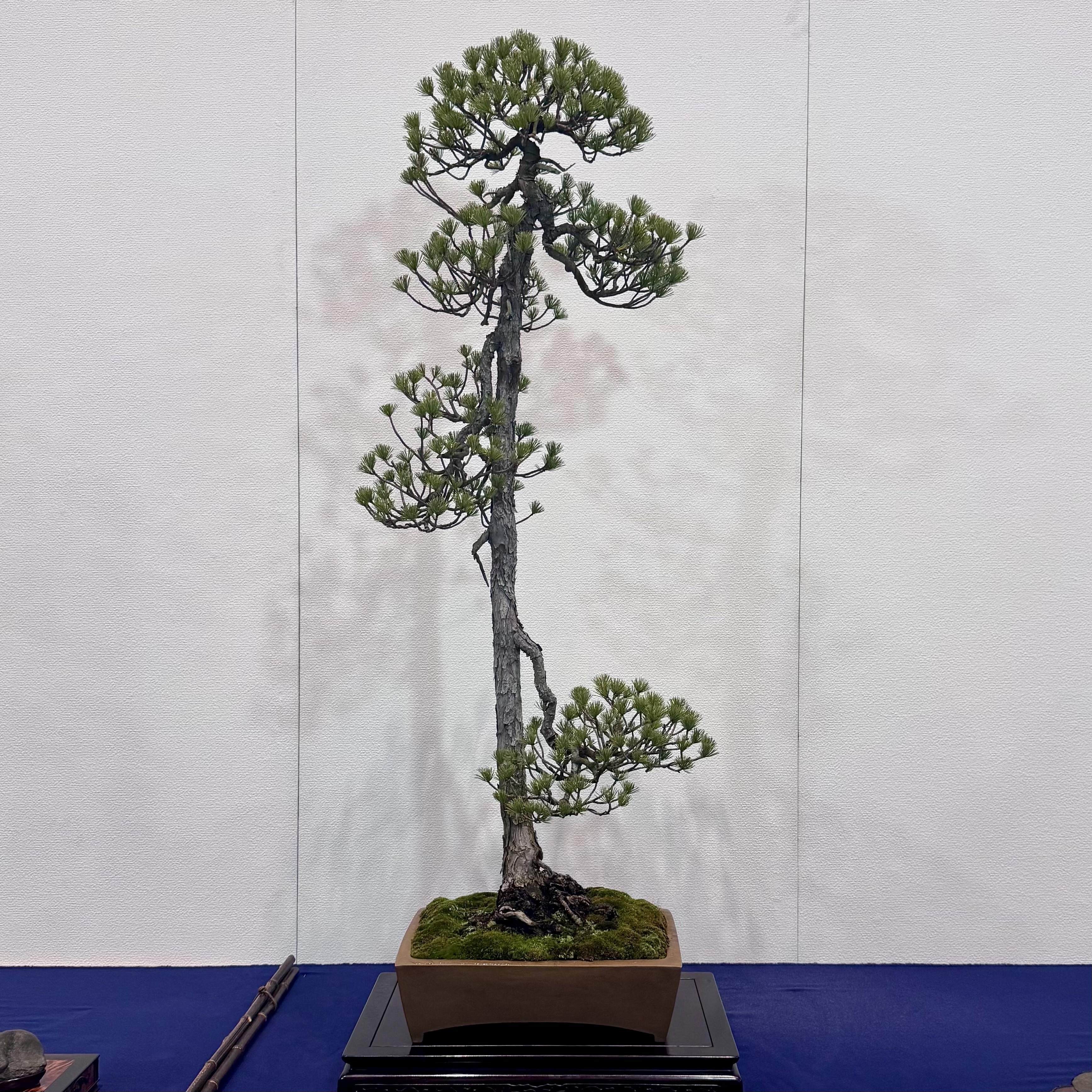
Another asymmetrical and yet well-balanced tree. The branches on either side of the tree “negate” one another.
An integrated tree is one where the foliage and the trunk and deadwood, especially jin, are one unit. Think of it as mochikomi north above the pot. The foliage snakes through the deadwood to make it look unified. In bonsai we applaud this as good design.
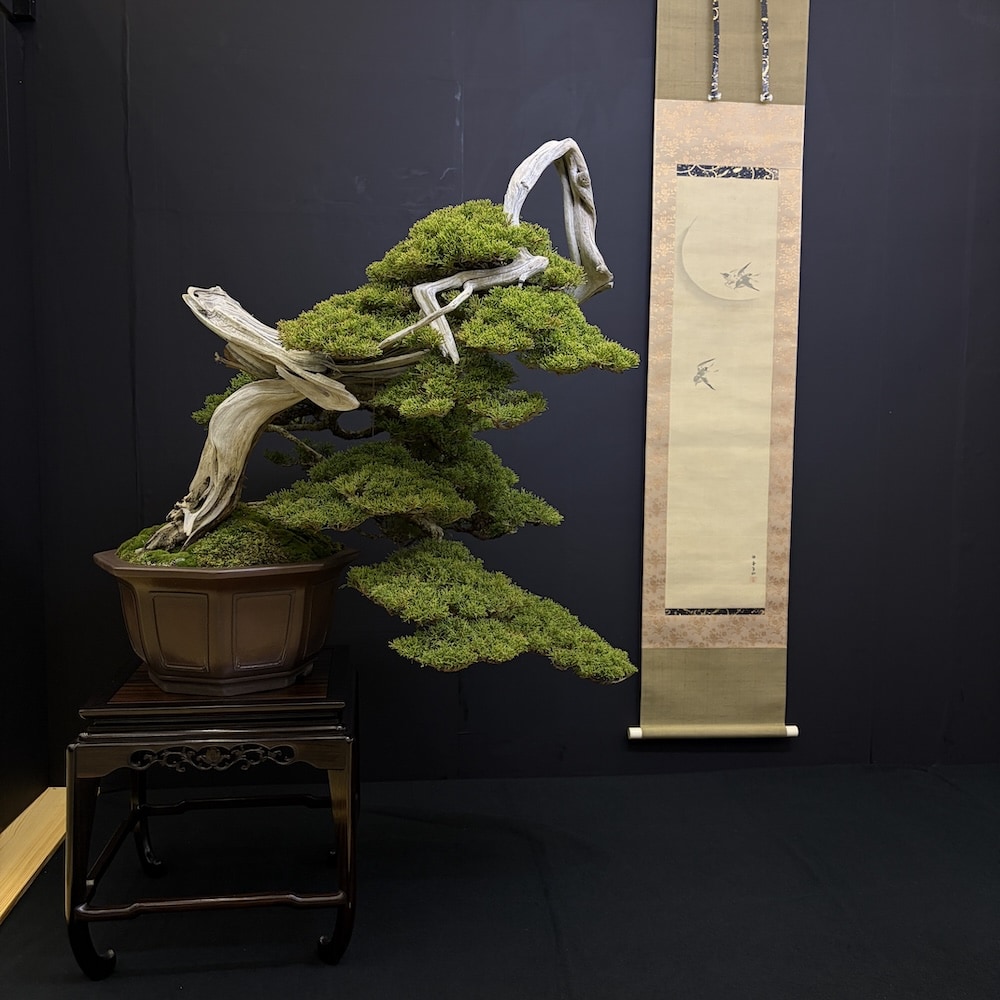
This quirky juniper is an example of good integration, displayed at last year’s Taikan-ten. The foliage is interconnected with the jin. It mingles. (Photo courtesy Bonsai Empire)
A non-integrated tree looks like two trees. There’s the deadwood, and then there’s the living stuff.
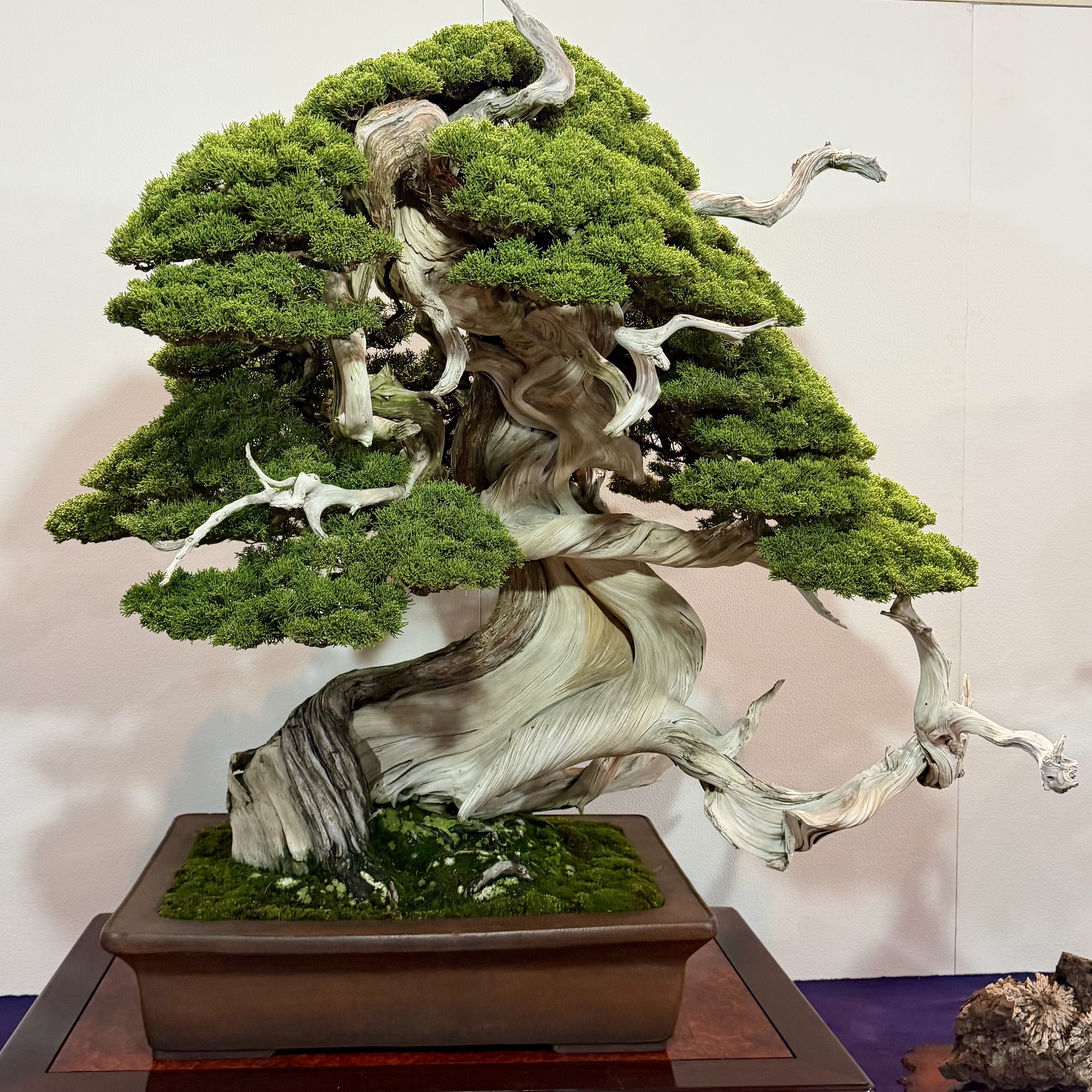
Another well-integrated tree, shown at this year’s Kokufu-ten.
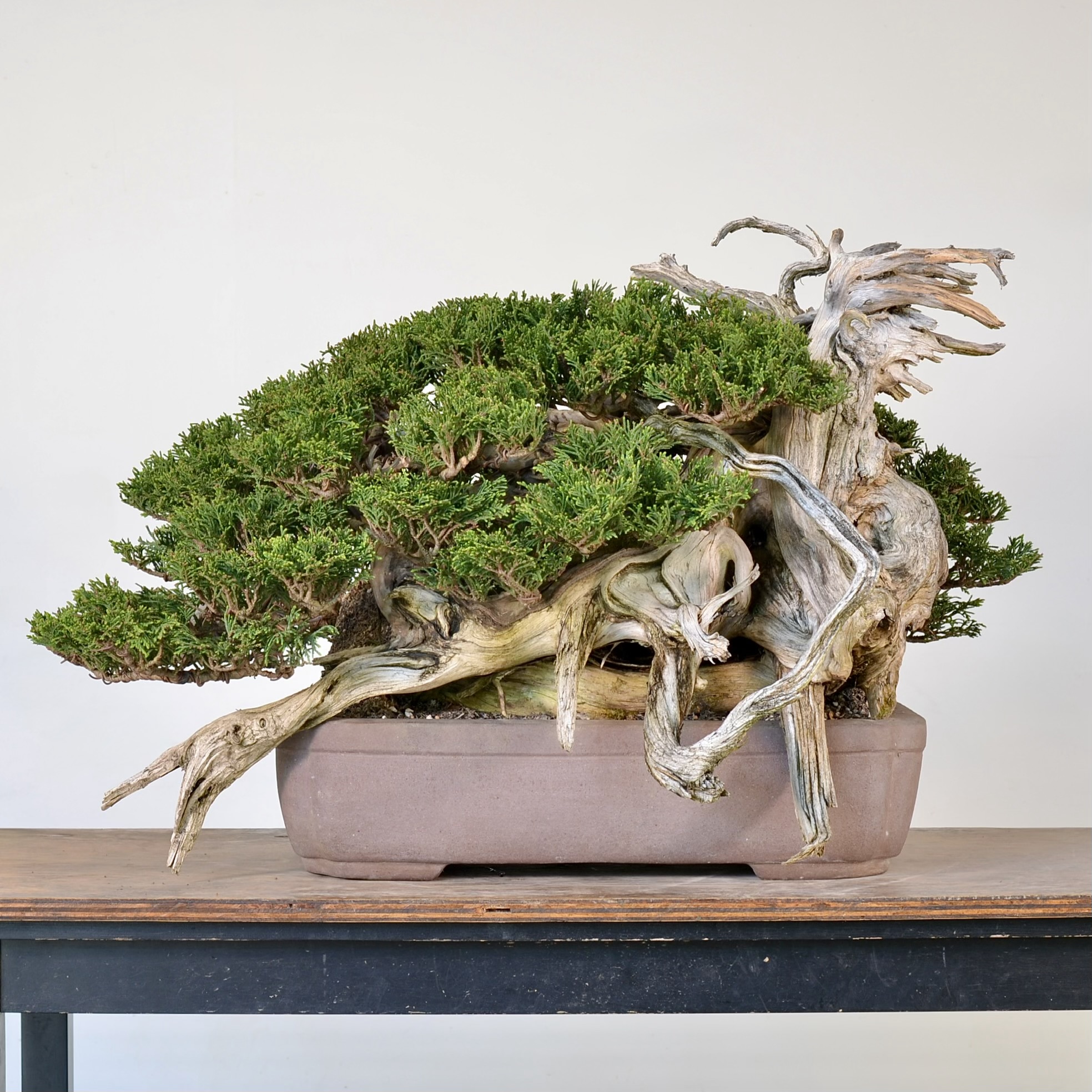
Let’s return to our sacrificial example, the Yellow Cedar. The foliage on top doesn’t integrate with the deadwood below. By normal bonsai standards, this sucks.
So those who thought this Yellow Cedar isn’t integrated are right (and some were former students, yay! Makes me proud.)
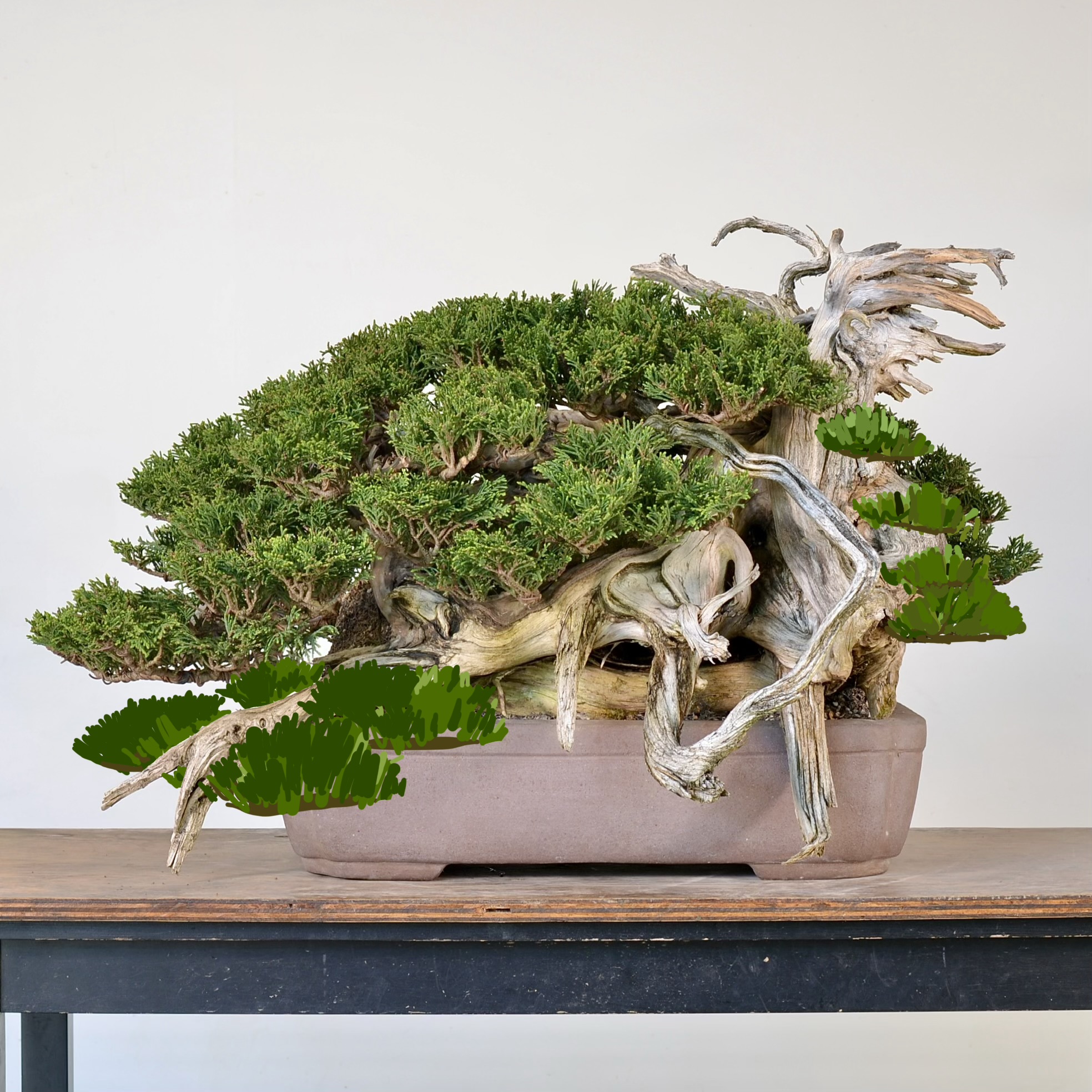
This digital redo is closer to what we expect from integrated design. The foliage cups the deadwood, as if accepting it. Any sensible bonsai artist would choose this design.
But here’s something to think about: integration is a construct. It can happen in nature, but it’s not a given. We like it in bonsai because the parts interrelate. In most cases, integration is a good arrow in your quiver as it makes cohesive bonsai.
Now let me share why I am not eager to integrate this tree. It isn’t to gleefully buck a guideline, but because my inspiration for it led to the non-integrated option.
In Oregon I often go to the coast to study plants in that environment. There I see trees and shrubs with a top layer of flattish foliage, and a lot of dead branches below that have died off in the dense shadow. Shore Pine and Spruce do this in wind hedges at the Oregon coast. You can also see this in areas with a heavy snow load. The contrast between living and dead is stark, not unlike shari and a live vein.
This tree, with deadwood that dangles below the rest of the tree, seemed like a good specimen to explore that.
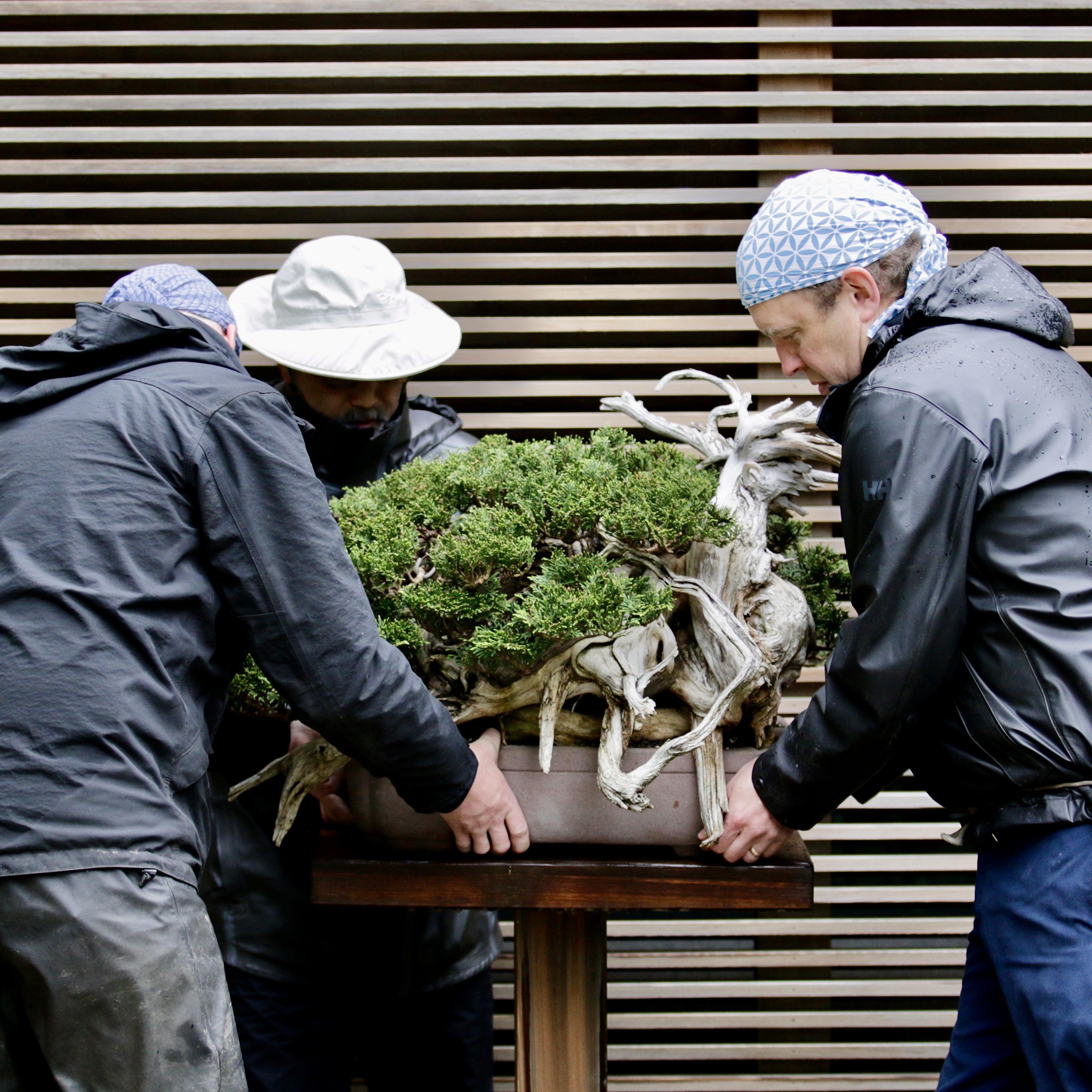
Incidentally, the Yellow Cedar is on display this spring at the Portland Japanese Garden, should you wish to fight your way through the strong winds and snow drifts to see it…
Here’s the recent post about the Yellow Cedar.
Leave a Reply