A Limber Pine Goes On A Corian Slab
I collected this Limber Pine with Steve Varland and Dan Wiederrecht about a decade ago. It looked younger than the delicious, half-deadwood trees on the slopes nearby. Then a couple years ago bark started to peel in the front and—delight of delights—the whole front had died, leaving a swath of shari.
Last week we potted this tree for the first time. In the Seasonal class we failed to find a suitable pot, so it went on a slab.
For years I’ve made slab plantings with juicy, organic root masses. I’ve wanted to try a root mass that suggested the shape and volume of a typical pot, so here’s our effort at that. A block of roots and soil that hints at a harder material.
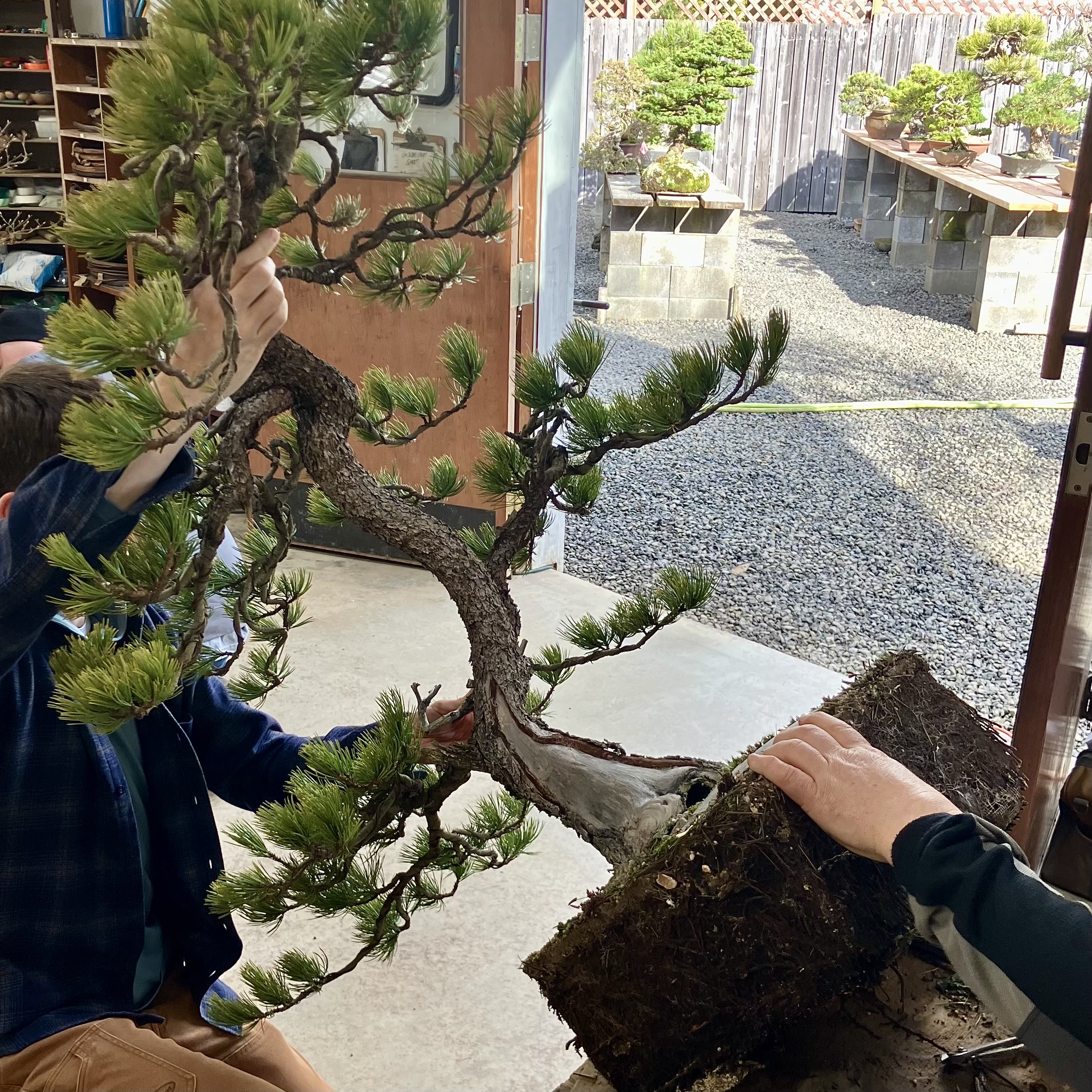
Here’s the Limber Pine being prepared for its slab adventure.
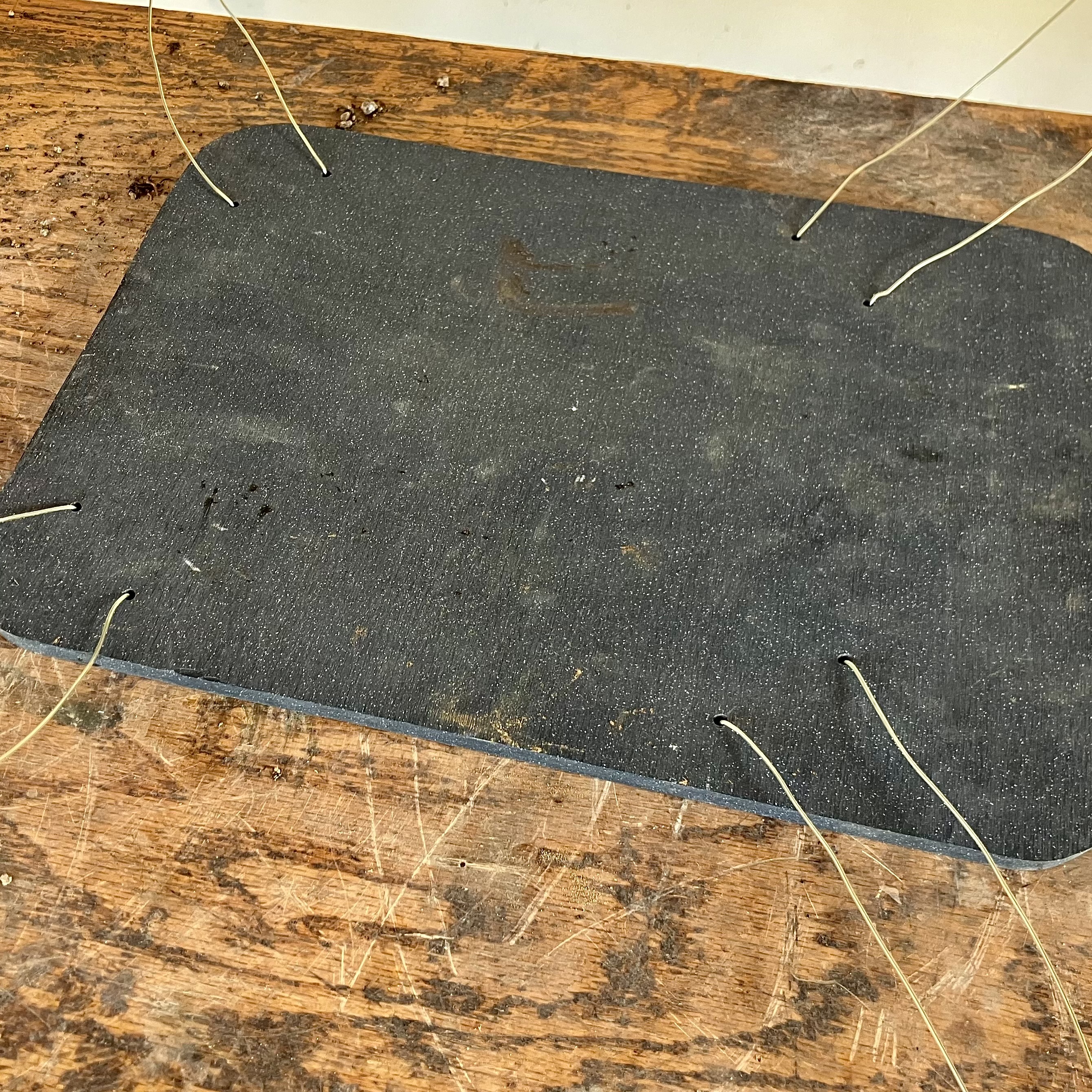
Our Corian slab ready for the rootball, cut to a soft rectangle. The bottom has grooves cut between the wiring holes so it sits flat. No need for drainage holes as the water will just go sideways.
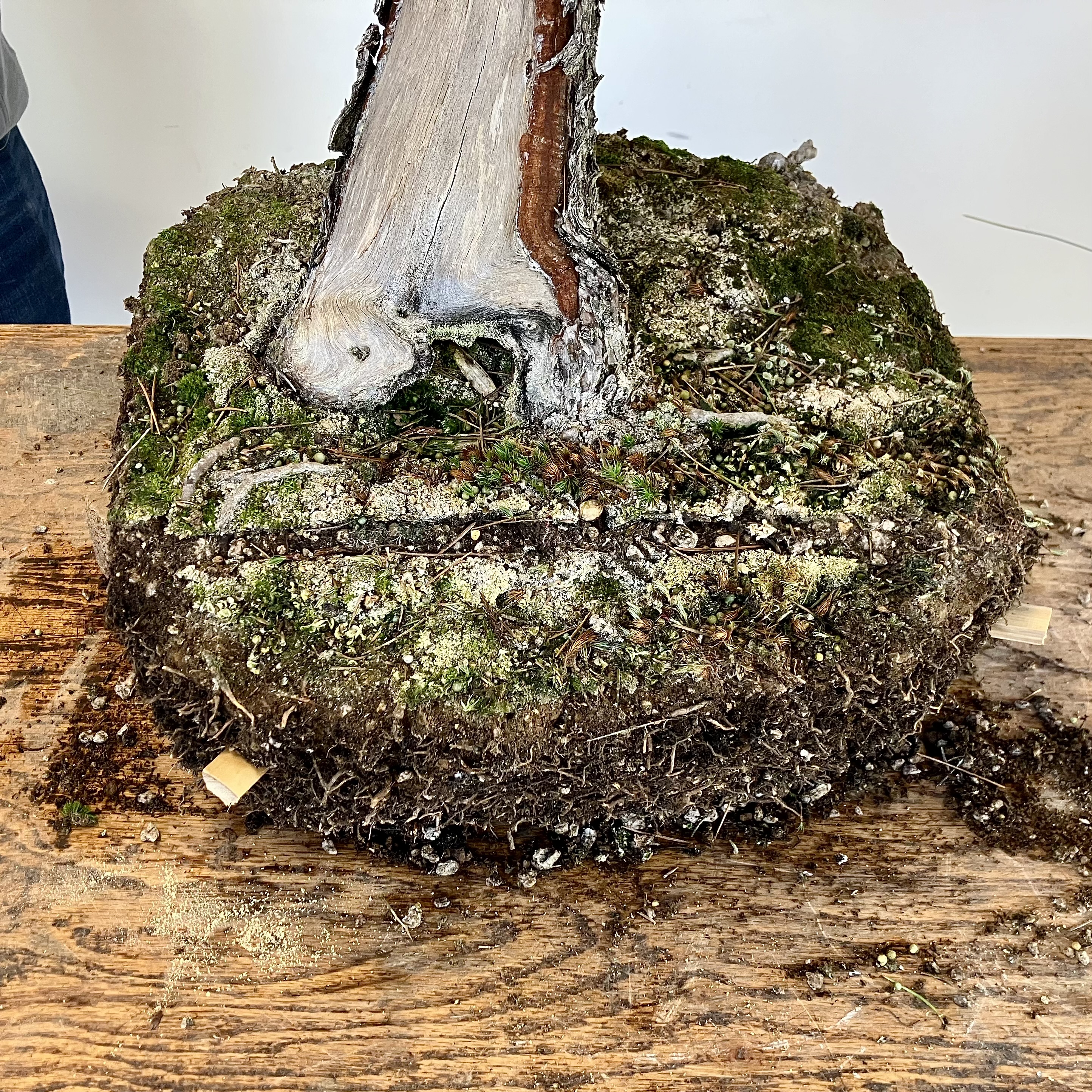
The root ball prepared with stout bamboo stakes in four corners to be used as tie-downs.
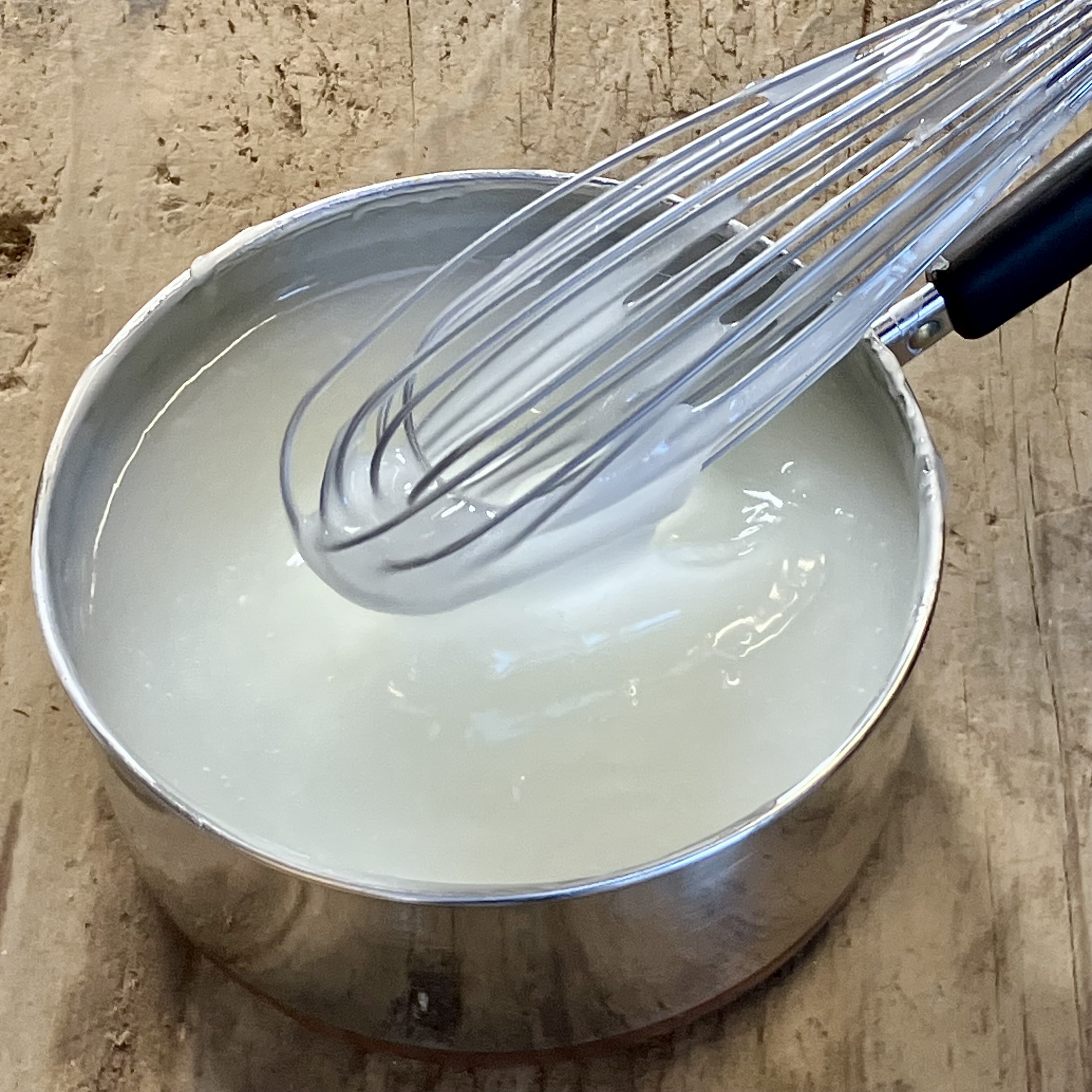
Gelatinous cooked corn starch helps firm up our muck. We use 1/3 corn starch, 1/3 long-fibered (unshredded) orchid moss, and 1/3 akadama dust. Sometimes more corn starch is needed for a sticky mass that doesn’t crack when you squish it.
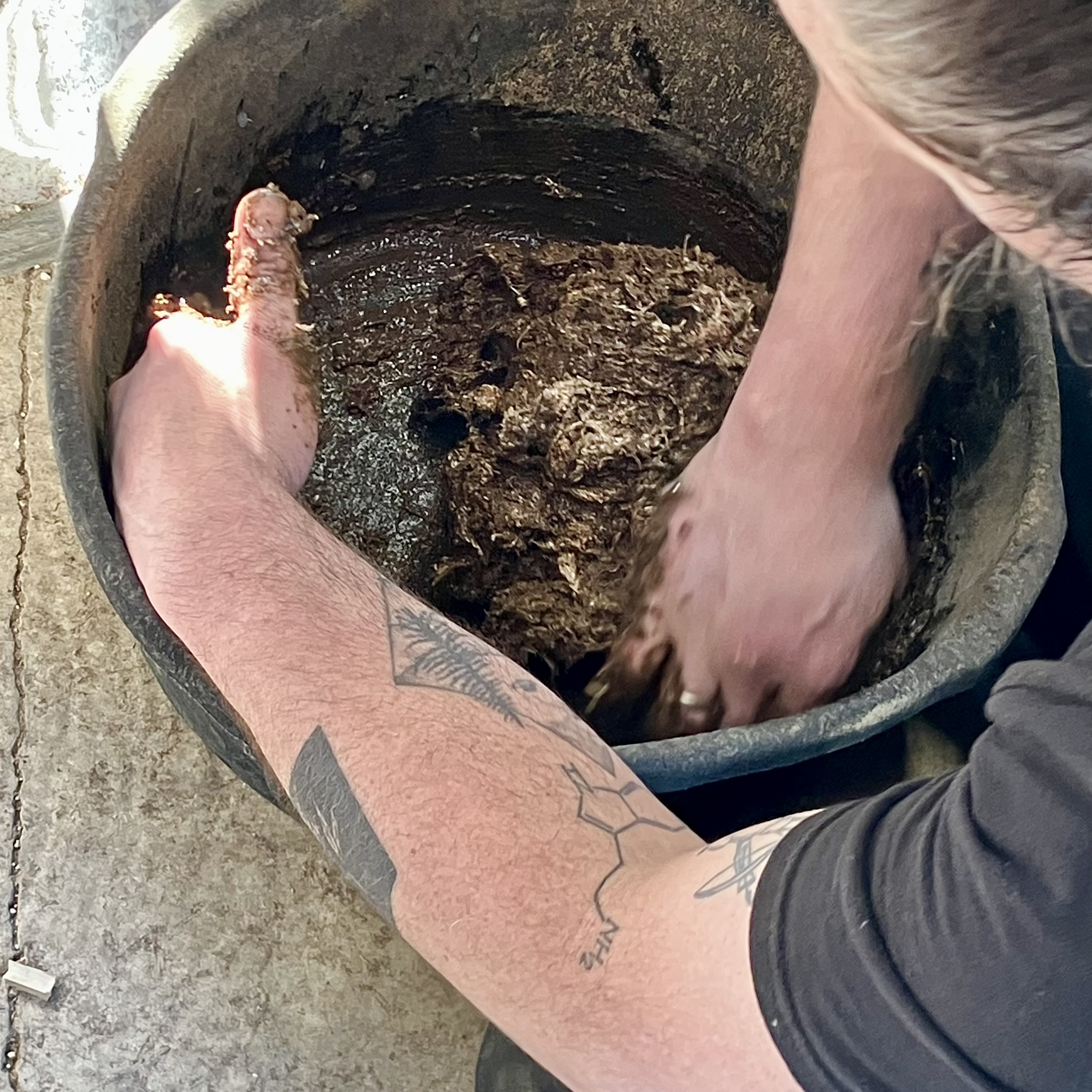
Mixing the muck.
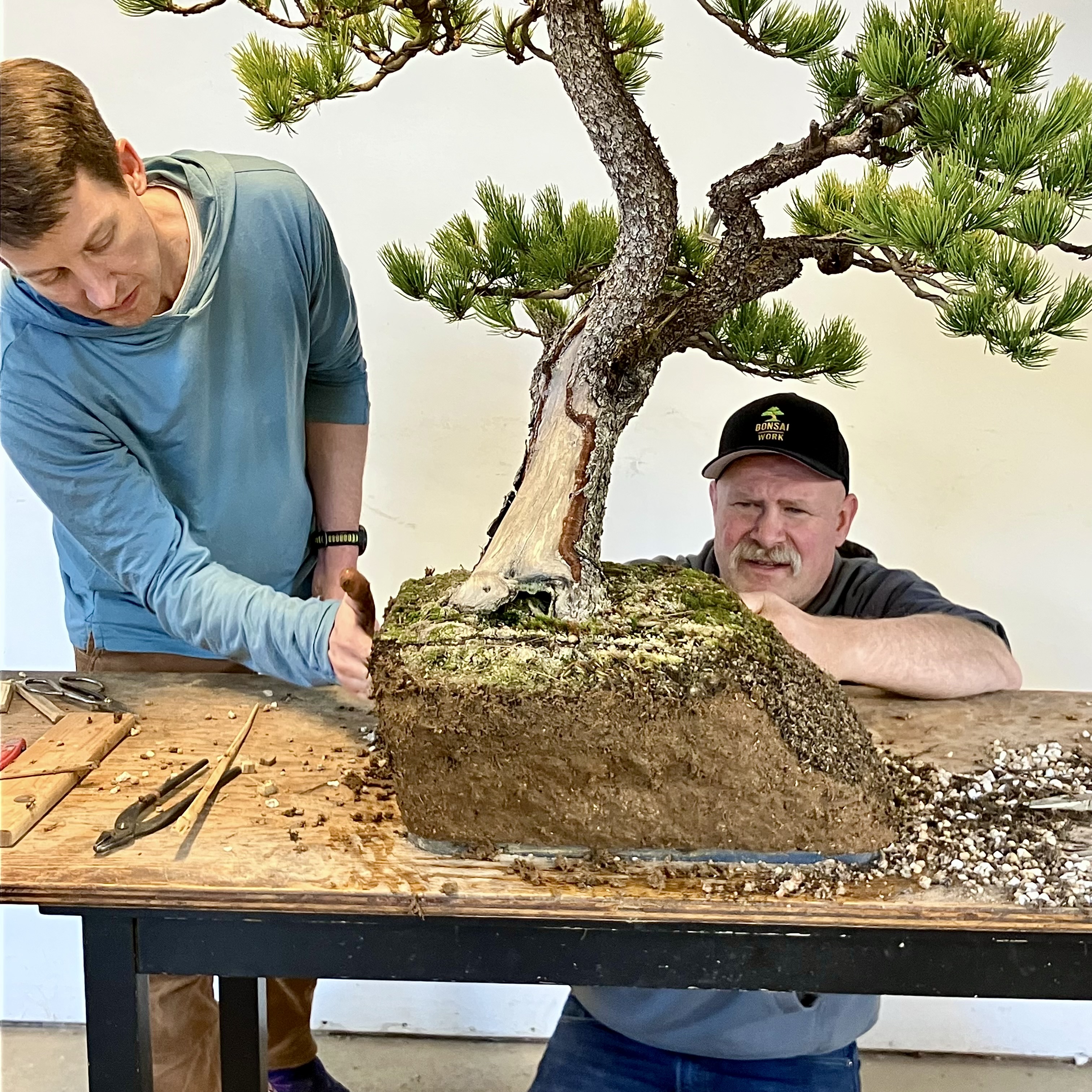
Ted and Chad work the ball. Chad’s hat is clever: bonsai overwork.
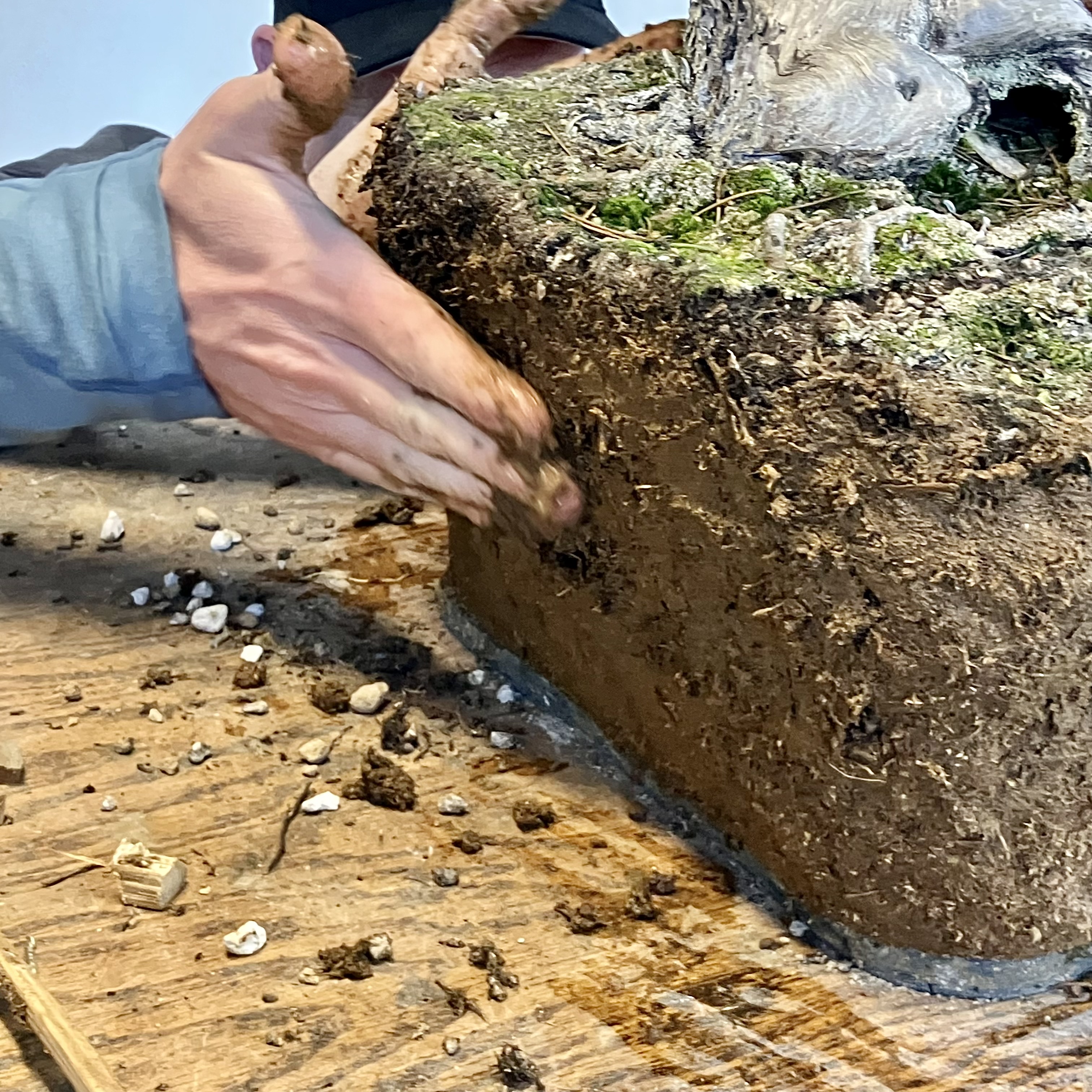
The bottom has a muck wall about 1” thick. Above that is the root mass where we spread on a watered-down muck like a slurry over the cut ends of the fine roots.
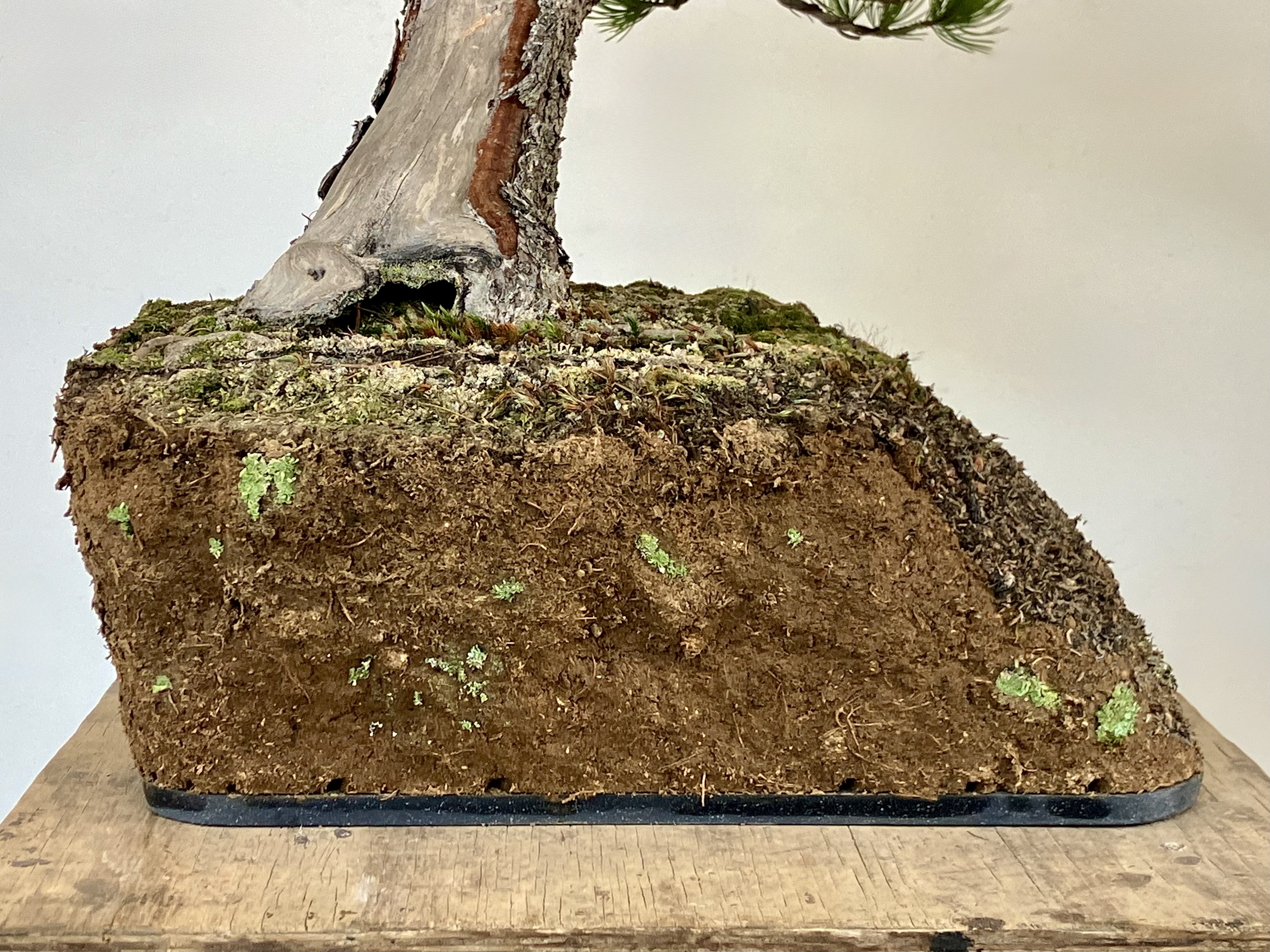
The finished slab planting. A few lichens adorn it to jumpstart the colonization of the new surface. Holes were punched in the bottom edge so when it’s watered, we don’t get a blowout of the muck wall from a gallon of water seeking escape. Had that once. Moss and lichen will cover the holes in a year or two, but once roots grow into the muck the protective job of those holes is finished.
The slope to the right has no muck on top, just soil with sphagnum over it for better water penetration.
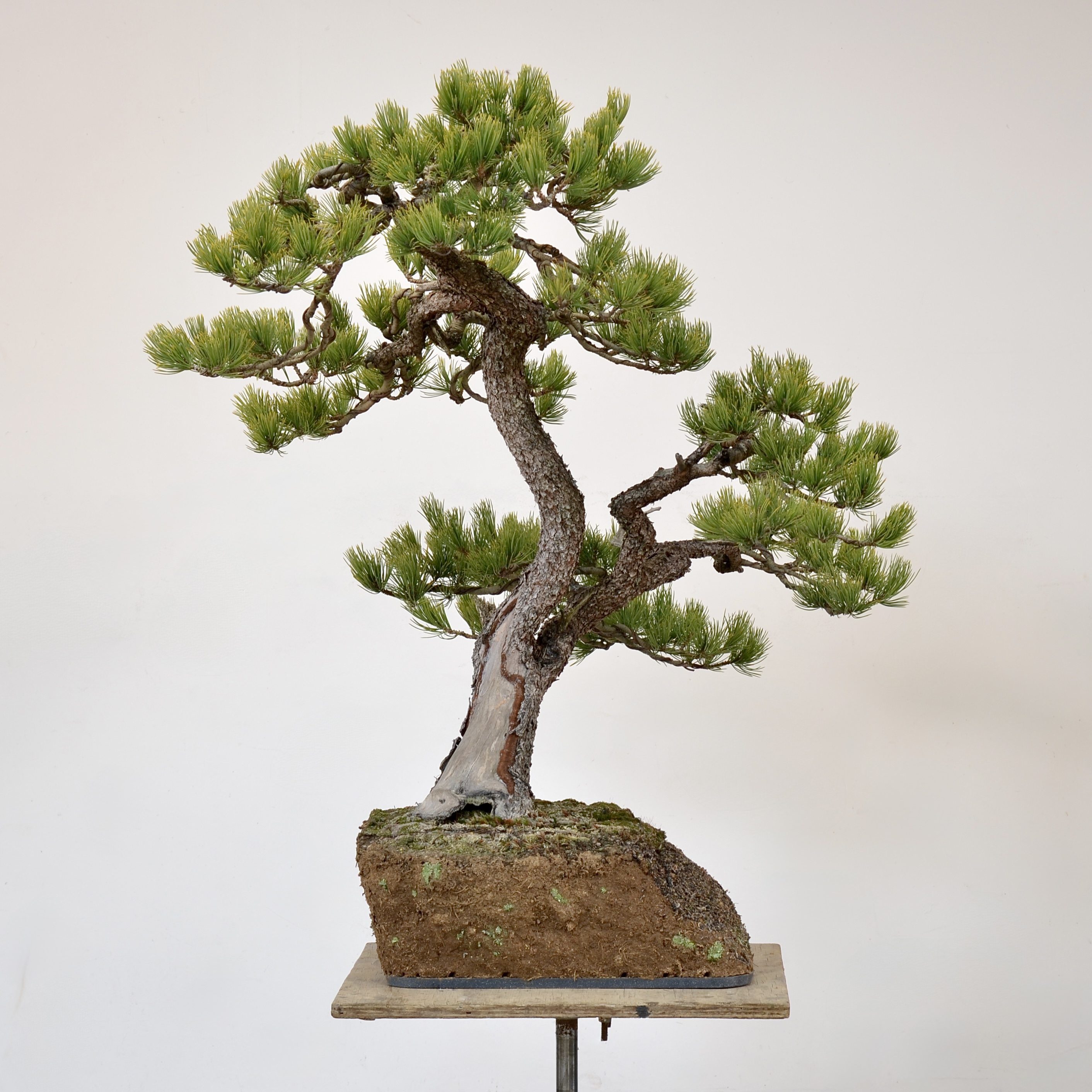
Here’s the finished piece. It’s not like a pot. But it has some clean lines and a pot-like mass. The slopes might suggest movement and direction with a flow to the right.

Inspiration? I didn’t notice the similarity of this DeWalt battery pack until several days later. Hard to claim inspiration if you don’t remember seeing it, though the mind is a funny thing.
For the backstory on this tree, here is the Limber Pine’s First Styling.
Then Maciek Adwent helped rework the design in this video in 2024:
7 Comments
So… it will be forever known as the “Battery Pack Limber Pine”? Cheers sir. Good to hear from you guys.
😁. BTW your muck recipe is bitch’n!
Now that I like. Battery Pack Limber. If we make it lumbar my back will approve.
Glad you like that muck recipe!
I believe this is the first time I actually seen a recipe for muck. Using corn starch is genius. I’m wondering how long does it last before it naturally erodes? Because I’m thinking of using that to rap around a root-over-rock tree instead of slowly cutting away a plastic pot. My suggestion for a Limber pine name is- “Walter Pine” ie DeWalt
Hi Joe, hope the muck recipe works for you! The muck needs to be peanut butter soft when applying. Overnight it stiffens, so it’s best to not water in your plant until the next day. And then I guess the corn starch would just become food for the roots when it breaks down.
Walter Pine! Alright then-
Hi Mike and thank you for sharing. Usage of the corn starch and its characteristics in your muck recipe makes a significant difference and I think many people (me included) would appreciate if you share more about it if you can: Unless this is the first time you all had done so, what is your experience with usage of the starch this way so far? How does the stiffened starched layer behave in time and in wet conditions?
And, I think the starch (or something similar) could open a new door for some alternative applications too – for example, if repotting a tree, when a large/complicated root ball comes with a risk of leaving empty cavities where the new substrate would be difficult to get by chopsticking and/or when an extensive root damage by chopsticking is expected, how about to mix some cooked starch with the repotting substrate, fill the mix in the root ball cavities while holding the tree upside down and then to position such prepared root ball on a substrate mound in the tree’s new pot like normally during repotting? Obviously, it wouldn’t be the starch stiffness but its stickiness which, defying the substrate gravity during the move, would do the trick in this case. So, while some chopsticking still might be appropriate, the mentioned risks would be not less than reduced. What do you think?
Thanks Stan for the comment!
I really like your idea to use it as a hole filling compound underneath a root mass. Excellent idea. Challenging to fill those confidently once a tree is inverted.
I’ve used this muck recipe for over ten years, and like how it stiffens up in the hours after using it—-so, it has a working plasticity much like epoxy, then stiffens. The stiffness does well in rain and resists erosion. The roots seem to like it. They grow right into it, maybe because of the starch and the food that might provide as it breaks down. Also, the long fibered sphagnum helps keep not-very-plastic akadama fines together as a unit in a macro way as opposed to the micro glue of the corn starch. So, it seems to have all the ingredients of a good substitute for keto, the muck the Japanese use which comes from river and pond bottoms. I tend to prefer this corn starch idea (which is NOT my idea, someone in Hawaii was using it and maybe came up with it), as it is not as water resistant as bone dry keto seems to be.
Fascinating! Thanks.
I live along the coast in Ventura County, CA–Mediterranean climate. 85% of the time I have coastal influence and good humidity, but when the Santa Ana winds blow (bone sucking dry), my moss tends to die back in a serious way. How well do you think a muck wall would do, over time, in these conditions? I was thinking to do something less aggressive with a lower forest slab planting (Chinese elm or cotoneaster, undecided). Any thoughts?