A Pine Makeover
Apprentice Patch Clark is back with a Japanese Black Pine. This is our sequel to A Juniper Makeover.
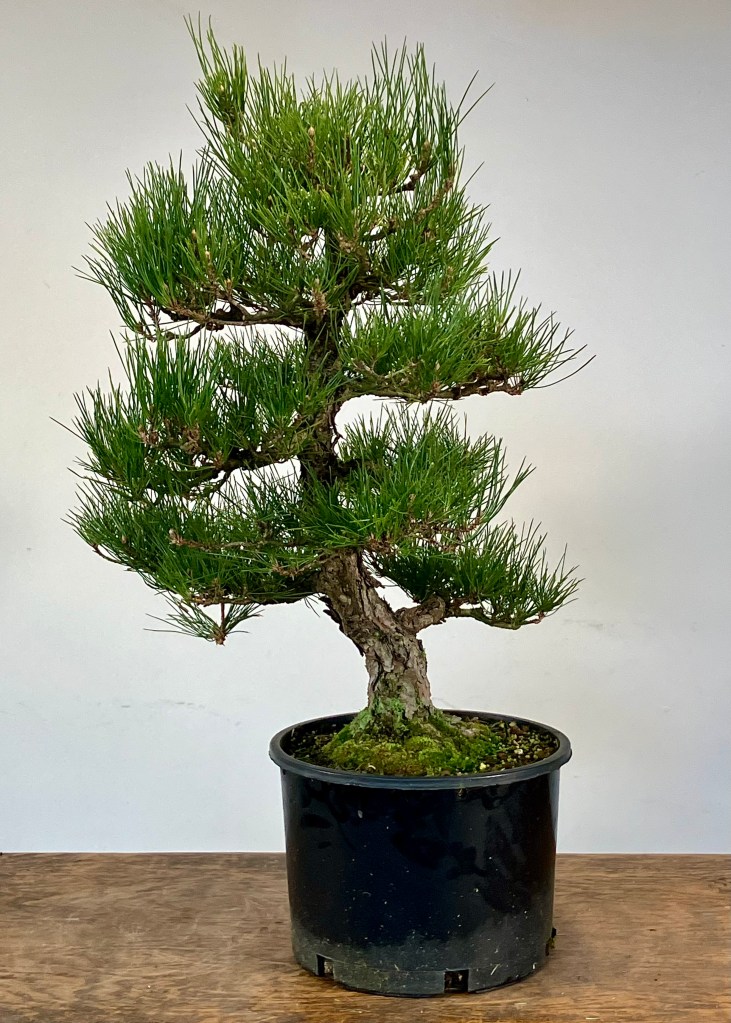
A tall Black Pine with nice bark and plenty of issues. For one thing, after the first foot there is no taper. The branching also has no rhythm or movement, which is why it looks like a stove pipe brush.
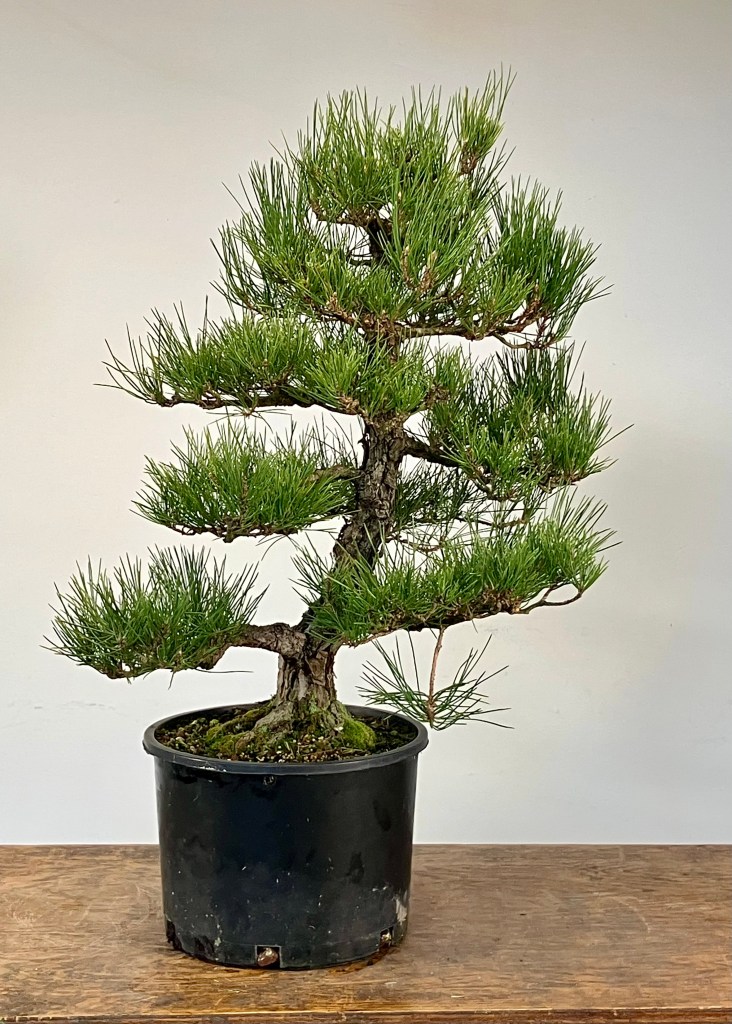
Another view of our pipe brush.
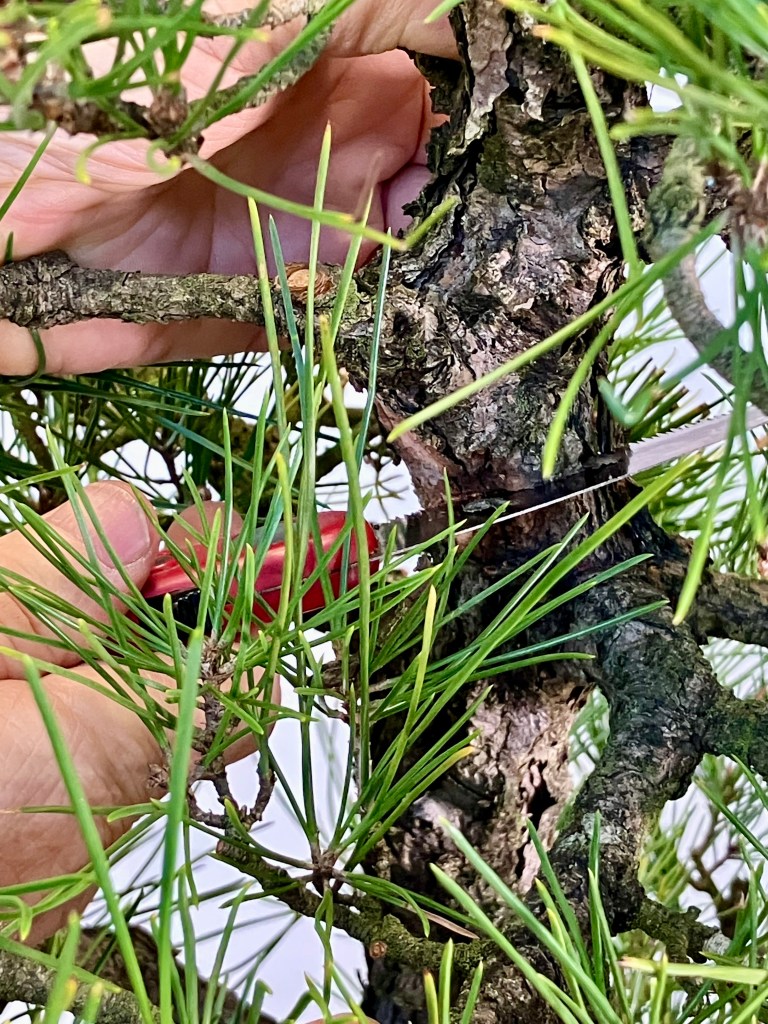
Patch has found a likely spot to reinvent this pine.

And suddenly we have a new story to flesh out.
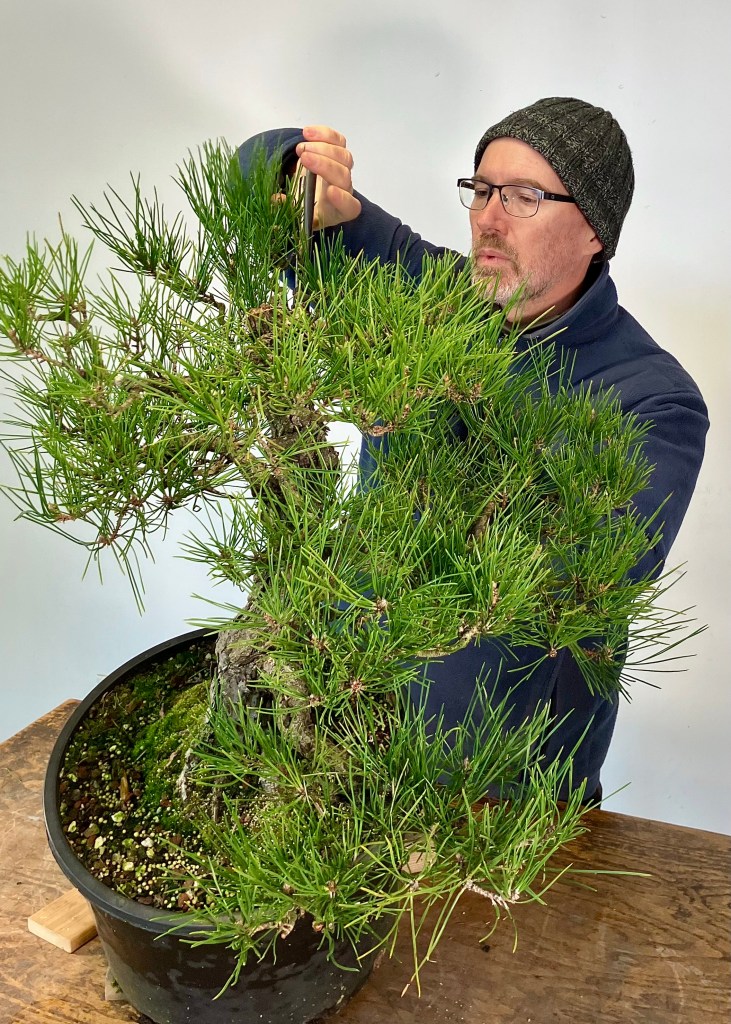
Looking for long, thick or stubby branches to remove.
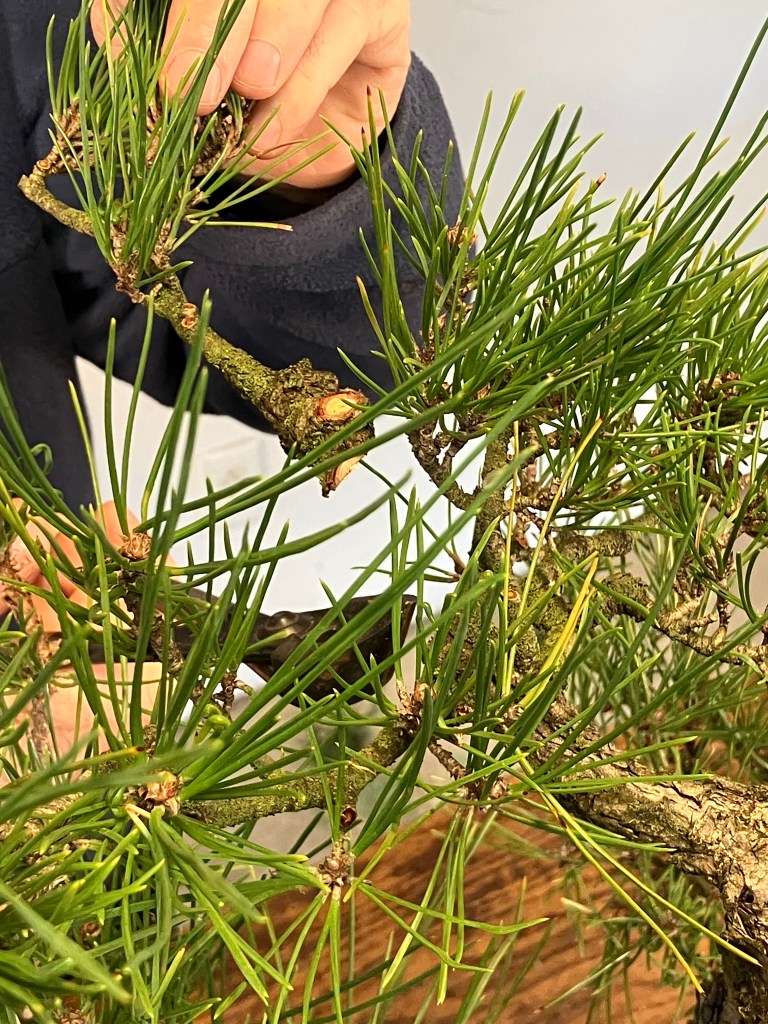
Like this one.

One possible front.

Another possible front.

This pine has a big, low branch with an awkward movement in it. A thick branch like this would look great on a thick trunk, but here on a thinner trunk it looks out of place. It also has a secondary problem. The low branch has deadwood in it. You can remove the deadwood and still move the branch, but it is another knock against using it.
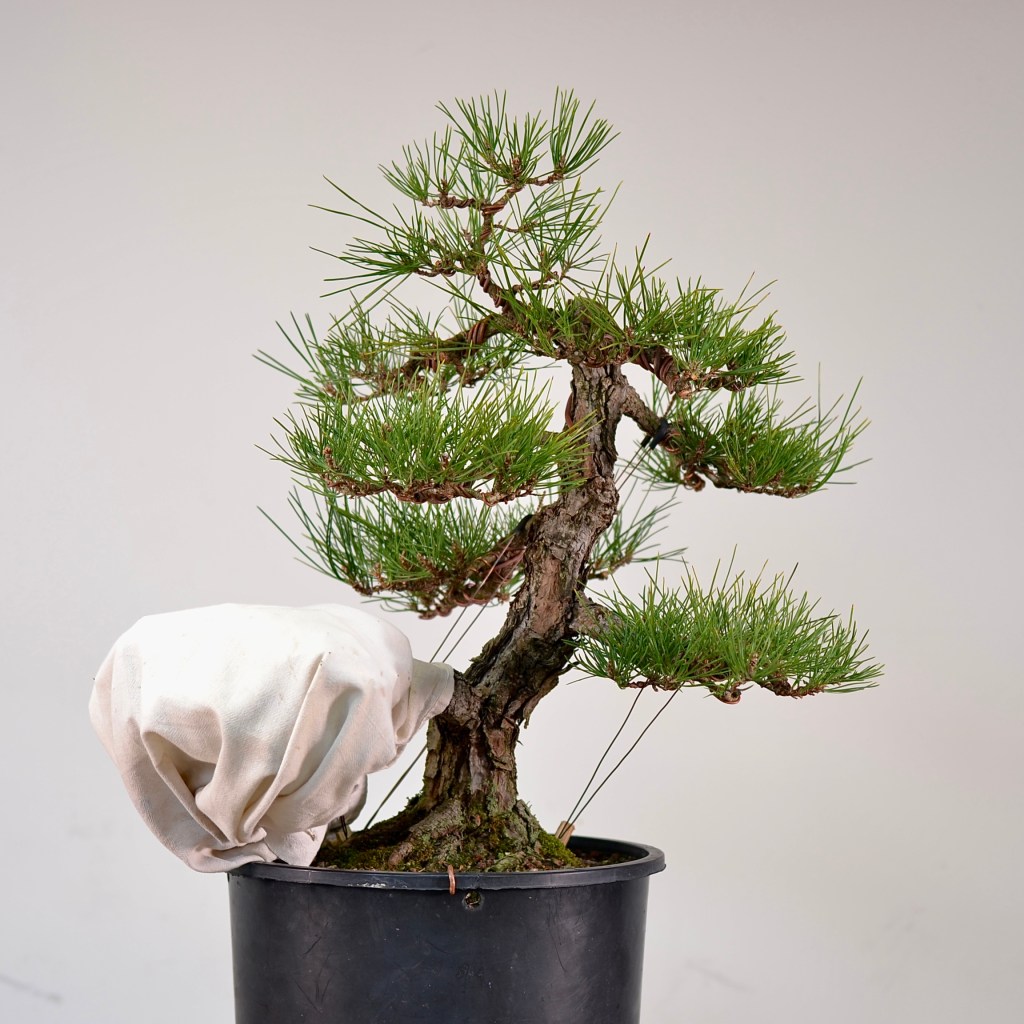
A thought—remove the low branch.
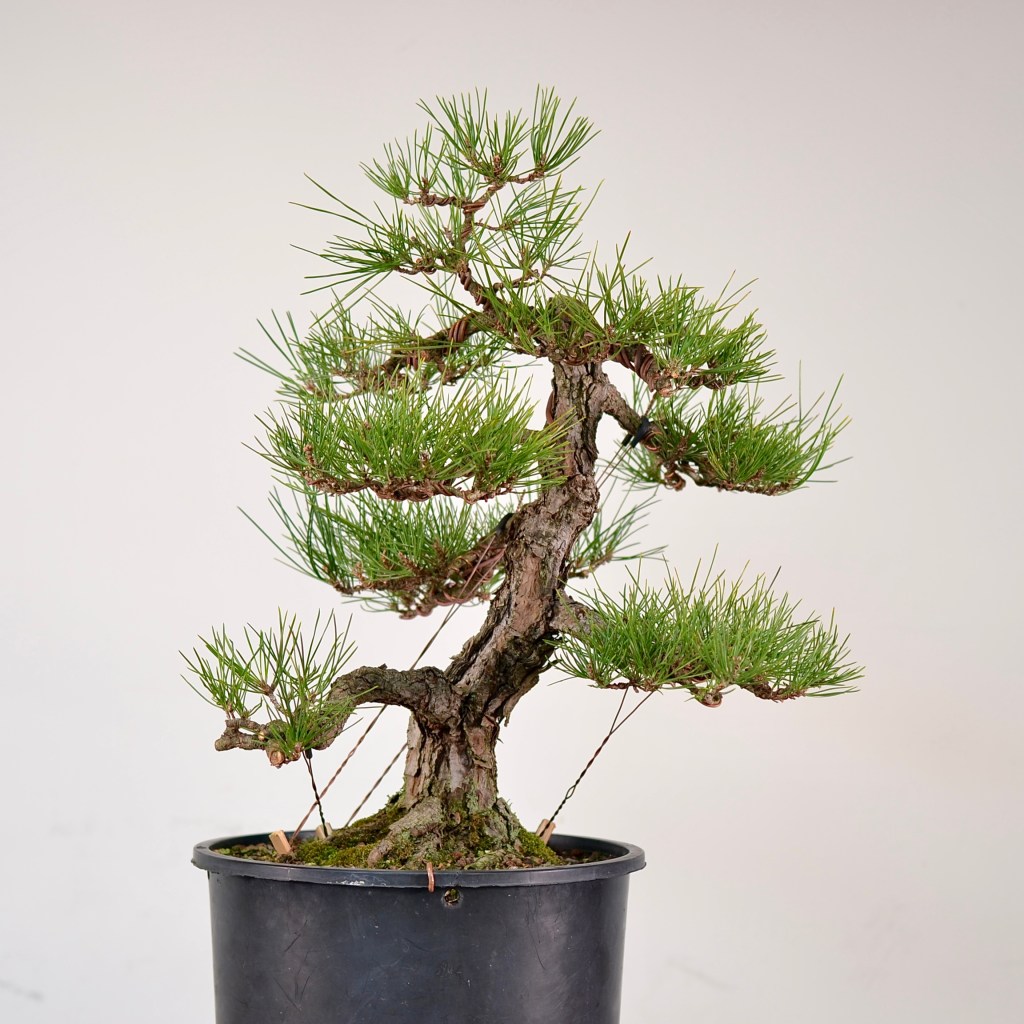
The low branch thinned.

Low, thick branches can cause trouble on removal. If this branch were cut off in one swoop, that may kill off part of the root system. Instead, we weakened it and will fully remove it within a year.
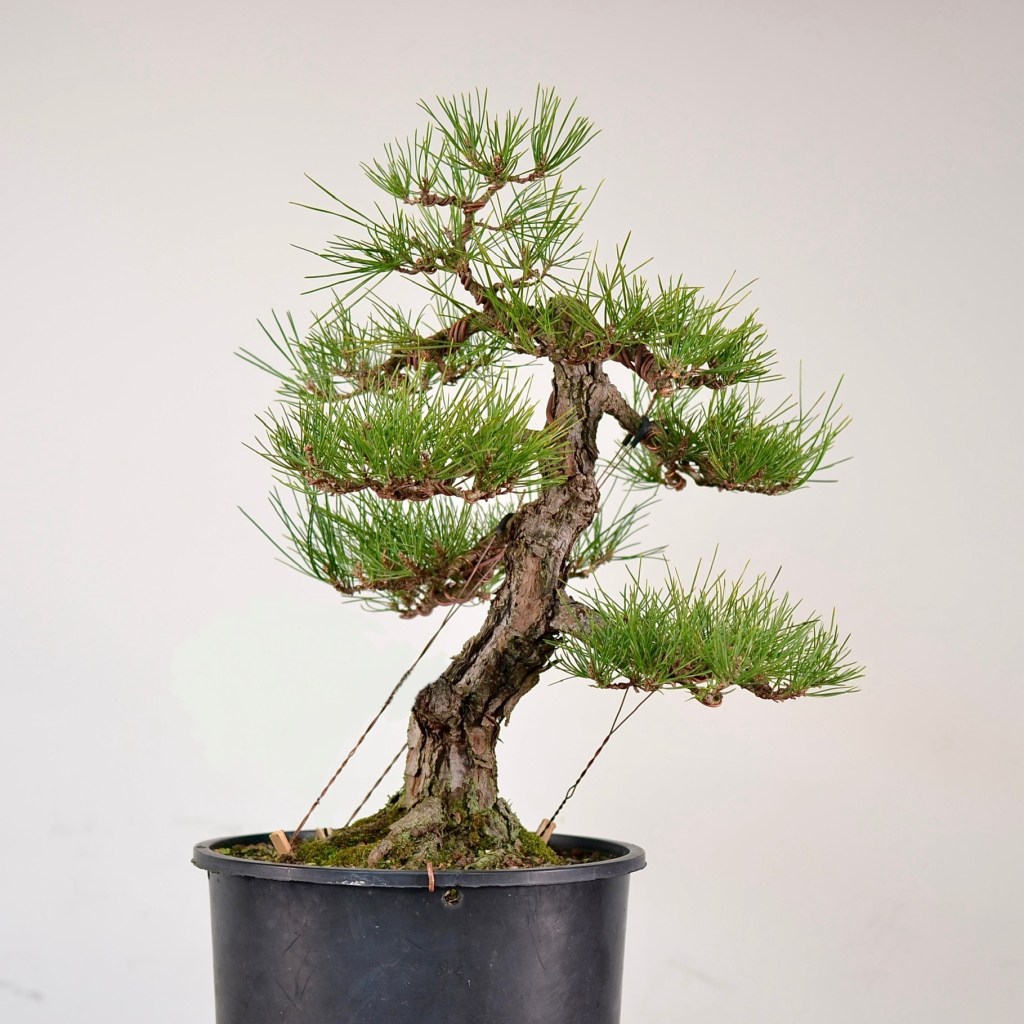
Patch digitally “removed” the low branch to show the future design. Without that thick low branch the trunk looks thicker and gains interest. The stub up on top will be shortened later. And the branch raised to complete the trunk line needs a few years to develop convincing taper.
The redesign was invasive enough that the tree needs a year to recover. We’ll return to this pine next spring for the repot.
12 Comments
Nice! Some cool work going on here.
Thanks Michael!
Another great post! And, congratulations to Patch becoming your new apprentice.
Thanks Ayla!
I’m doing same thing to my pine this winter. After the work you did, will you candle this June or leave till next year. Probably will do final chop next winter.
Brian
Excellent question. Some of the buds look robust enough to candle this year, but only 20% of them. So that may be what we end up doing——partial candling this year with the hope that next year we can do all of them. Sometimes on a weaker tree like this one it’s best just to skip altogether.
Thank you for another great demonstration. I especially like the inclusion of secondary thoughts. Tertiary insight would be amazing but that may be asking you to write a book chapter.
I look forward to a potential follow up.
Best,
Mats
Ha! Yes, tertiary gets bookish. We will try to catch this one again next spring.
Hello all,
I am pretty new to the bonsai world. I live in Castle Rock, CO. So far, I have some deciduous trees and one Colorado Blue spruce in the development stage. My question regarding the spruce is: since I already pruned it hard and repotted it, when should I start wiring it?
I don’t want to stress it too much after the pruning and repotting! Thank you in advance.
Hi Demis, spruce are usually wired in the fall. And good idea, yes, to give it a good break after repotting!
Hi Michael, thanks for the amazing content, as always. I was revisiting this post while going through some of your older content, and I noticed the soil in the photo, is that organic material, like pine bark? I remember from your book that you don’t usually recommend it for more developed material, and I would have assumed a pine at this stage would already be in volcanic soil. Curious to hear your thoughts! Thanks!
Hi Felipe! Yes, that is likely some organic component like bark. We didn’t pot that plant up but that’s my guess. With a young plant, some amount of organic is often an advantage as it holds onto more fertilizer and water, which helps it beef up faster. Yes, in Bonsai Heresy I was mostly talking about established trees, I need to write a book about younger ones maybe…the goals and methods are nearly opposite. Anyhow hope that helps!