Handling Pines
Before I went to Japan I studied with Boon Manakitivipart. He taught how to maneuver your hands in pines to avoid breaking the needles, a lesson that has paid many dividends over the years in not mangling the pines I was working on.
For many plants—juniper or boxwood or ficus, for instance—the position of your hands and how you enter a canopy is not critical. Your hands can come from the top. Zig-zag in from the sides. It really doesn’t matter.
On pines it is best to get in the habit of entering the foliage from the bottom for whatever work you have planned.
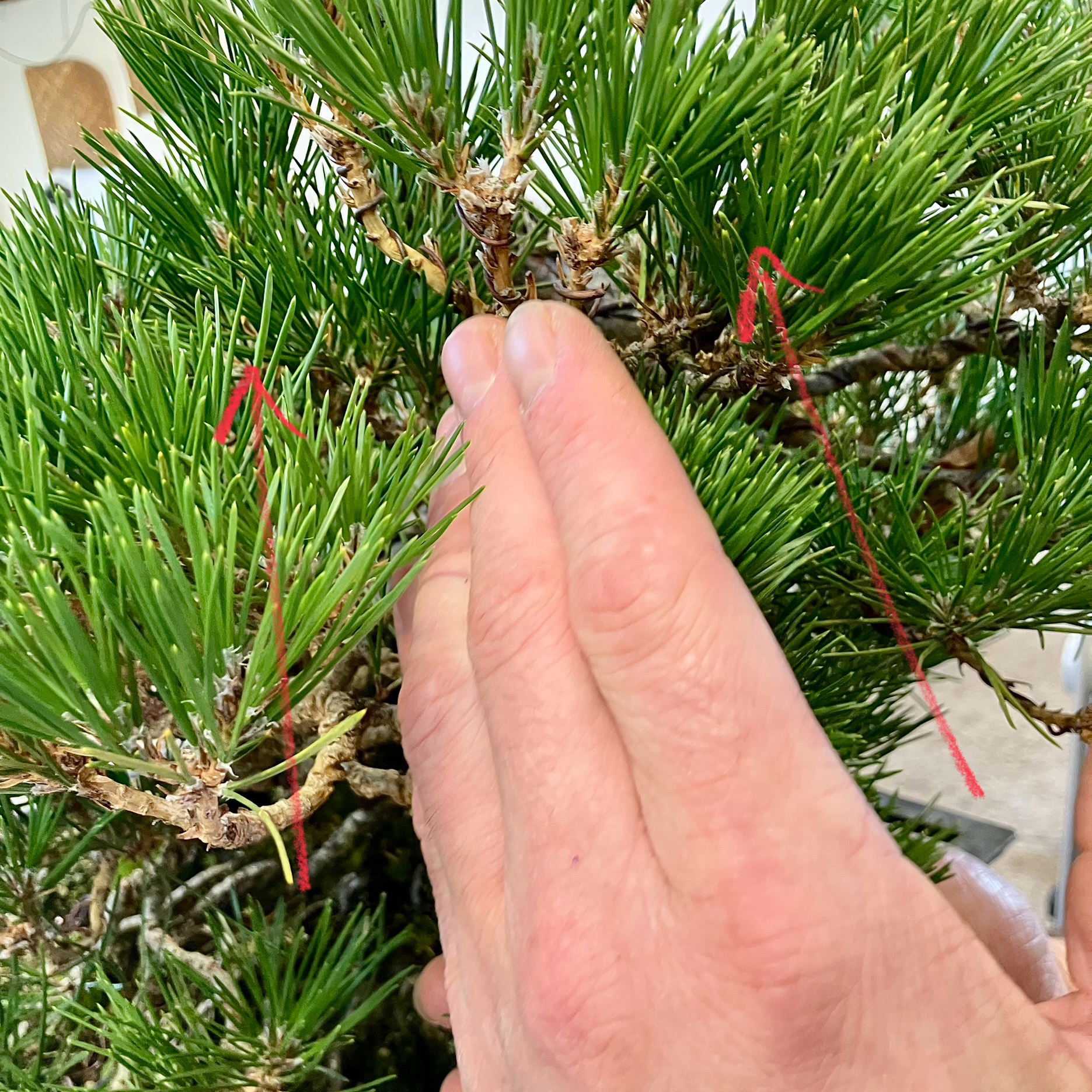
The best way to handle pines: your hand beginning at the bottom and rising through the needles. You can push the needles to the side, and then wire, or take off wire, or pull needles. It is easy to break needles of this Japanese Black Pine, because the needles are stiff and brittle.
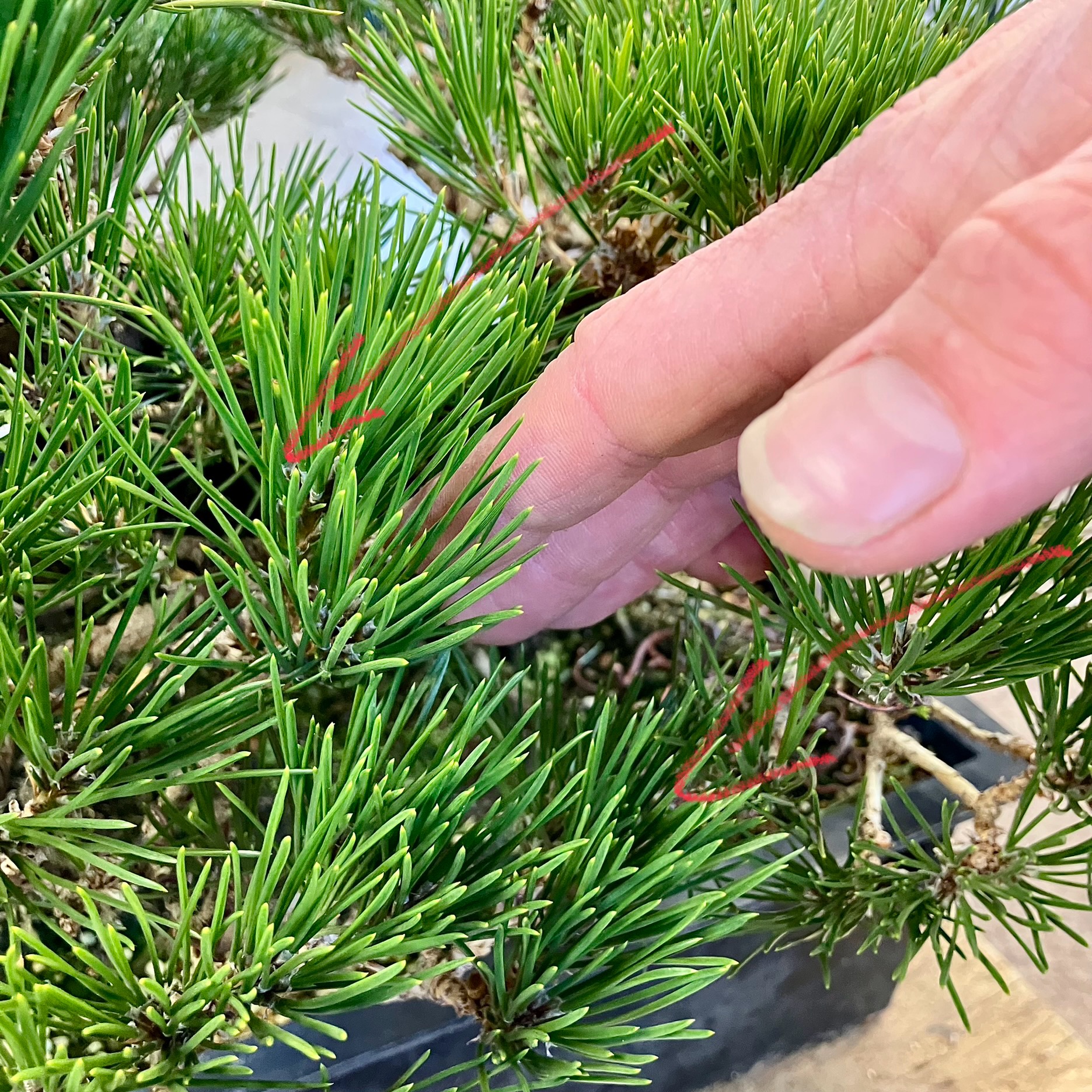 The bad way (as Sting would have it): coming in from the top.
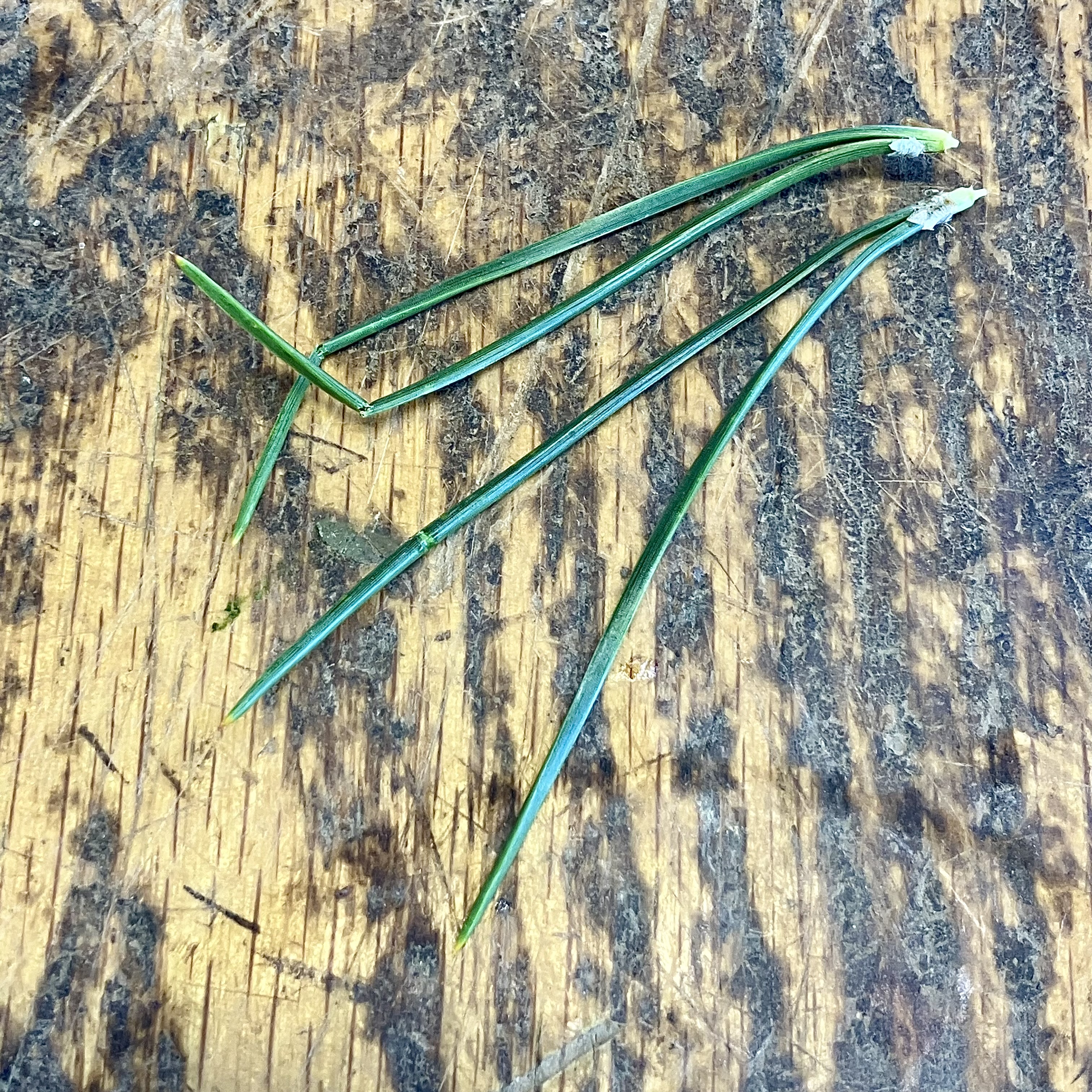
Broken needles, easy to do with poor entry technique. Also, it is best to wire only when needles have stopped growing, as in the spring they are even more brittle.
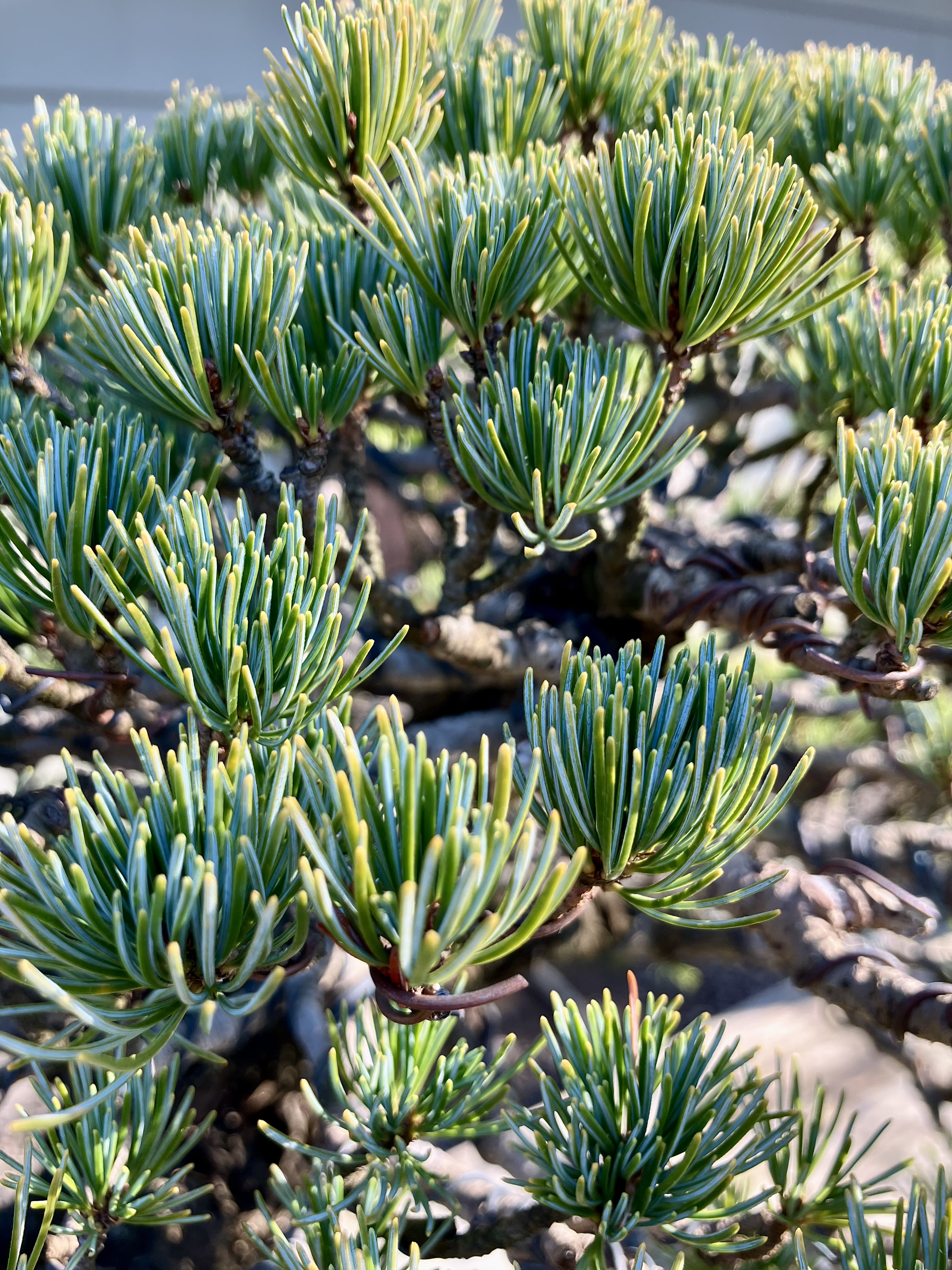
You will notice that Japanese White Pine has a softer, flexible needle that results in less breakage.

Limber Pine is another with needles that will break if provoked, but it also has a softer needle that will bend a lot before it does.
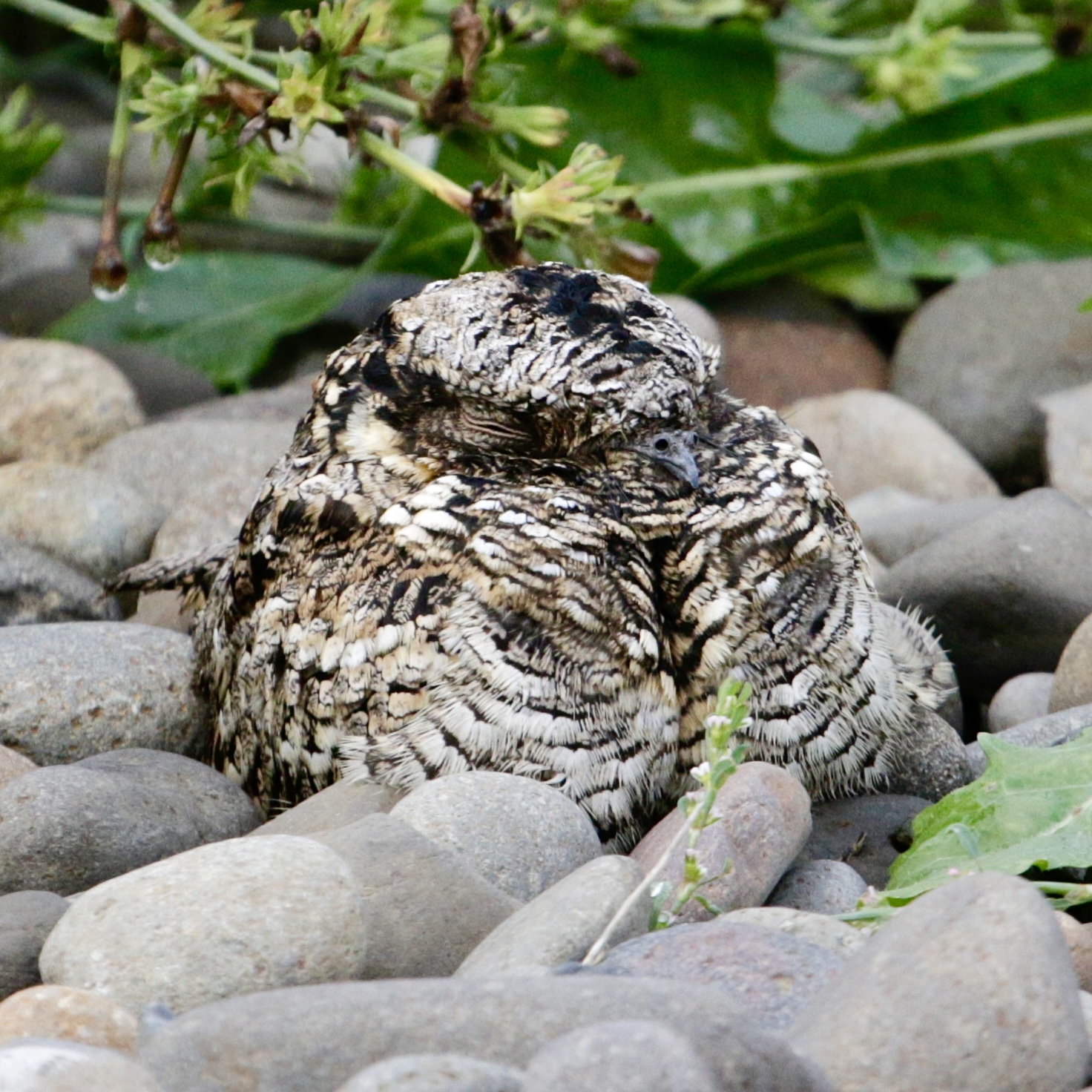
Totally unrelated to bonsai, but fun. This feathered rock is a bird. It’s a Common Poorwill, a bird only seen in Western Oregon a few times a year and I was delighted to get a chance to see one. When it showed up in Portland we had what is familiar in these days of apps—within hours birders flocking to see it, like ants to the honey. The Poorwill a funny little thing that camouflages so well that almost stepping on them is common (in fact that’s how this one was discovered). It also wobbles around every few minutes which is charming, but an odd behavior for a bird disguised as a rock. In the past these nocturnal birds were called Goatsuckers, which we won’t get into.
6 Comments
Michael,
A common sense blog post raising a simple but important topic. He would think I would’ve figured this out on my own, but bring light to the subject confirms I have more to learn.
I’m also happy to have finally seen a Chupacabra!!! Rare indeed.
I’m sure Yacu would have loved to see the bird as well.
Be well,
MH
Ha! Yes, the goatsucker…chupacabra. I heard that Aristotle was the first to spread odd rumors about this poor bird.
But bravo! Glad you’ve seen it too.
We have to find a way to get Yacu up north…
Is that the same as a “Whippoorwill”? I remember listening to them as a kid at the end of the day during the summers when I’d stay with my grandparents.
Hi Wayne, it’s a different bird, but same group. They have huge mouths and eat insects on the wing at night. That’s an eastern bird, and I hope to see / hear one someday!
Michael – wish you had posted this a couple of weeks back when I was working on my black pine . I myself did the blunder of trying to wire from top and broke needles . Such a stupid guy I am ! Only later I found that entering foliage from below is such a better idea . Hard lessons but now your post confirms what I learnt the hard way . Anyways it’s just another lesson in the grand scheme of life long journey with bonsai
Cheers Abhishek! I could have said the same (and maybe did) before studying with Boon.