When Do We Turn Trees?
The common admonition “Turn Your Trees!” is a good one. It’s even better when framed by a few qualifications.
Turn trees every week or two when trees are:
- Dense
- Next to walls, such as close to a house
- In the growing season
- Taller, where the height of the tree might shade lower portions
Yet:
- Broad, high canopy trees need less turning
- Turn cascade trees less often; cascading branches benefit from being pointed south
- Not important when trees are in dormancy
Loose trees do not need turning. Young or recently collected often fall into this group.
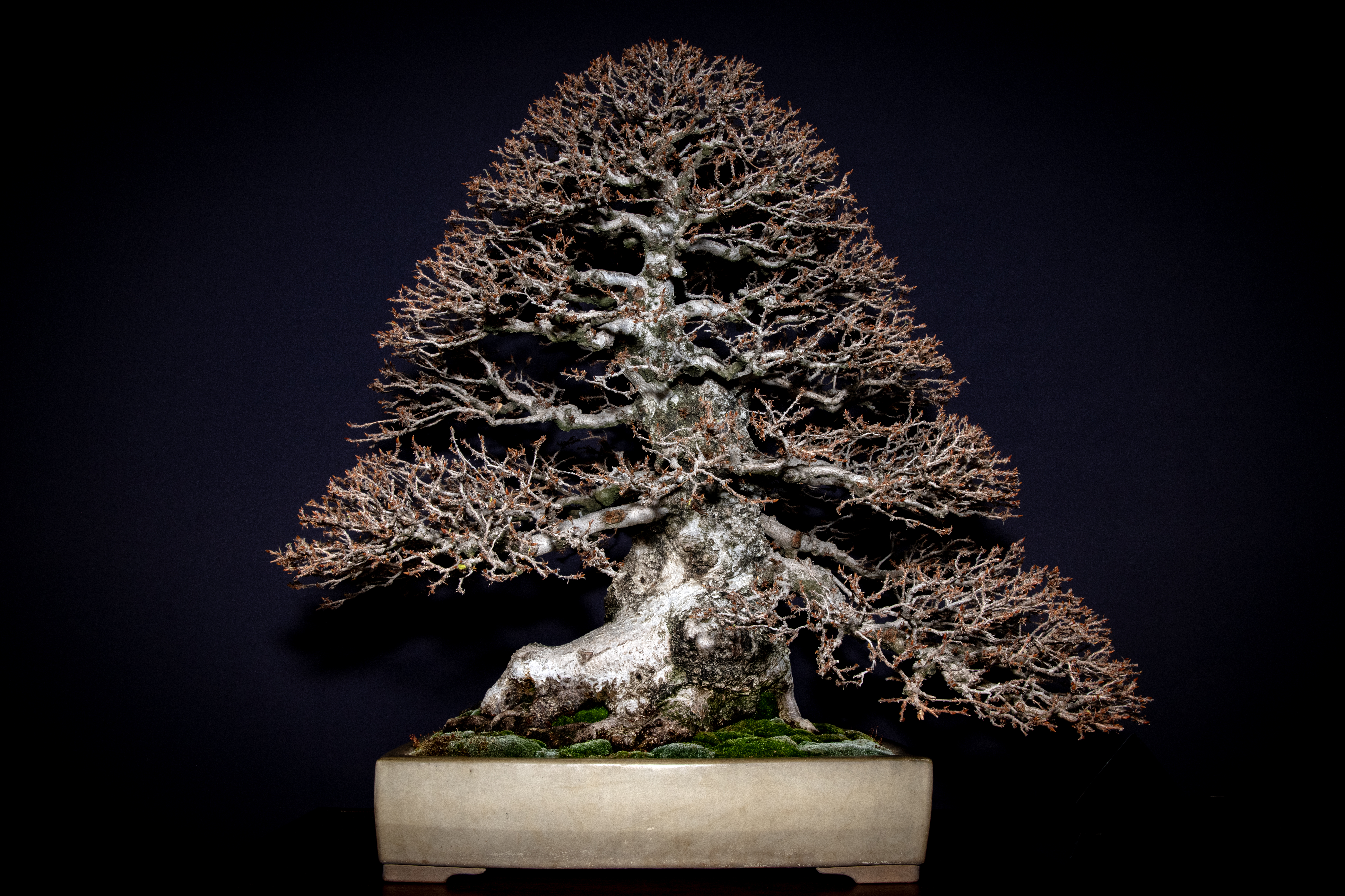
A Hornbeam from the 2024 Pacific Bonsai Expo. A tree like this, in leaf, is going to be dense enough to appreciate frequent rotation. Without that, some branches are favored for light over others, which then translates into imbalance in strength and weakness. The height of this tree relative to the branch length also suggests more frequent rotation.

Bonsai from the 2024 UBE show in Spain with longer branches. The strong 45 degree angle to the canopy all around suggests less frequent rotation. The overhead summer sun hits all areas.

A cascade from the Pacific Expo which would benefit from the lowest area pointing south. Otherwise the rest of the tree shades the lowest branch, which, being already the weakest part of a pine, then is at a double disadvantage.
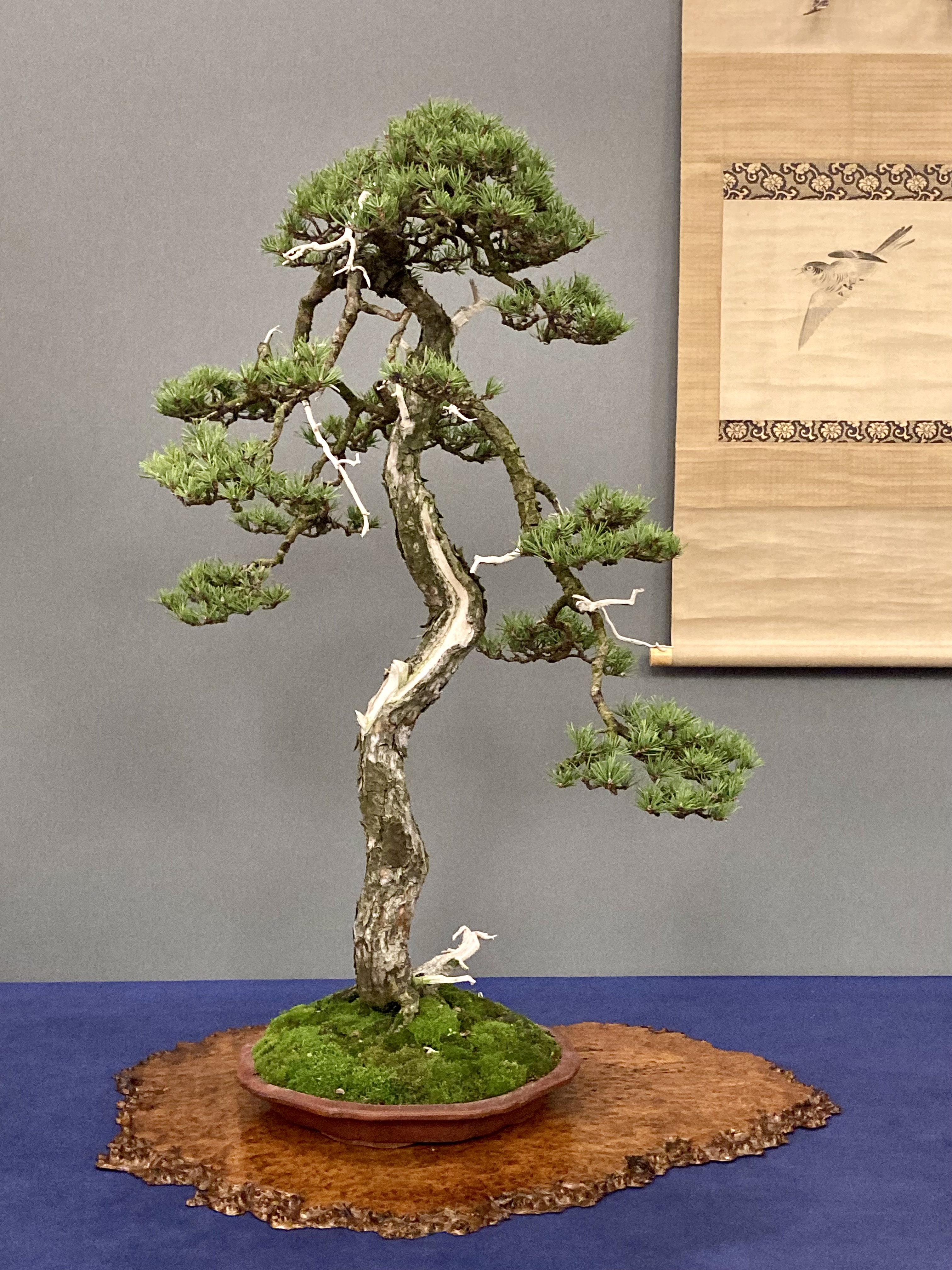
This Scots Pine from the 2024 UBE show does not need frequent turning. The tree is open with plenty of light available for the branch pads. If it sits in the garden next to a wall, that’s another story. Self-shading and external shading are both considerations for rotating trees.
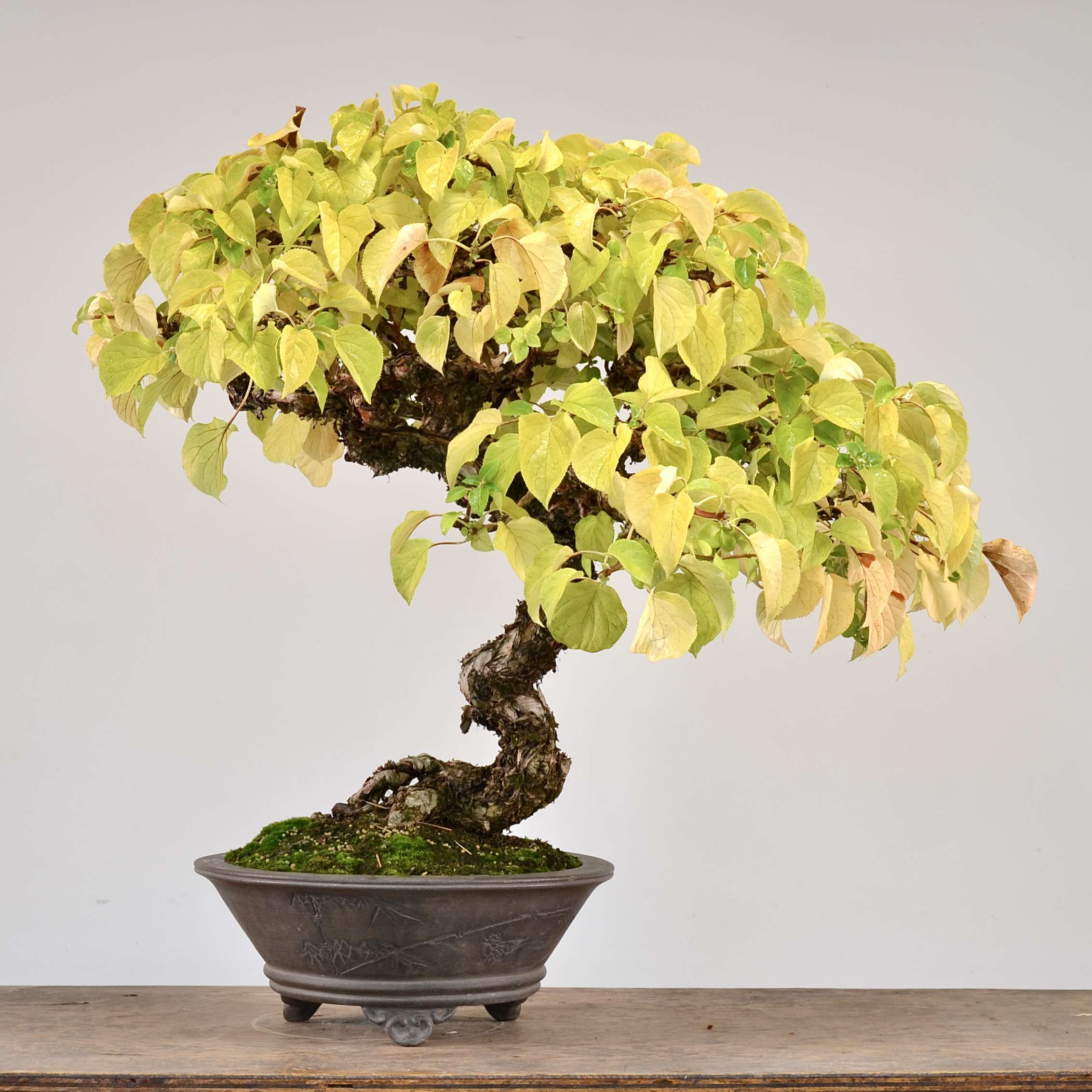
Bonsai like this Climbing Hydrangea do not need frequent turning. The canopy is broad and high and light is plentiful.

An open, unstyled tree that does not need turning.
These suggestions might be more useful to those with many trees to consider, or many large trees, with a limited supply of turntables. If you have a small collection, you would not do wrong to turn everything occasionally.
2 Comments
Great Post Michael!
Especially like the fine distinctions
One additional thought perhaps might be considered, if you haven’t already mentioned this in previous posts.
Certain trees placed too near a wall, especially non coniferous, azaleas, maples et al appear to be susceptible to heat damage. Also near light and white walls, reflected light.
Do you think with a substantial percentage of this light and heat radiation directed to the underside of the leaf undersides. That this might trigger stomata closure and potentially shut down photosynthesis with associated growth or health issues?
Yes! Walls make things very unhappy in the summer.
That’s a very interesting question, and I don’t know the answer to it, about the stomata. I think generally they want to close during stress, but maybe someone else would like to chime in in this instance?