The Oaks of Spain
In January I visited Spain for their national bonsai show in Madrid, and for a personal birding trip. Although the bonsai part of the trip was superb as expected, during the birding days my guides brought me to see some of their old oaks. Some are just magnificent specimens. Others were part of an ancient agricultural practice that fascinated me.
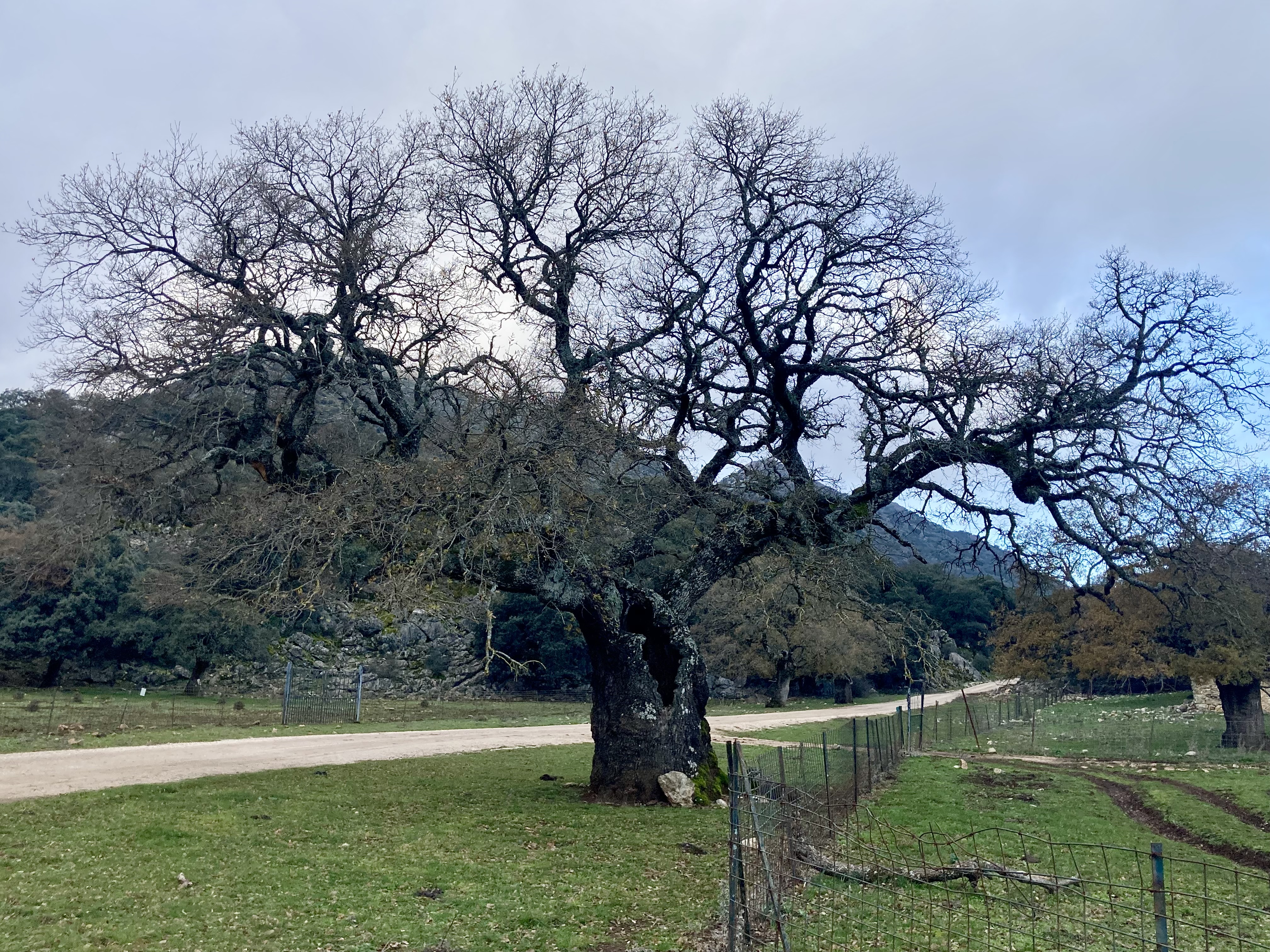
Portuguese Oak in Andalusia, southern Spain. My birding guide Florent (an ex-pat Frenchman), on learning I was interested in trees, brought me to see Portuguese Oaks in the mountains. These are semi-deciduous, and huge.
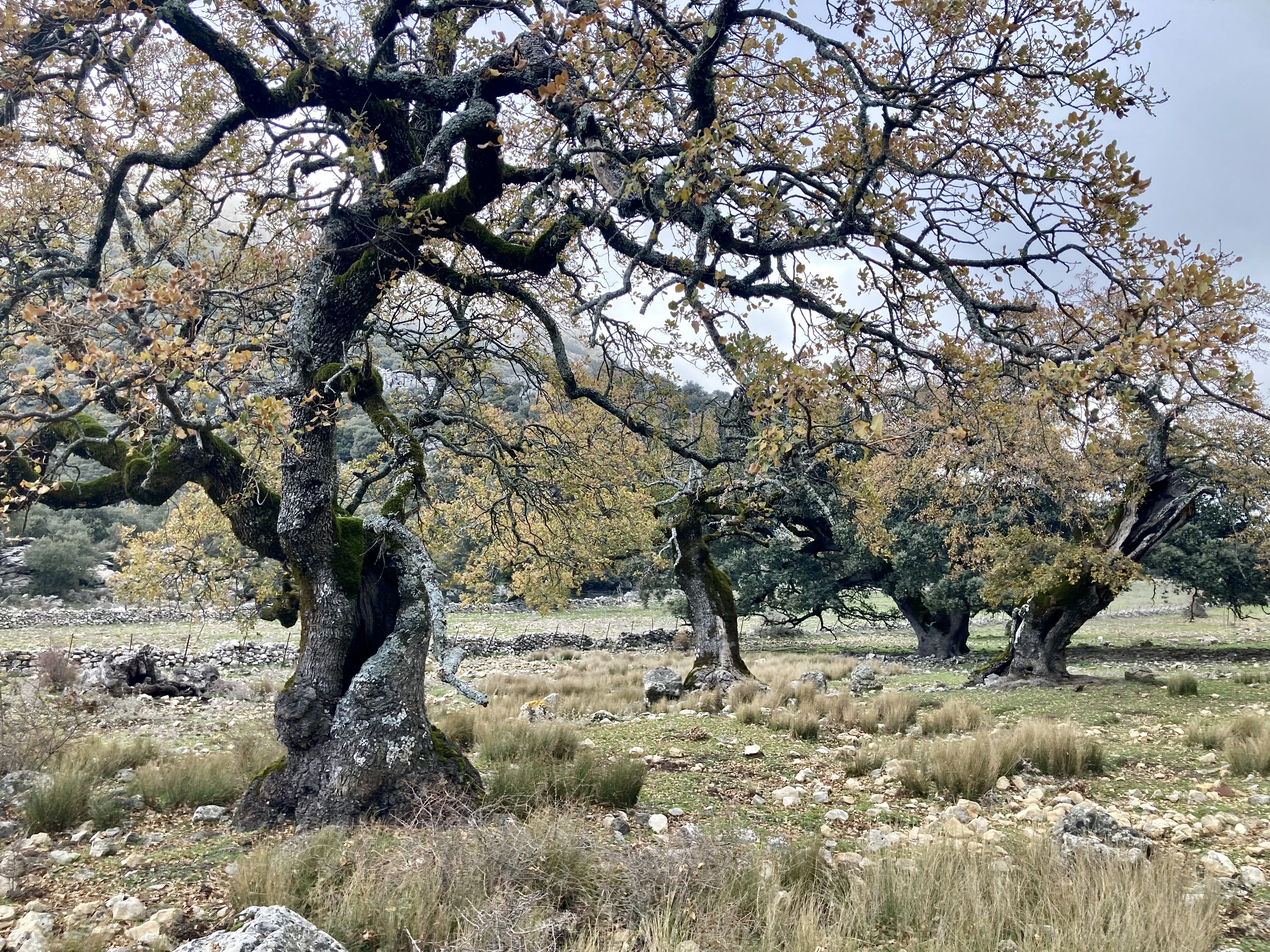
Portuguese Oak in the foreground, with an evergreen Holm Oak in the background.
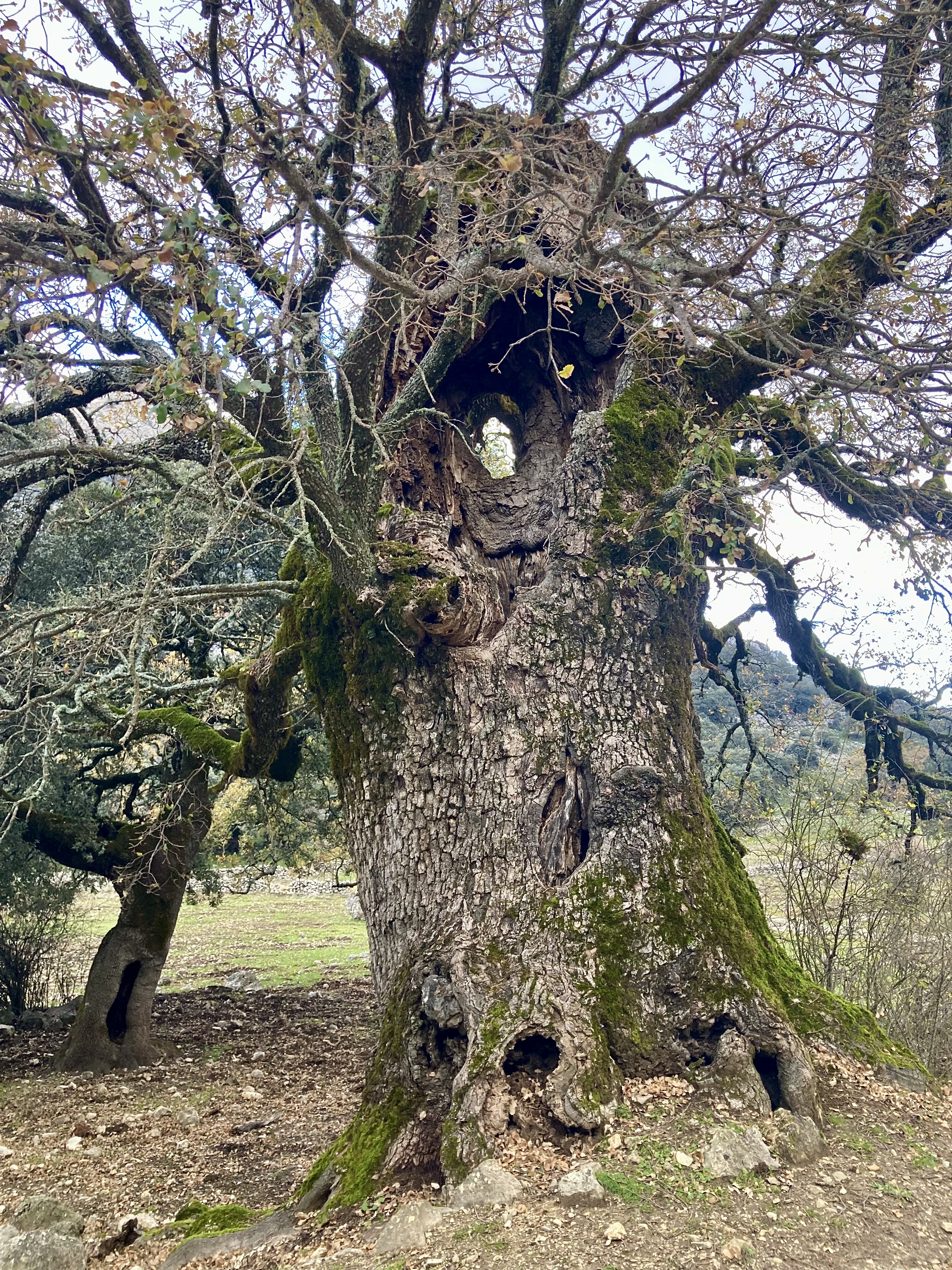
Another Portuguese Oak with a story to tell.

This is the Dehesa forest that stretches west from Madrid into Portugal. A huge managed agroforest, it is comprised of Holm, Portuguese and Cork Oaks.
On the highway the Dehesa stretches to the horizon, oaks dotting the rolling hills. It almost looks like an olive orchard at a distance, for the trees are not tall, only 20 feet or so, which is not the normal height of a mature oak. They are pruned annually for firewood. And that begins the tale of the Dehesa.
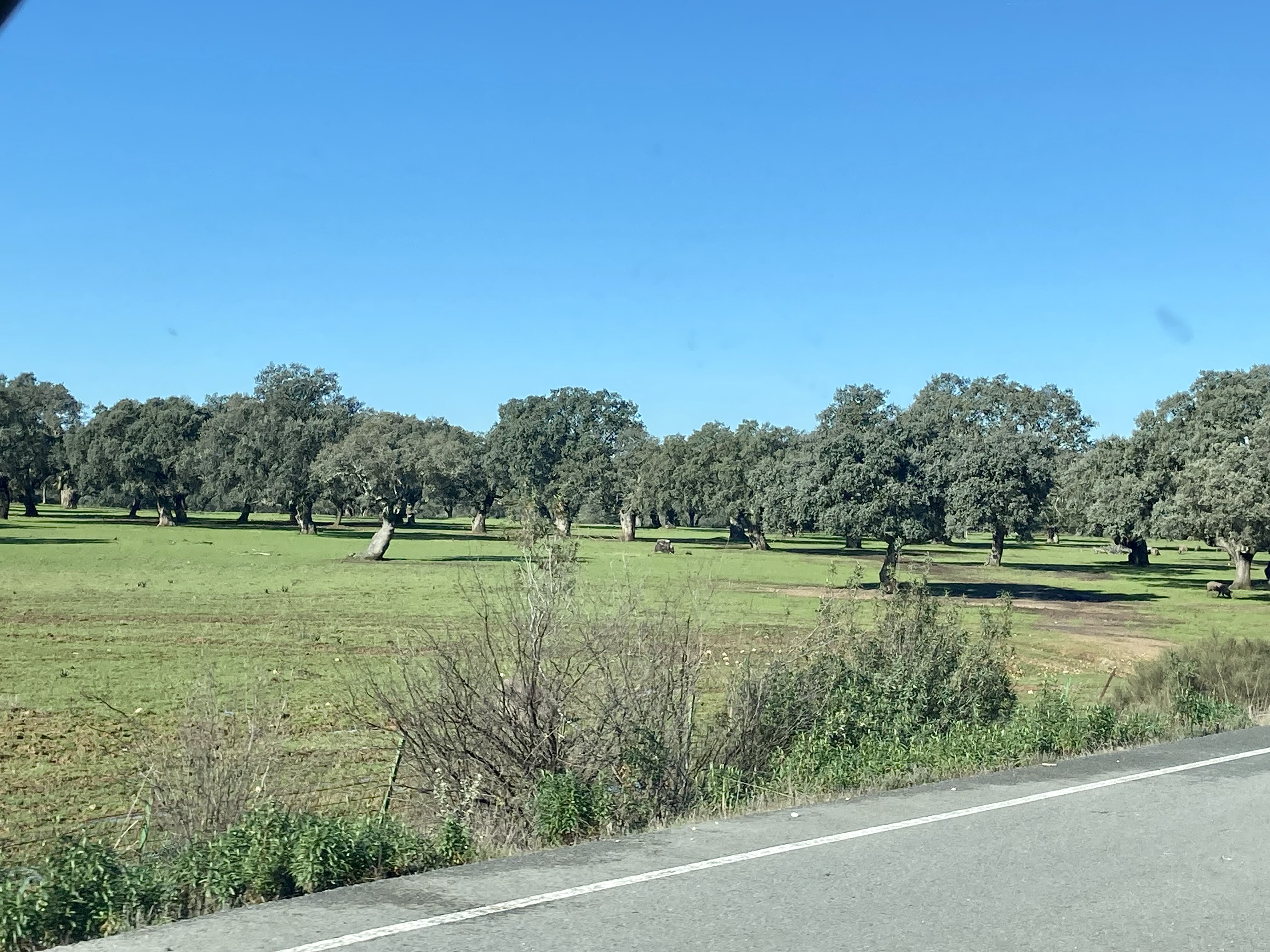
These are Holm Oak in the massive rural region of Extremadura, Spain (one of the hotspots in Europe for birding, incidentally). If you look closely you can see a pig off to the far right, under a tree. The presence of this pig is another clue to the Dehesa forest story.
The spacing of the oaks allows enough light for grass, for the cows, and oak seedlings are routinely cut to preserve this open forest. But the mature oaks provide escape from the intense summer sun for the livestock, which includes Iberian pigs. And the pigs feast on the nutritious acorns, making an expensive and much sought after pork.
Where Cork Oak is present in the Dehesa, it offers yet another product: cork, which is peeled off trunks in a 9-year cycle for flooring, footwear and insulation.
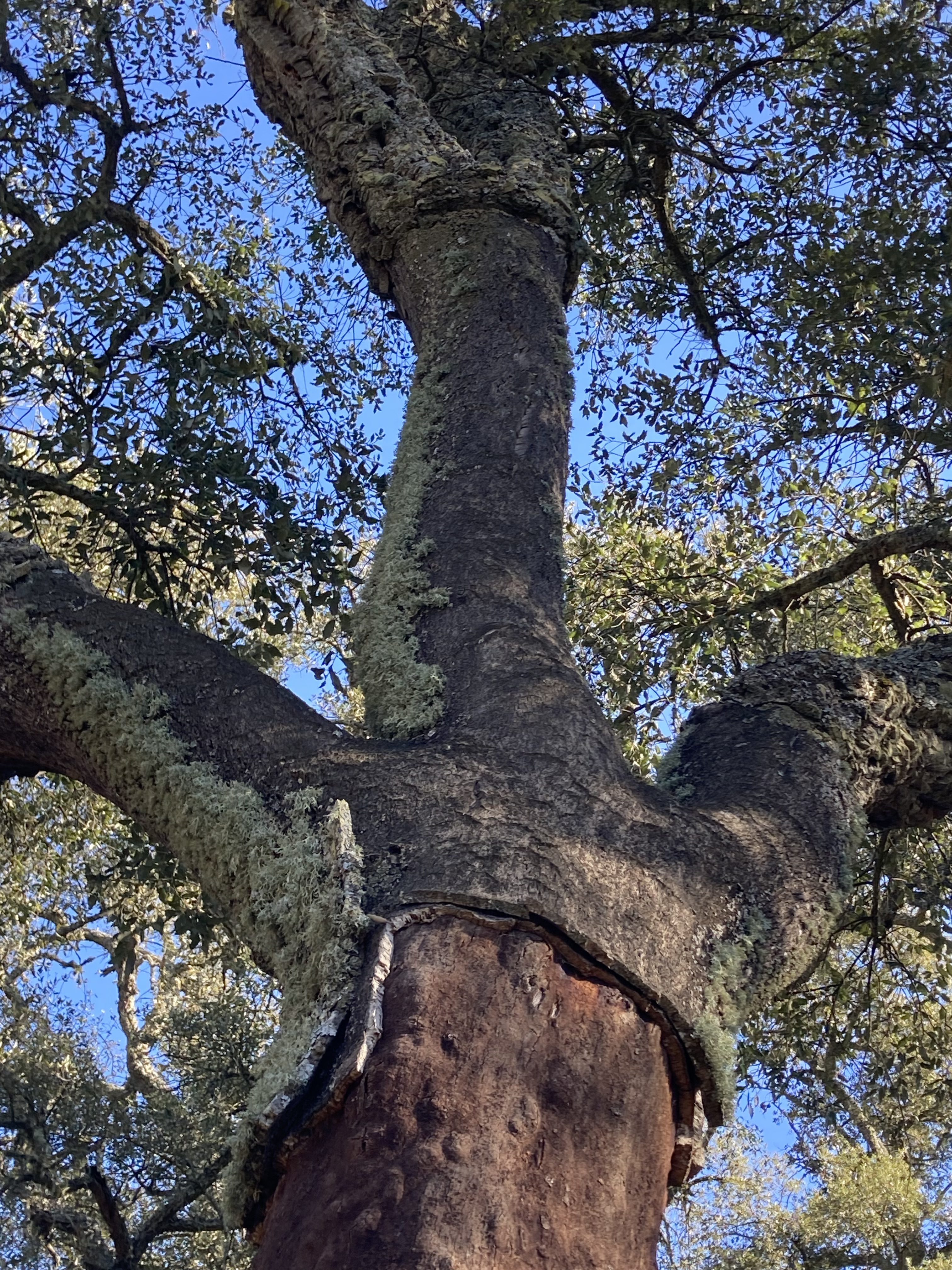
Cork Oak, with bottom cork removed. Higher up, out of reach, is cork that hasn’t been harvested.
It struck me that this multi-use, semi-wild rangeland speaks to our long history with trees, for the management of the Dehesa dates at least back to medieval times. Some think as far back as the Bronze Age. Whenever it began, it appears to hit on an idea that seems a contradiction: sustainable exploitation. Firewood. Pork. Beef. Cork. All within a rich ecosystem.
To me this was inspiring. In bonsai we don’t produce food or cork products, but bonsai arguably is, if done well, sustainable exploitation.
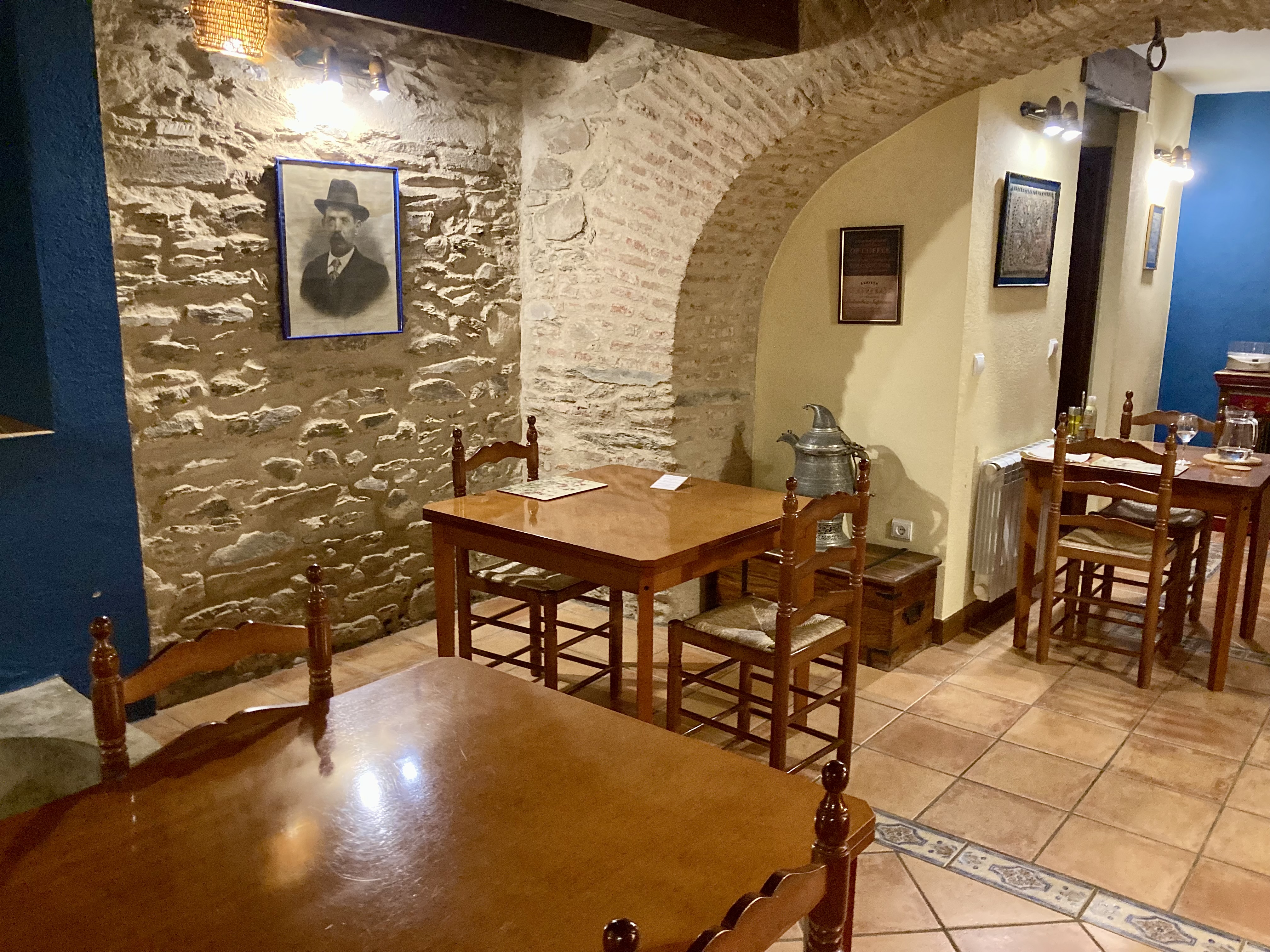
My only splurge this trip—a birding lodge that appeared to have its dining room in a former wine cellar. Otherwise I stayed in places that might as well have been cellars.


Lastly—if you will indulge me, for this has nothing to do with trees or bonsai—I wanted to share a side trip to Granada to see the Alhambra. The Alhambra is one of the marvels of Europe, a Moorish palace dating from the 1200’s.
In a dry land, here water is everywhere, you either saw it or heard it, in pools or running down both sides of stone stairways. You’d reach out your hand for a railing and could cool your brow from water inches away.
Gardens were everywhere you looked. The interior palace spaces were modest in size, and felt both grandiose and intimate at the same time—I don’t recall any architecture I’ve visited that made me feel that way. I was told the exterior walls conformed to an accepted building practice of near brutalist simplicity, so that if you were wealthy you would not embarrass your neighbor.
And, along with visual marvels, they were clever engineers, for they found a way to pump water up the mountain to irrigate their fountains and gardens. Even without the colorful tiles and paint that used to enliven interior walls and intricate plasterwork, there is a timeless spacial magic here.
If you’re in Spain, don’t miss this. I loved Seville and Madrid, and I’m not a city person, but Granada could swallow a couple of weeks and you’d not feel bereft.
6 Comments
Tx for the great article! The Alhambra is truly incredible
Thanks June! The email notification didn’t have the photos of the Alhambra for some reason, but if anyone wishes to see them, please go to the blog on the website…there they showed up!
Was in Tavira, Portugal and Seville, Spain in June this year. Saw some of the agriculture like the cork oaks. Definitely an eye catcher. Saw soooo many loads of cork going for processing. Loved both cities, although Tavira was more of a town. The gardens in Seville were may and some very large–more like parks. Our friend showed us a 2000 year old olive in Tavira. It was in the middle of a well managed vacation rental cottage complex. The tree was not abused, thankfully. Saw a pomegranate orchard. All of the hundreds of trees had some twist to them. Hmmm. Anyway, those areas of Portugal and Spain were terrific.
Seville is so special. I didn’t get to Portugal, sadly, but would love to see the bonsai someday. The olives of the Mediterranean are epic! And, the bonsai olives follow suit…spectacular. Interesting about the pomegranates. Very interesting.
One of your best and you’ve had plenty of good ones.
Thank you Michael!
Cheers Wayne! Thanks for the kind comments-