The ‘Switch-Hitter’ Junipers: Two Ways of Training
Most junipers have two types of foliage, a needly foliage and a non-needly. Often these two foliage types are seen on the same plant. Other times the needle-type foliage is only apparent when young or in times of stress, and the cord-like foliage (or mature foliage) is seen when everything is physiologically rosy and stable.
Needle Juniper is an unusual juniper in that it always has the needle-type foliage. The hypodermic needle character is only equaled (some say exceeded) by Barberry.
A common question is, how do we train the middle group? The ones that often show both foliage types at the same time, which includes San Jose, Procumbens and Foemina. Switch-hitter junipers, we might call them.
In general, we don’t train these switch-hitters like the Needle Juniper, which is a scissor technique that removes all the new shoots (like Japanese Black pine, cutting all the spring candles off). Needle Juniper predictably regrows from such wholesale trimming, which we don’t do on Shinpaku.
One other juniper responds like Needle Juniper to the scissor technique, and that is Foemina juniper…and yet Foemina is a switch-hitter.
If you’re thoroughly confused at this point, I hope the photos will clarify.
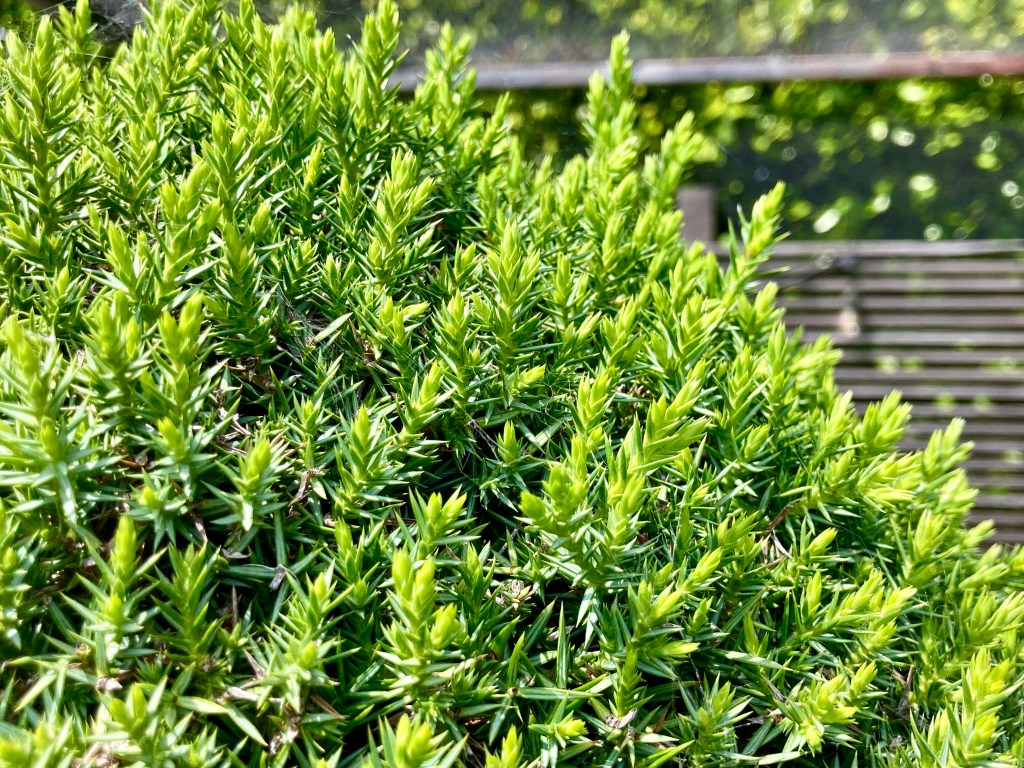
Foemina Juniper with the needly foliage habit. Under normal cultivation, with moderate to high fertilization and lots of water, this is the form we usually see.
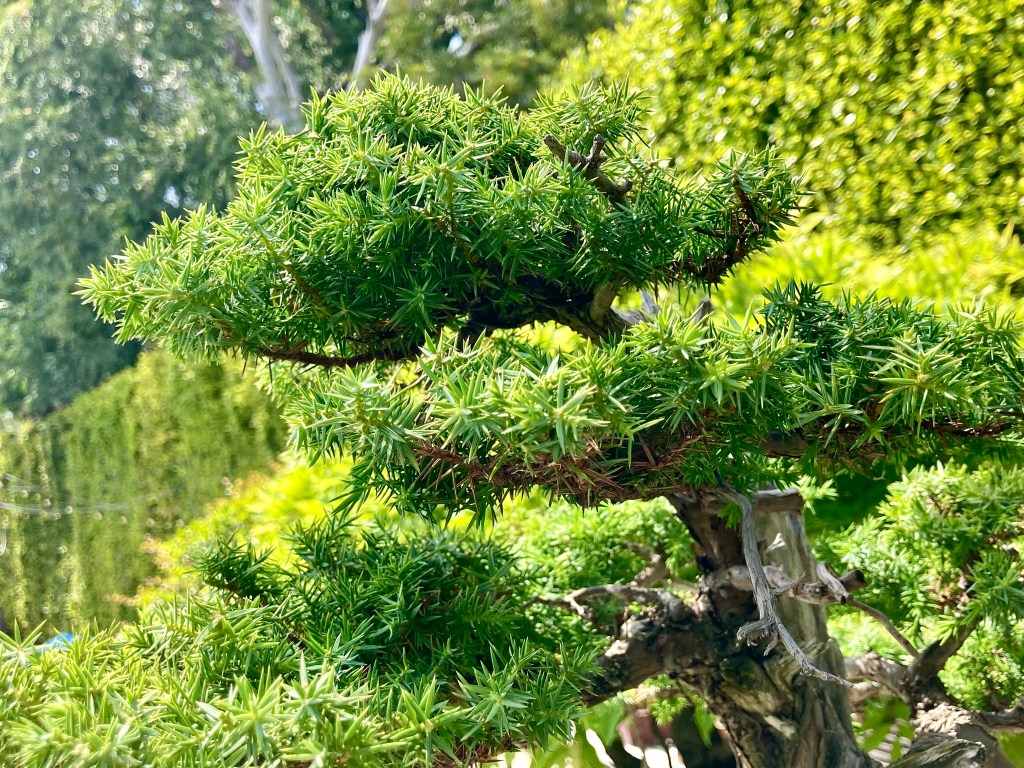
After trimming shoots of needle foliage on Foemina with scissors. Over time, compact and detailed foliage pads are possible. This is the same technique as used with Needle Juniper. But this is not a technique for Procumbens, for instance, which, like most junipers, appears to weaken over time if all growing shoots are pinched or scissored.

Same species, Foemina juniper, with mature foliage. If in good sun and not over-fertilized or over-watered, this foliage form may become predominant. It is looser than Shinpaku foliage, but similar.

After the strongest mature foliage shoots were trimmed with scissors and the interior and dangling foliage pulled off with fingers, leaving growth tips everywhere else. A softer look and feel, with the same species. On the bottom branch are a few sprigs of needle-type foliage.
In my experience it is easier to get needle foliage on “switch-hitter” junipers and harder to get the soft, mature foliage. Sometimes we just need to wait, reduce fertilizer, and don’t over-water. Mature foliage is more often found on older juniper bonsai than on younger.
I don’t see one approach as better than the other. Needle juniper technique allows for clean, tight pad presentations with otherwise unmanageable foliage habits. Mature foliage technique takes less time to maintain and gives a softer feel to the tree. It is unusual, however, to have options in how we maintain a species, and Foemina is one of those.
Leave a Reply