Multiple-Tree Inspiration: Hemlock
When I first moved to Oregon I went to a famous WPA lodge on the top of Mt. Hood—our nearest active volcano—for some low-stress sightseeing. What I found on the walk around this high-elevation lodge spoke beautifully about how to design multiple-tree bonsai.

These tight Hemlock groups just below treeline have several characteristics: 1- Multiple, individual trees. 2- Large ones sprinkled in the middle. 3- More related to each other than to a larger environment or scene.
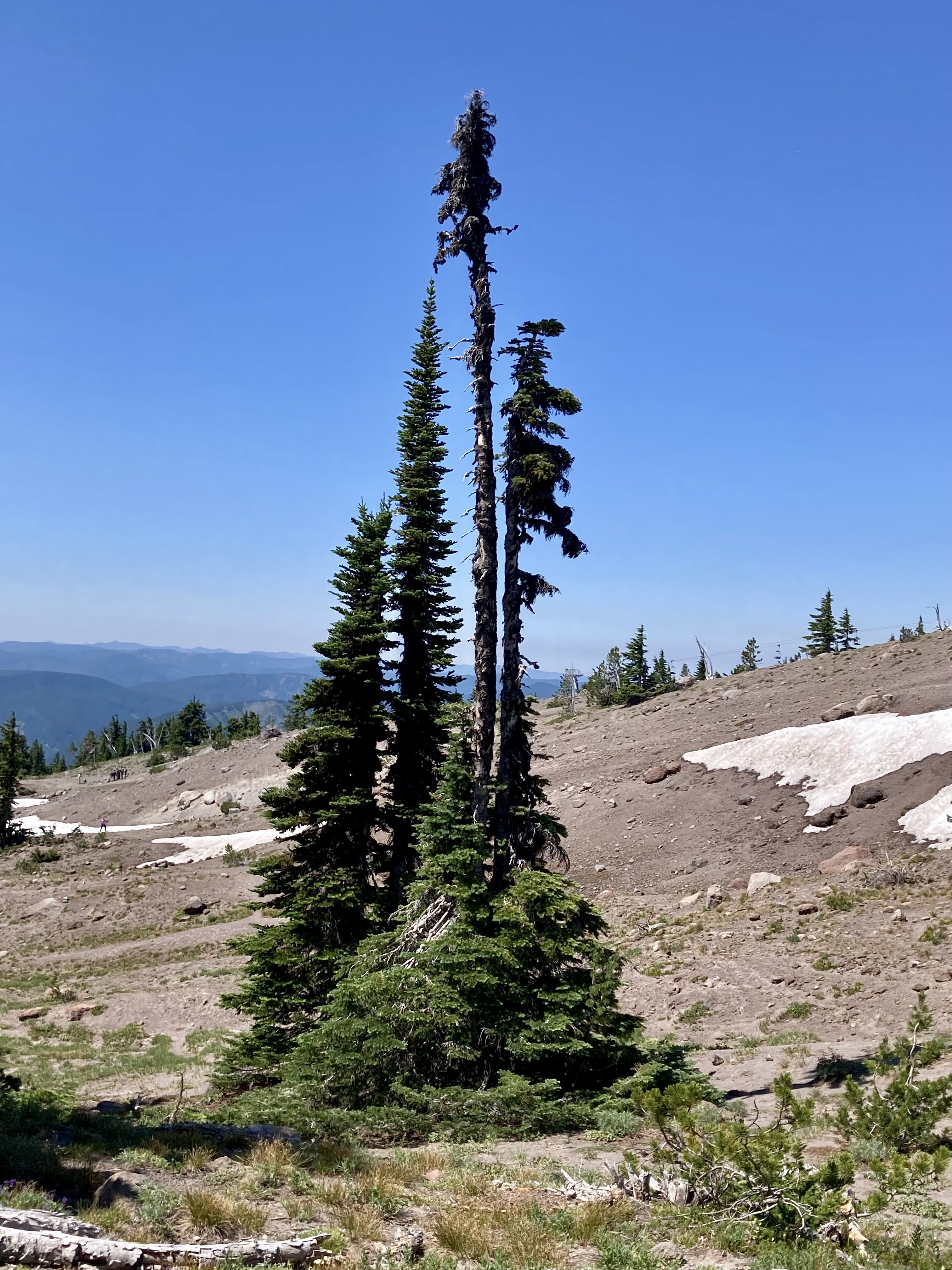
A very tight clump of Fir and Hemlock. Being better protected on the inside, the interior trees have the advantage and that translates into greater biomass.
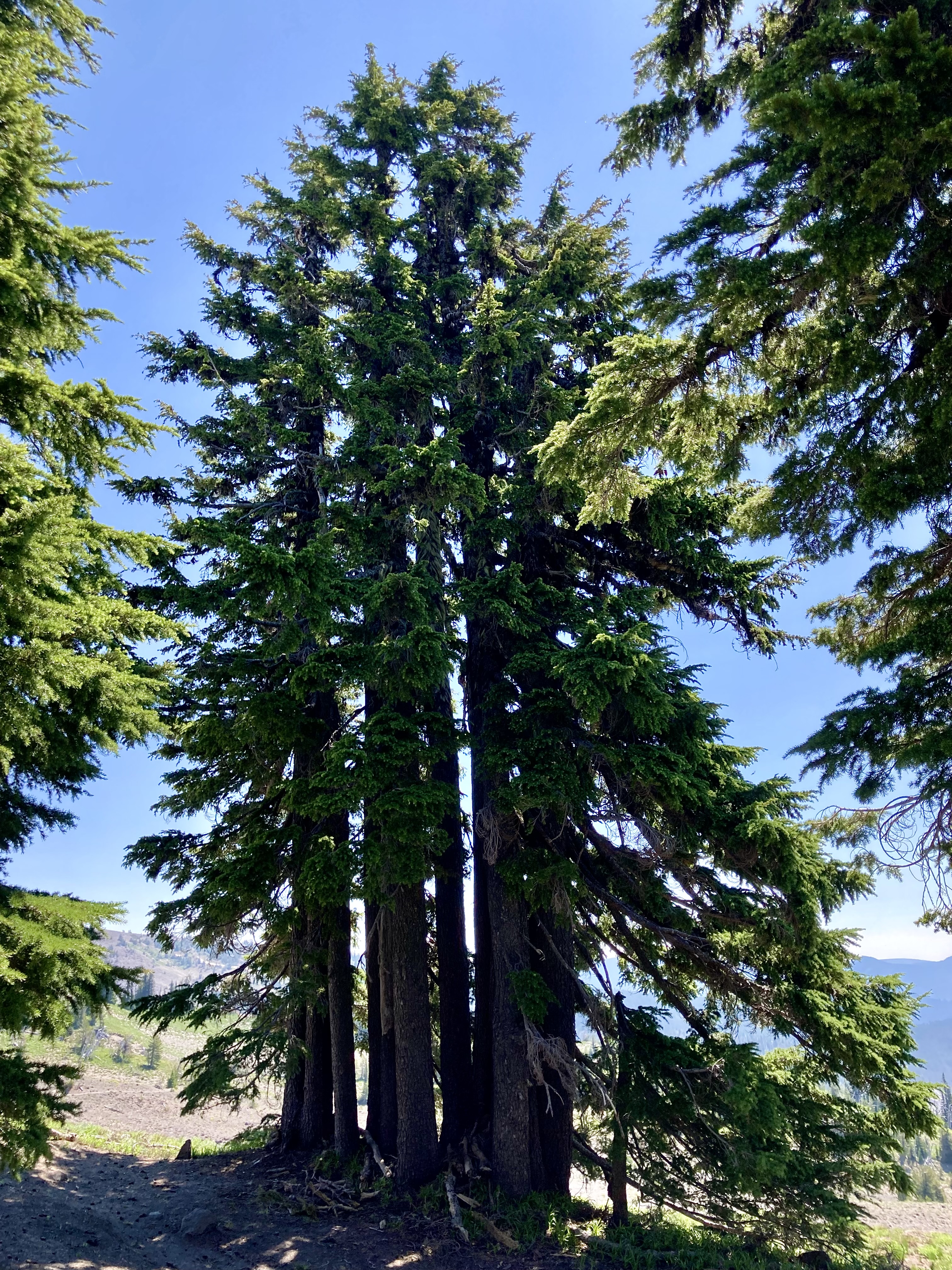
Mountain Hemlock group. This group is very tall, with shallow tapers.
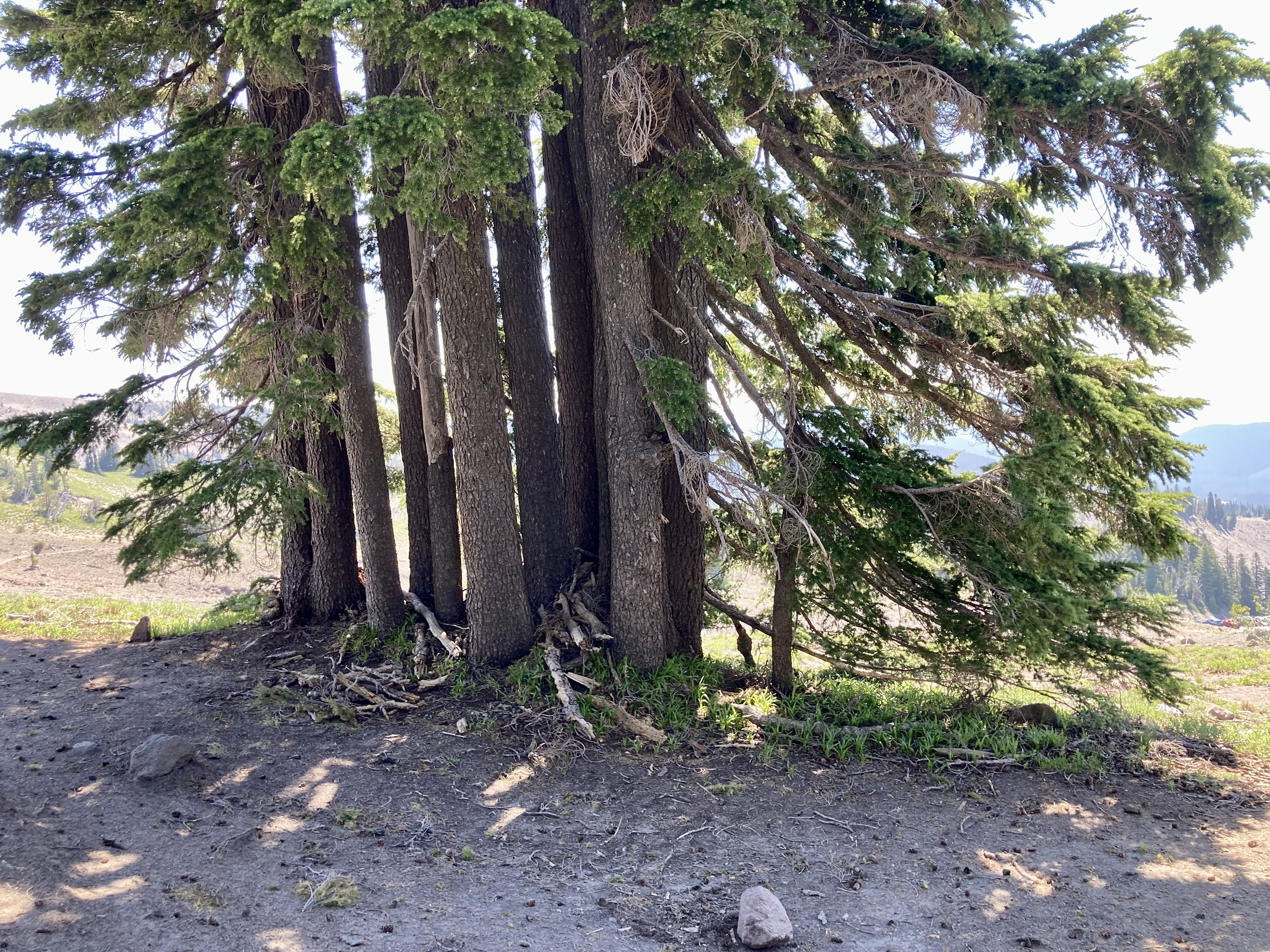
A close-up gives a better feel for the depth of the group. The small tree to the right sets off the scale of the larger trees—a great trick for bonsai compositions. Create contrast with trunk size. It sounds obvious, but used well it can make a not-so-large trunk seem huge.

Dead snags mixed in with this Hemlock group. Note that the dead ones are on the outside. Makes sense, doesn’t it? This is an extreme environment. There are constant winds. Snow drifts. Ice storms. With that as a swirling constant months of the year, any tree on the inside has a better chance of getting through to spring unscathed.

A more open group. This would be an effective planting if done by hand. Notice the negative space between the trunks—and not just trunks, but between groups of trunks. And again the effectiveness of smaller trunks next to larger ones, and how that energizes both sizes.

A view from farther away gives the sense of open forest: Small clumps of trees dotted over a high slope.
2 Comments
Michael,
Thank you for your insight and interpretation of the natural forest settings. Your points seem spot on. Sometimes easier to see than to incorporate when building a multi-tree composition.
Your contribution is not taken for granted,
Mats H
Thanks Mats! Much appreciated!