Shade Cloth Part II: What Color?
Most shade cloth is black. But there is also green. Red. Grey. White. Silver.
And we might wonder, there a difference, other than looks?
A few experiments have shown that shade cloth color can influence plant growth.
One experiment showed an increase in internode length and leaf width in blueberries grown under black shadecloth. The other shade cloth colors in the study—gray, red, and white—did not increase growth.
Another experiment used tea plants as subjects, finding black, blue, and red shade nets increased the height and stem diameter, net photosynthetic rate, and reduced cold damage in winter. No significant difference was found among the black, blue, and red shade nets on growth.
A third found chili plants to have greater growth under green and black shade cloths, but not white.

Tea plants, Camellia sinensis, growing under shade cloth
Should those of us growing bonsai change the shade cloth color we already have? Maybe not yet. It does appear plants have different responses to the color of shade cloth, but this field of study is just beginning.
This might be something for bonsai artists to keep an eye on, if the color of our shade cloth can help keep short internodes, for instance. Or to help build more biomass, if we have a young, developing bonsai collection. The chili pepper experiment suggests that white shade cloth might be an option for keeping small leaves and shoots, but that is with a pepper, not a maple or an azalea. Otherwise, in general, black shade cloth appears a good option to encourage plant growth.
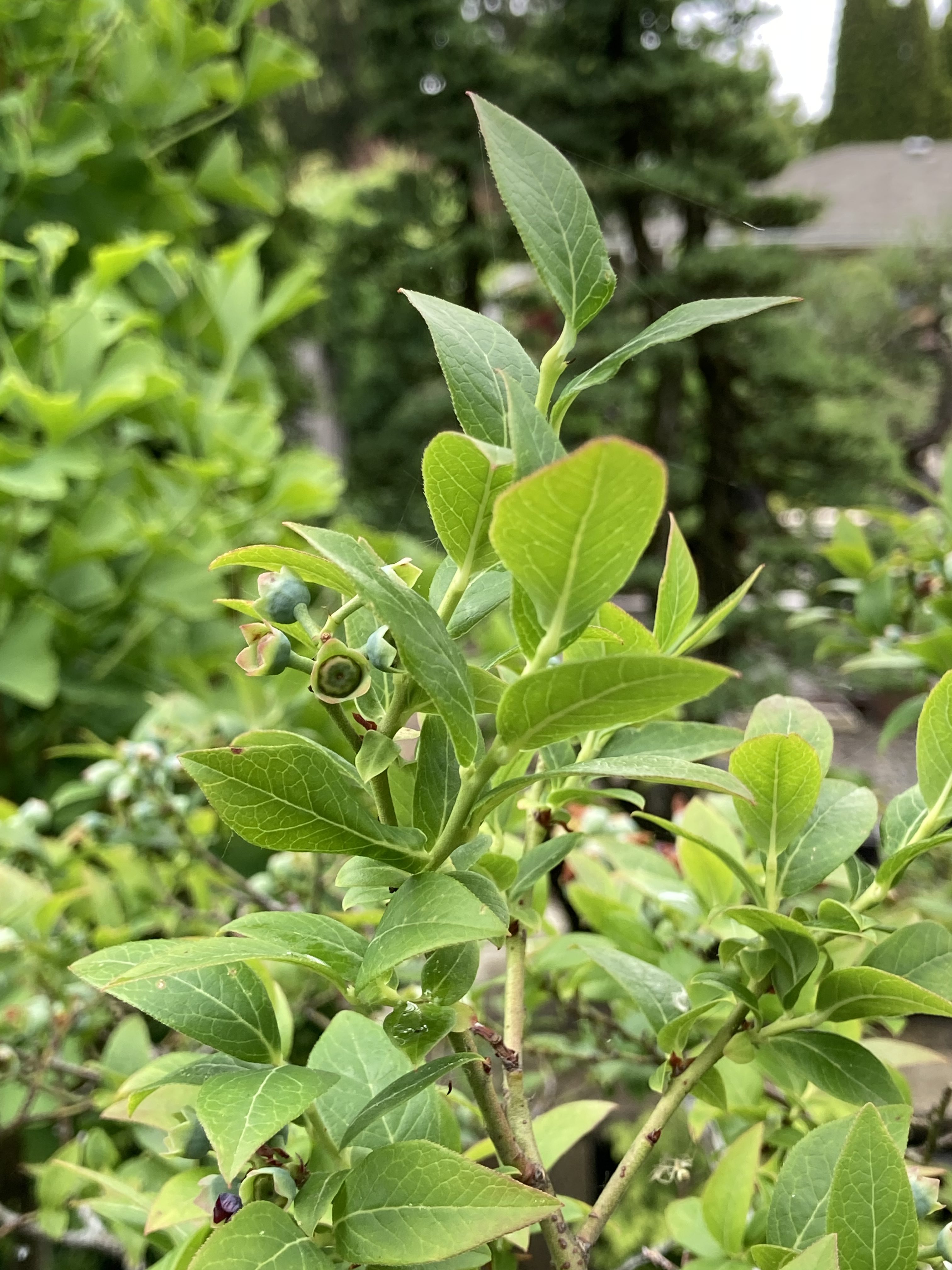
Highbush Blueberry
For the first post in this series: Shade Cloth Part I: A Sliding Scale
The experiments:
Blueberry experiment: https://www.researchgate.net/publication/257821038_Colored_shading_nets_increase_yields_and_profitability_of_highbush_blueberries
Camelia japonica experiment: DOI: 10.3389/fnut.2022.786421
Chili pepper experiment: DOI: https://doi.org/10.21273/HORTTECH04895-21
5 Comments
It would be interesting to have two adjacent shade structure, one with black and one with white shade cloth. Would the black shade cloth absorb more heat (infrared part of the spectrum) as well as creating shade, and provide cooler temps below that might encourage growth?
Would the white shade cloth allow reflected light (including the blue part of the spectrum)
to inhibit gibberellin production, creating shade but also promoting shorter stems?
Fascinating thoughts Dave! You will get back to us after conducting these experiments, won’t you? Seriously, I would be interested in such a study. One more way to get nerdy about our plants.
Very interesting!
I only have a 50% white cloth and this year I really noticed an immediate difference when I put it up this week during our heat wave (Virginia)….the heat or humidity seems so much more present. I personally perspire much quicker than simply being in the sun. I’ve noticed this the last few years. It’s hard to work under the cloth. I started considering not even using the cloth but 99degrees got me worried.
I didn’t notice much, if any, shade cloths in Omiya and it was hotter than heck when I visited. Fuyo En and all their magnificent deciduous were not under shade cloths.
Hi Scott, really interesting observation. It’s here and there in Japan, the use of shade cloth. The humidity in the summer does give an edge to the plant. But my teacher, Shinji Suzuki, had 50% over all the deciduous trees and spruce, and they did look better than those we had out in full sun, on display. Those were yellower by a lot. What is on display vs. what is in the back under development are often cared for differently. Still, interesting observation, thanks for sharing!