Are The Best Bonsai Grown By Hobbyists?
In this week’s Bonsai Wire podcast I discuss this idea with John Eads.
John Eads owns Left Coast Bonsai, a young-tree bonsai development nursery left of Portland, Oregon, nestled up against the Coast Range. As a professional he talks of the need to balance speed with quality. Because of this limitation, it’s our opinion that the backyard hobbyist has the best laboratory for high-end, pot-grown bonsai.
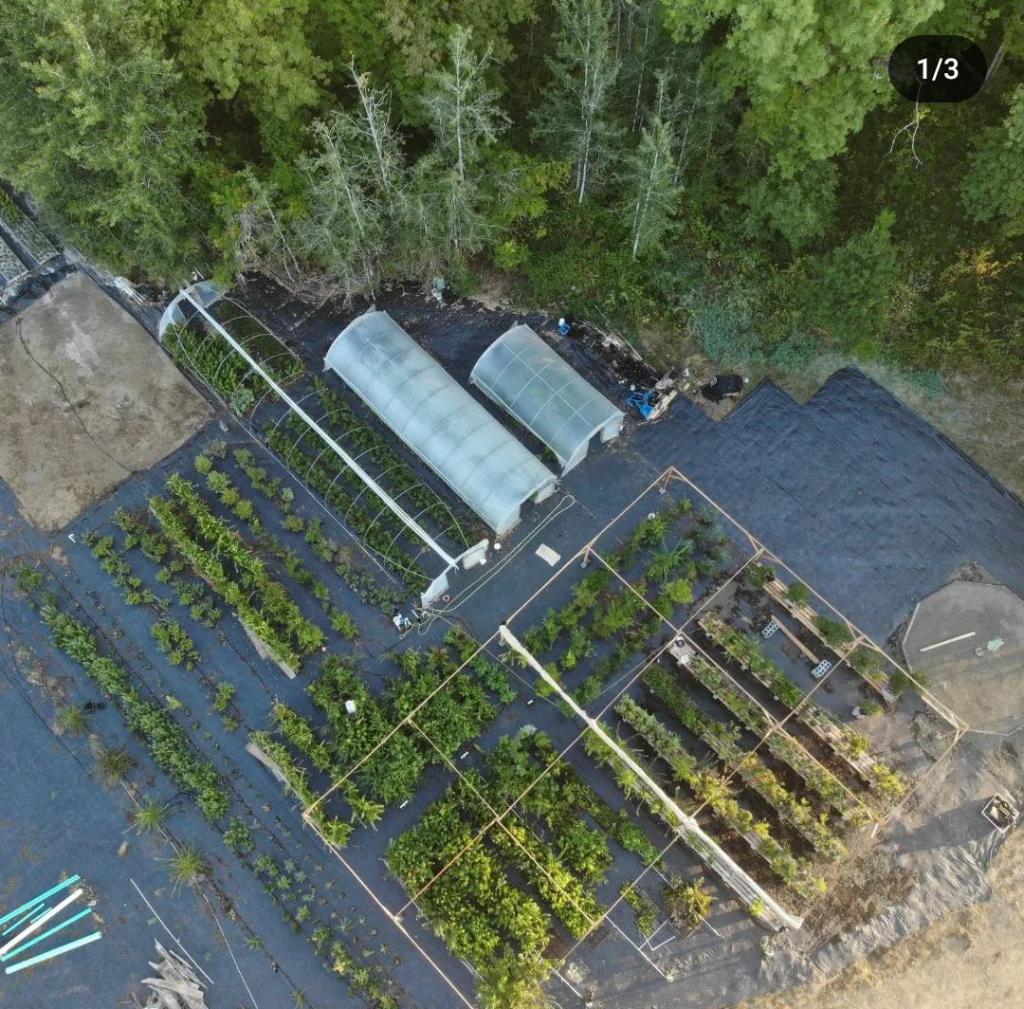
Drone shot of Left Coast Bonsai, a premier bonsai growing grounds on the west coast
This isn’t just our opinion. Japanese professionals, such as Daisaku Nomoto (who teaches the Shohin School along with Jonas Dupuich and Andrew Robson), actively source trees from backyard hobbyists—and actively train them to grow stock.
John is a big fan of pot-grown plants, only planning to have 10% of his operation in the ground. John says in our podcast, “The ground is an accelerated pedal, so if a wheel is falling off the vehicle, it’s not going to improve by putting it in. You have to get the vehicle in good tune before you press on the accelerator, or you push forward all the problems.”
He also prefers raised beds to ground-growing. With a raised bed filled with pumice, a pot may be set on top of it, or nestled in partway, and then easily lifted for an annual trimming of the roots. Then we are not, as I put it in the podcast, “creating problems that are hard to uncreate.”
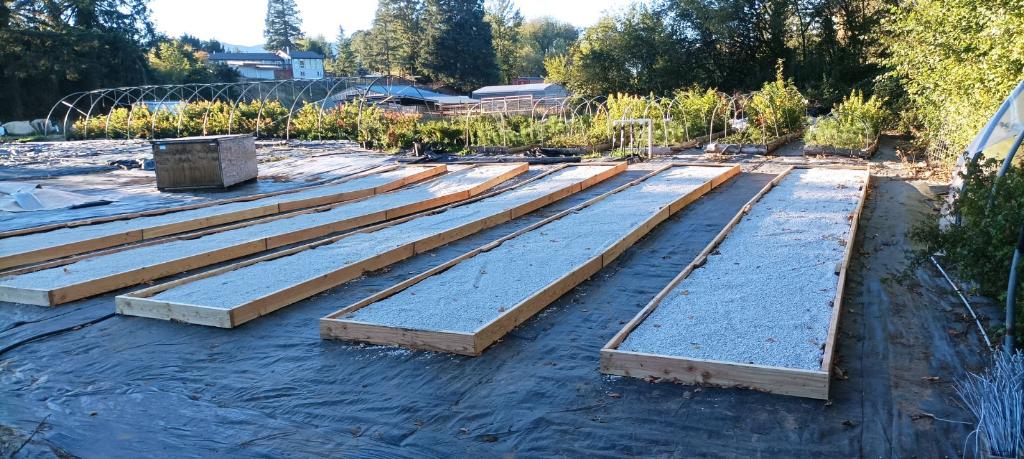
Pumice beds, which John sees as the sweet spot for professional growers
John said, “I think this is a big part of the work that I’m trying to do, how to skate that razor edge of development goals without creating internodes so large that they have to come off.”
We think the techniques of professional growers like John can help you skate that razor’s edge as well, and give you tools to consider in your backyard.
Some of my favorite bonsai in my garden were pot-grown by hobbyists. Most were grown a bit slower than those of professionals.
We hope that our podcast chat this week will support your backyard work and maybe give you a couple tips about how to grow young trees.

Red Maple, created by a hobbyist in a pot, never been in the ground. This is an example of the sort of work, often deciduous, done by hobbyists that professionals don’t have time to do. This tree is 32 years old now.
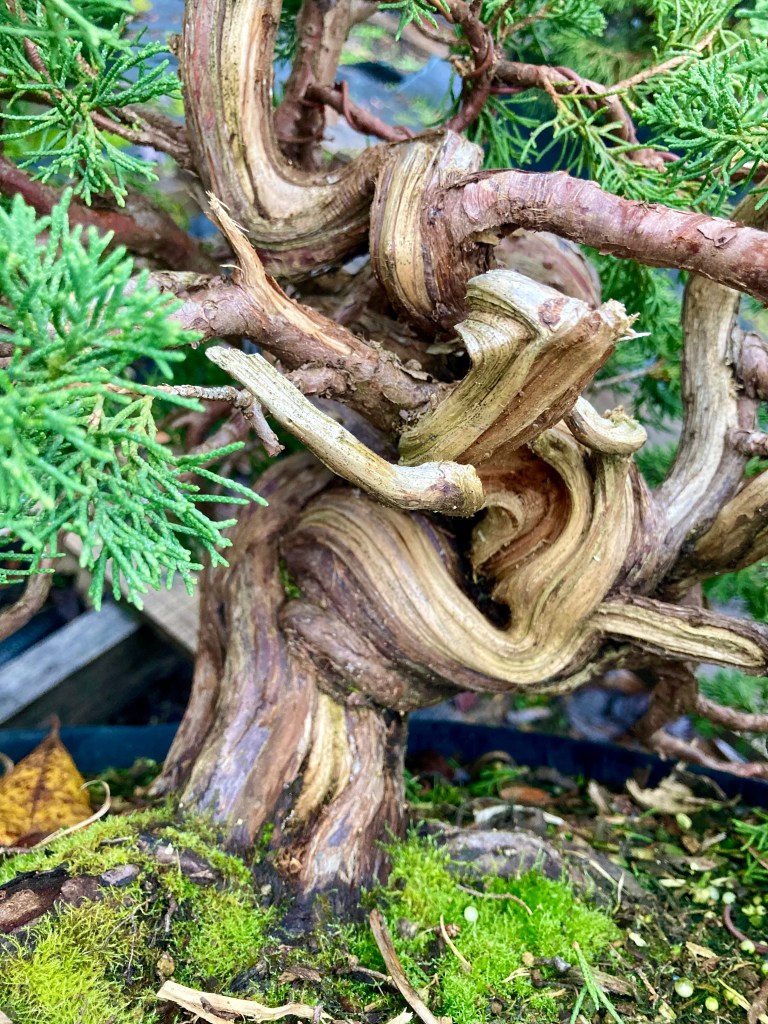
This work is done by both professionals and hobbyists—this example, with a 3” trunk, grown by a hobbyist in the partly in the ground, partly in a pot method discussed in our podcast.
If you like growing young plants for bonsai, try out our podcast episode A Casual Conversation About Growing Trees With Michael And John for more tips (and humor…)
4 Comments
Thanks for the pod cast… I liked the discussion about different approaches and timing. Good info.
Perhaps most important with bonsai production is to consider long term growing as you would a long term financial investment. When I began bonsai production in 1987 in Canada I consciously decided that I would set a side a number of trees to grow long term for my RRSP (Registered Reinterment Savings Plan – Cdn equivalent of the USA 410K) . The plan was that the investment would mature and be cashed out when I turned 65 (2023). Like most people in my age group, we realized over the past 10 or 15 years that retiring at 65 was no longer realistic.. As such, my new retirement target shifted to 70, and soon after to 75. I adjusted my growing schedule for maturity for my 1500 trees in the RRSP to 2030 to 2035. -This was made easier by the fact that by 2010 the viability of the the long term investment would indeed be a “good long term investment” in the North American bonsai market. To be clear, other than culling a few along the way long term trees they were not part of our short to mid term income. In 1981 during my long term apprenticeship in Takamatsu I met my first Western bonsai people. Chase R. and Bill V. visited Kokubunji, it was amazing to find out that bonsai existed in the West and there seemed to be a viable future. During lunch Bill gave me a most important piece of advise that I took to heart for my career. He said, “If you want to make a living in the West growing and producing bonsai you need a second job for income”. For many professionals in the West I think teaching became the main source of income , while growing and producing quality trees became the side show. For me the sideline became dealing in commercial bonsai for the general public as well as landscaping, both also common income sources for long term bonsai producers.. Eliminating the need to generate short term income for long term trees, while enjoying all the farm tax benefits is perhaps the most important goal of long-term commercial bonsai production. Without a doubt, a great resource of high quality , container grown bonsai , like in Japan, are grown by backyard hobbyists. However, I think the majority are produced by professionals in Japan – often over generations. Though I was somewhat ahead of the curve, there are now growers outside of Japan (The Americas, Europe, and Asia) that are committing to sustainable long-term bonsai production. I do think California likely offers the most, and highest quality slow-produced trees by private backyard growers .
Loved the podcast… great to hear John give his thoughts on process and approaches. Thanks.
Thanks Michael! A fun chat for sure-