Pruning Japanese Maples And Clumps
This specimen offered a couple key points about Japanese Maple pruning, and pruning forests and clumps.

Japanese Maple in need of fall pruning. To prevent sap bleeding from cuts, Japanese maple is often best pruned before leaf drop. Another good time to prune it is at repotting time, as repotting will stop bleeding from pruning wounds. A bleeding wound prevents sealant application.
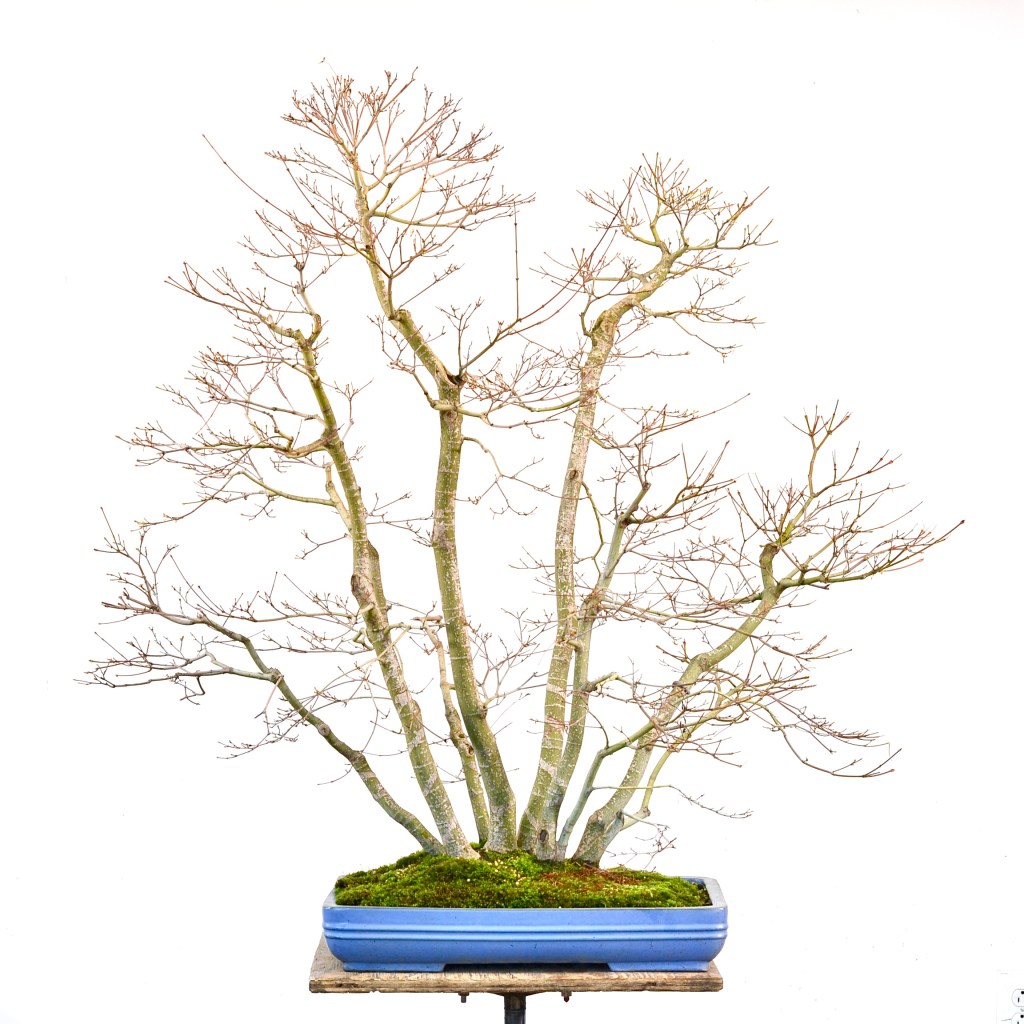
If strong shoots are not pruned back they will get even stronger next year. And this tends to make a bonsai imbalanced.
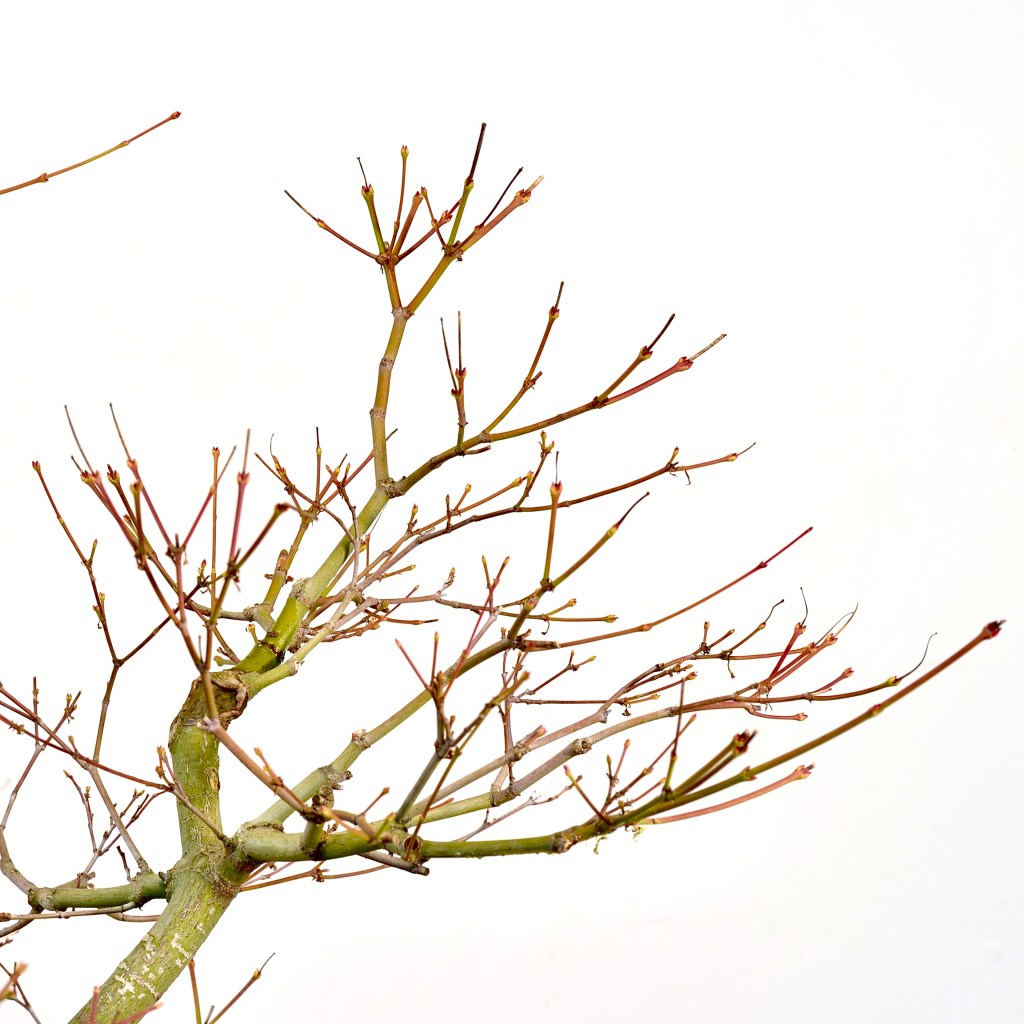
Closeup of one area before pruning. Long shoot to the right is an example of a shoot that will get too strong next year.
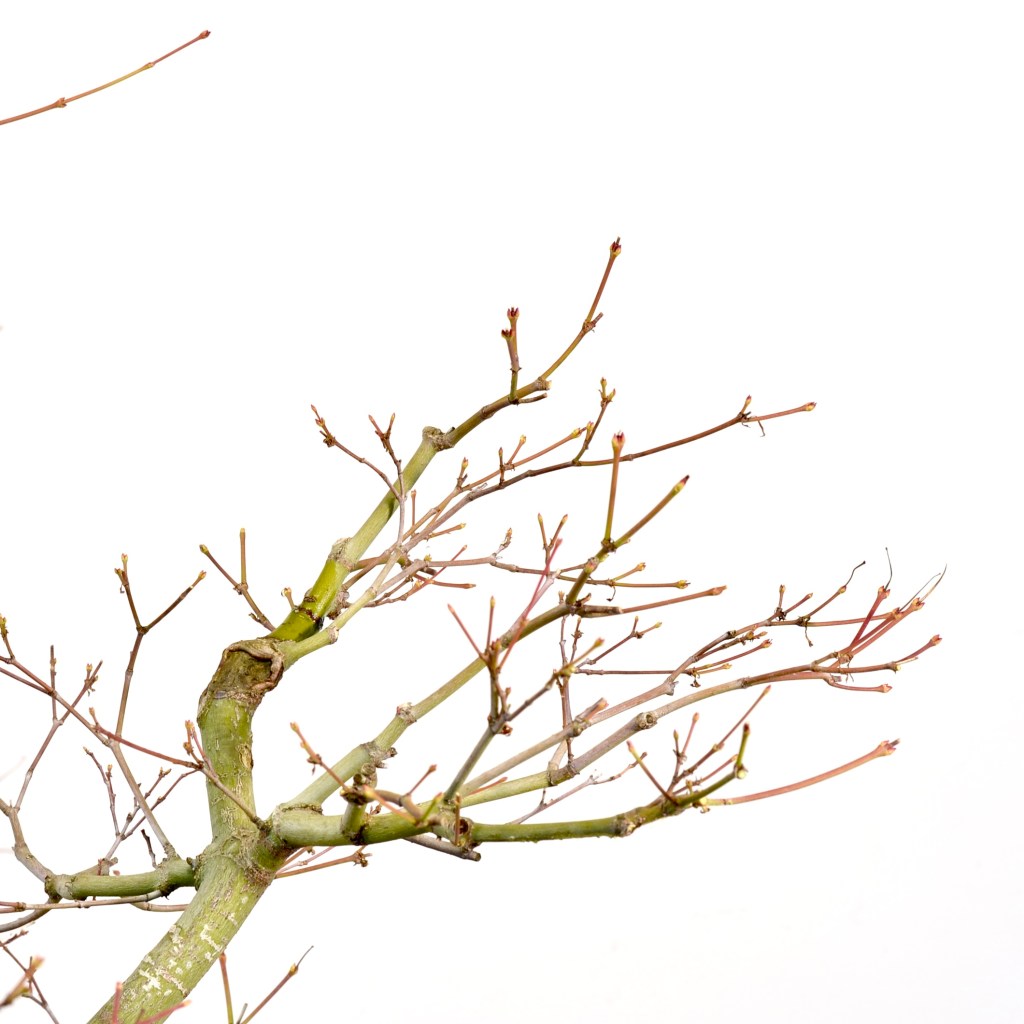
Same area after pruning. Some branches were cut back for better taper, like the top.

The whole tree after pruning.
A few takeaways for this specimen:
- Prune just before or just after dormancy in Japanese Maple to prevent bleeding
- There are no big shifts at this stage of development
- But—crowns are pruned more aggressively than lower branches
- And—smaller trunks are pruned more than bigger ones.
Anyone wondering why we didn’t cut the long shoots on the tallest trunk? That trunk was weak. During the summer we noticed this, and it was the first to lose its leaves as well, confirming our suspicions. So these long shoots will be left as helpful-energy-dolphins (just came to me, no idea) and will be trimmed back perhaps next fall.
A few points about pruning clumps and forests:
- The main trunks in a clump can often get weak
- The root systems of those trunks are often trapped inside the group
- Avoid letting the periphery trees outgrow the main trunks
- Letting some shoots grow out on main trunks—and developing taller main trunks in general—can minimize this risk
4 Comments
How old is this clump?
Was this the original composition or were tree added?
Do you have any historical photos?
Hi Michael—- It’s about 15 years old, from cuttings. We did add two or three smaller cuttings at the base for nebari correction, and left them in place as small trunks. I’m not sure I have any very early photos of this one, though I’ve blogged about it once or twice.
Hi Michael. Are these Deshojos? Beautiful color. Also, have you had any issues with powdery mildew in your group plantings?
The parent tree (this was created by cuttings) was found in a group called “Dwarf Red”, but more than that I don’t know. It’s not Deshojo. No issues with mildew.