A Yellow Cedar Gets Potted And Reset
This collected Yellow Cedar, Callitropsis nootkatensis, came from Vancouver Island, BC. We designed it six years ago, and in the following photo essay we transfer it from a box to a pot, and adjust the branches.
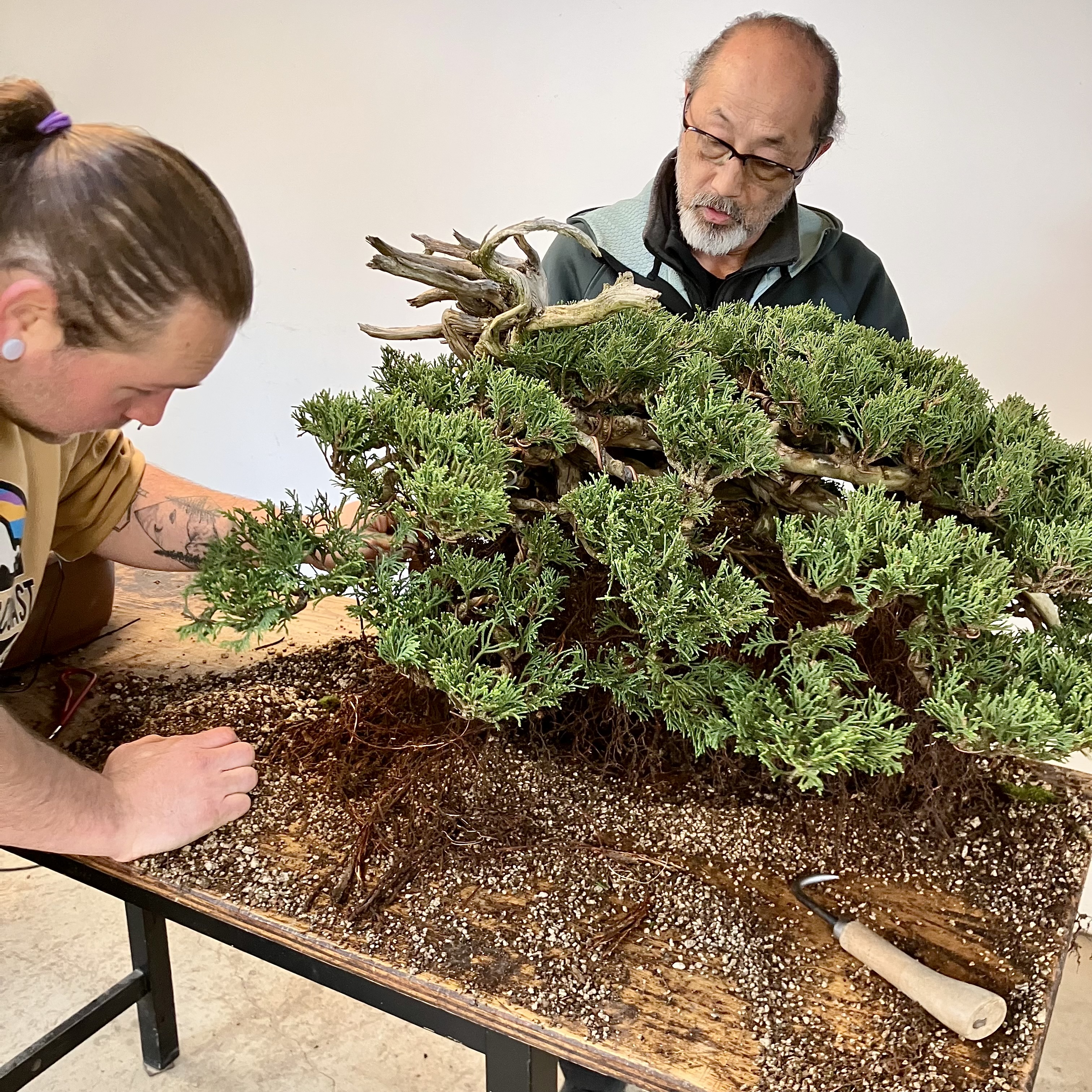
Patch and Masaki removed the Yellow Cedar from the box and began exploring the root mass. We hoped it might fit in a pot we had, but didn’t know if its large base of deadwood and living tissue would allow that. We went slow and with a backup plan.
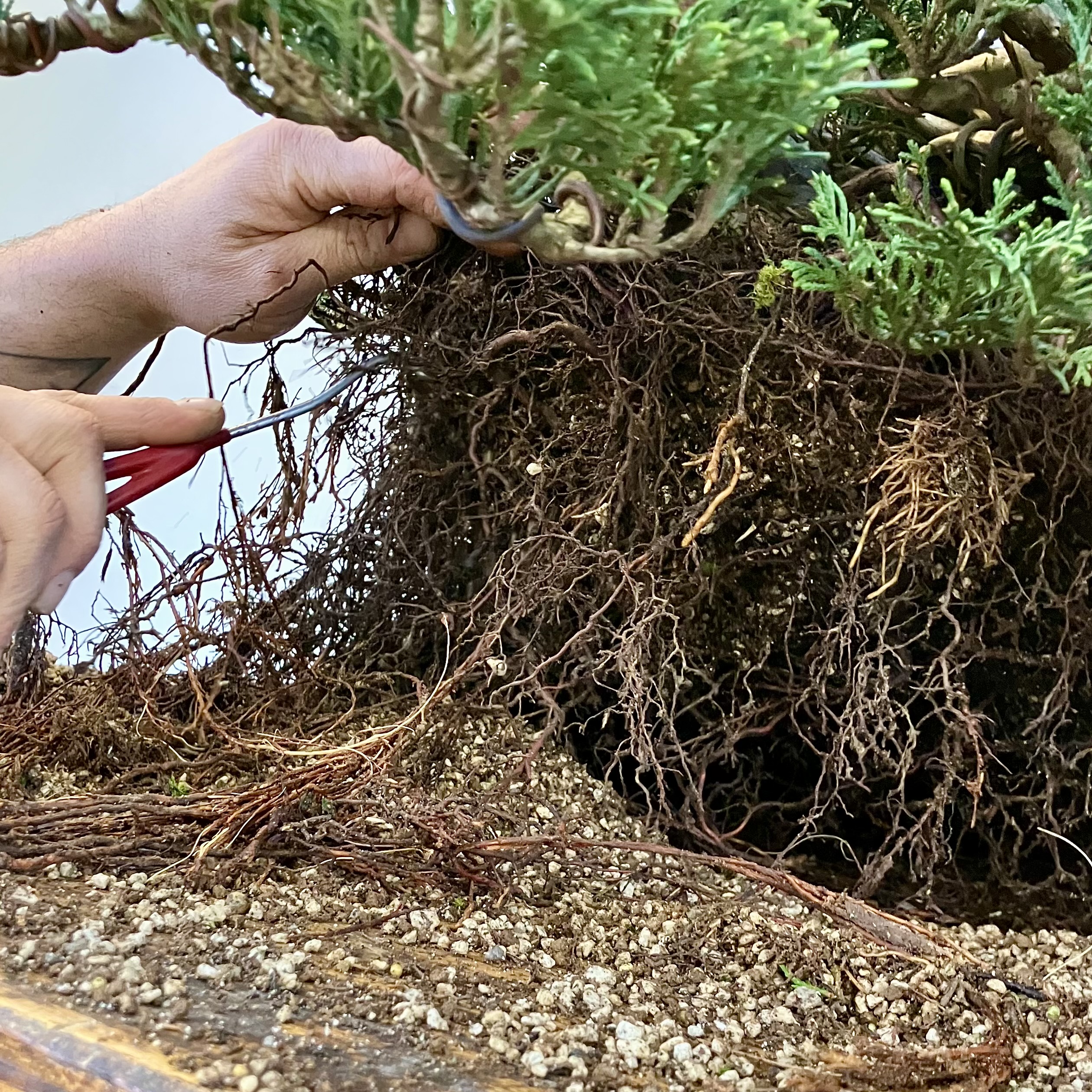
A root hook assisted bringing in the sides.
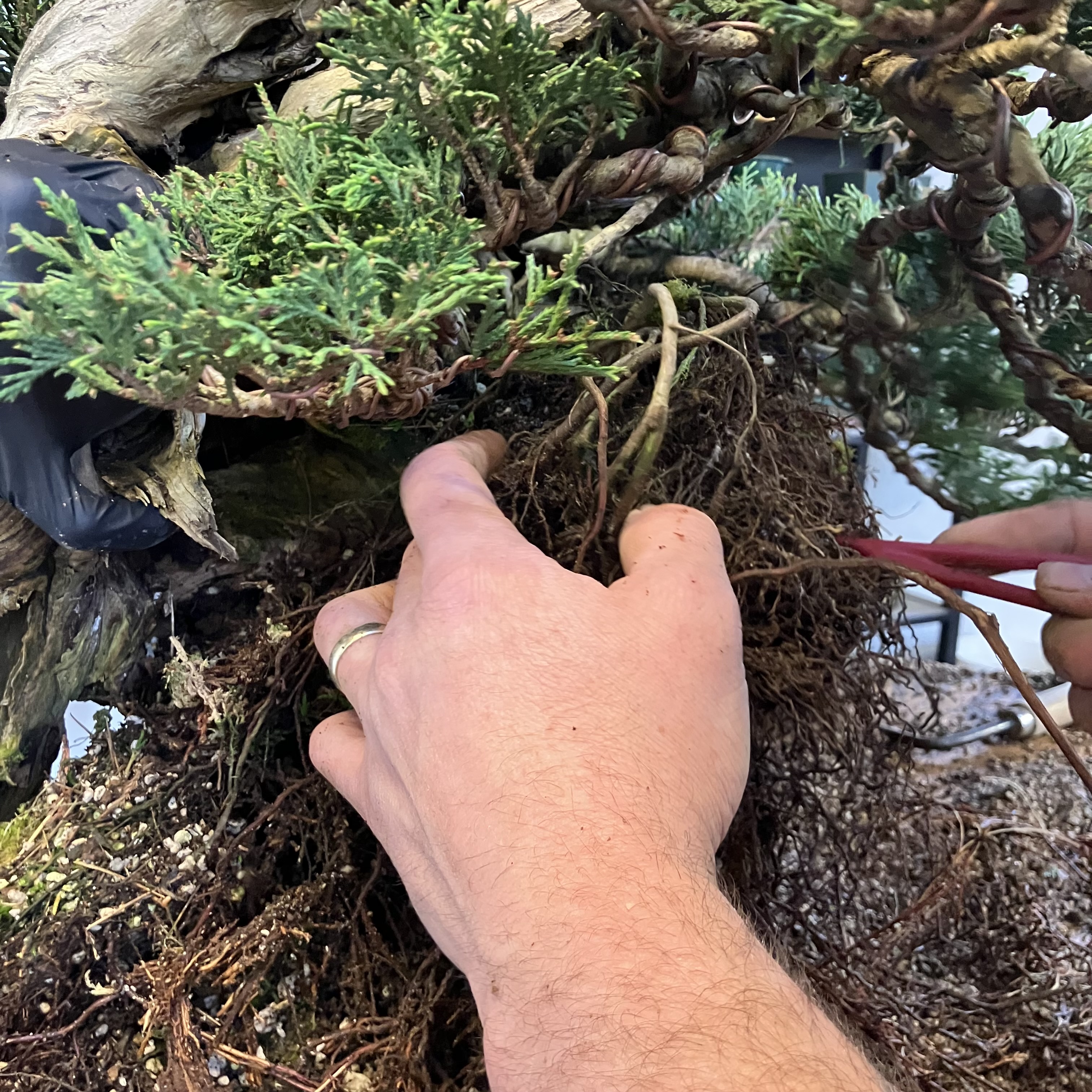
One of the challenges with this specimen was the inclination forward to present the front. At about a 75 degree tip, a large portion of the rear root ball would become a high root sail. Patch works away at that back area to lower it.
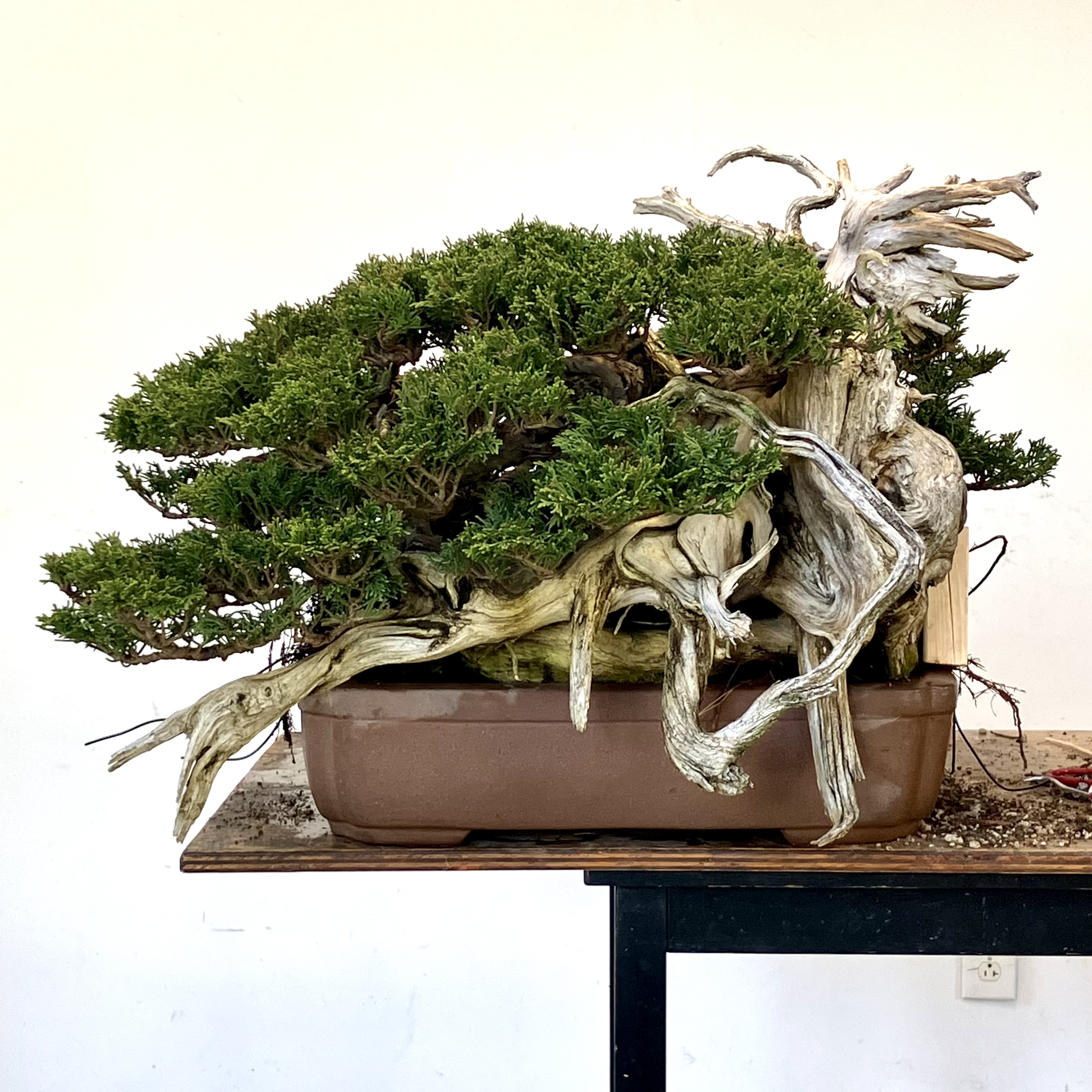
The rough set to check fit. A block of 2×2 to the right temporarily braces against the deadwood for this strong forward tip.
For a while I considered a slab for this one, but worried the hanging deadwood in front would make that presentation problematic—at least, without a tall mound. Luckily the pot we had slipped around the low, long deadwood like a shoe around a foot, and over which the frontal jin had enough height to hang.
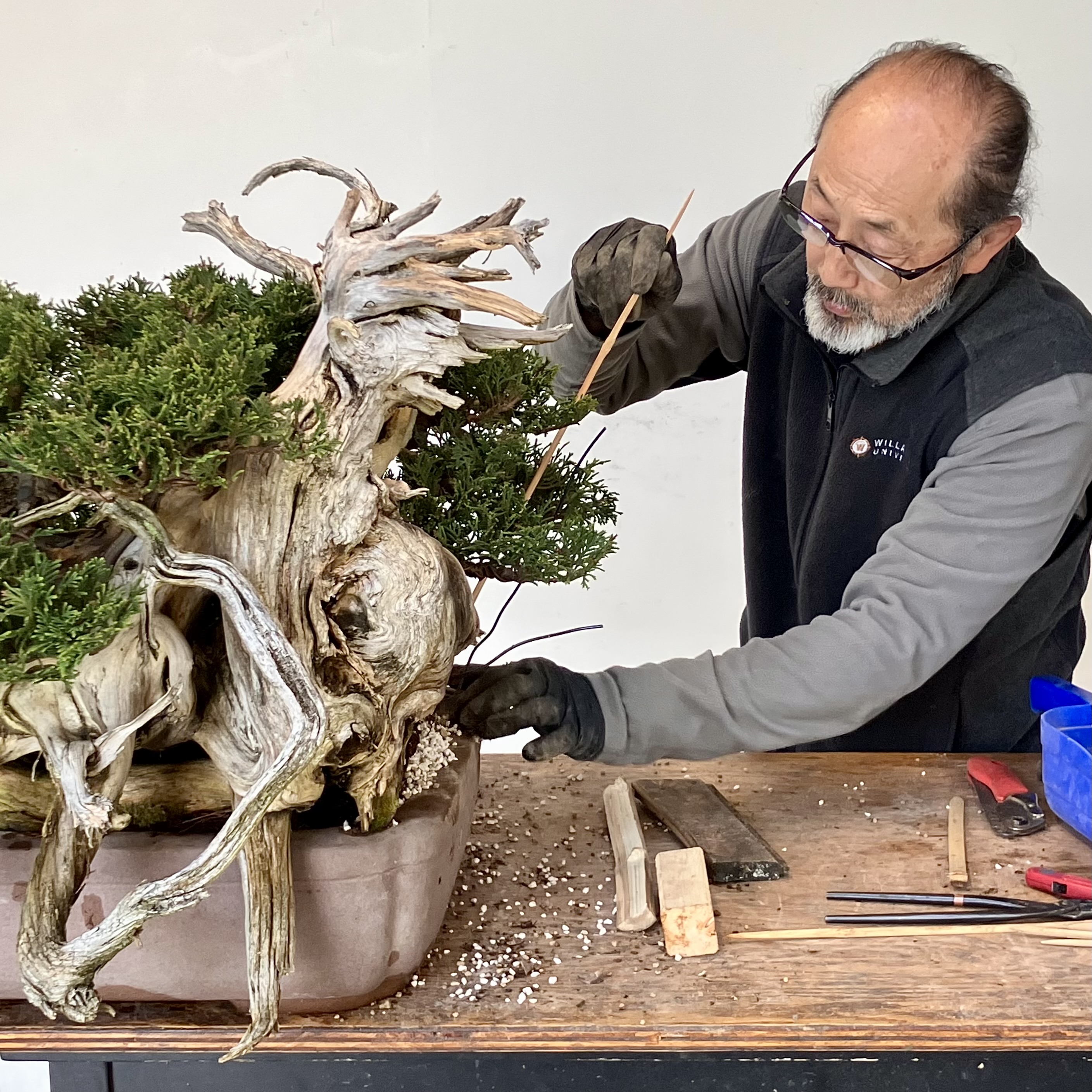
Masaki works a very long chopstick, which helps protect the foliage as he does his sewing action. Note that he’s flipped it point side up—not a textbook move—but in areas where you are sure there are no fine roots, the blunt end can help push soil underneath areas and into holes. With tighter root masses, with more fine root, or with moist soil, it is better to use the sharp end.
Like any tool, having the right one defines the game—it helps to have long chopsticks, short ones, thick ones, and skinny ones on hand. Timber bamboo with its many dimensions of length and thickness is used to make these. A great way to play with an hour.
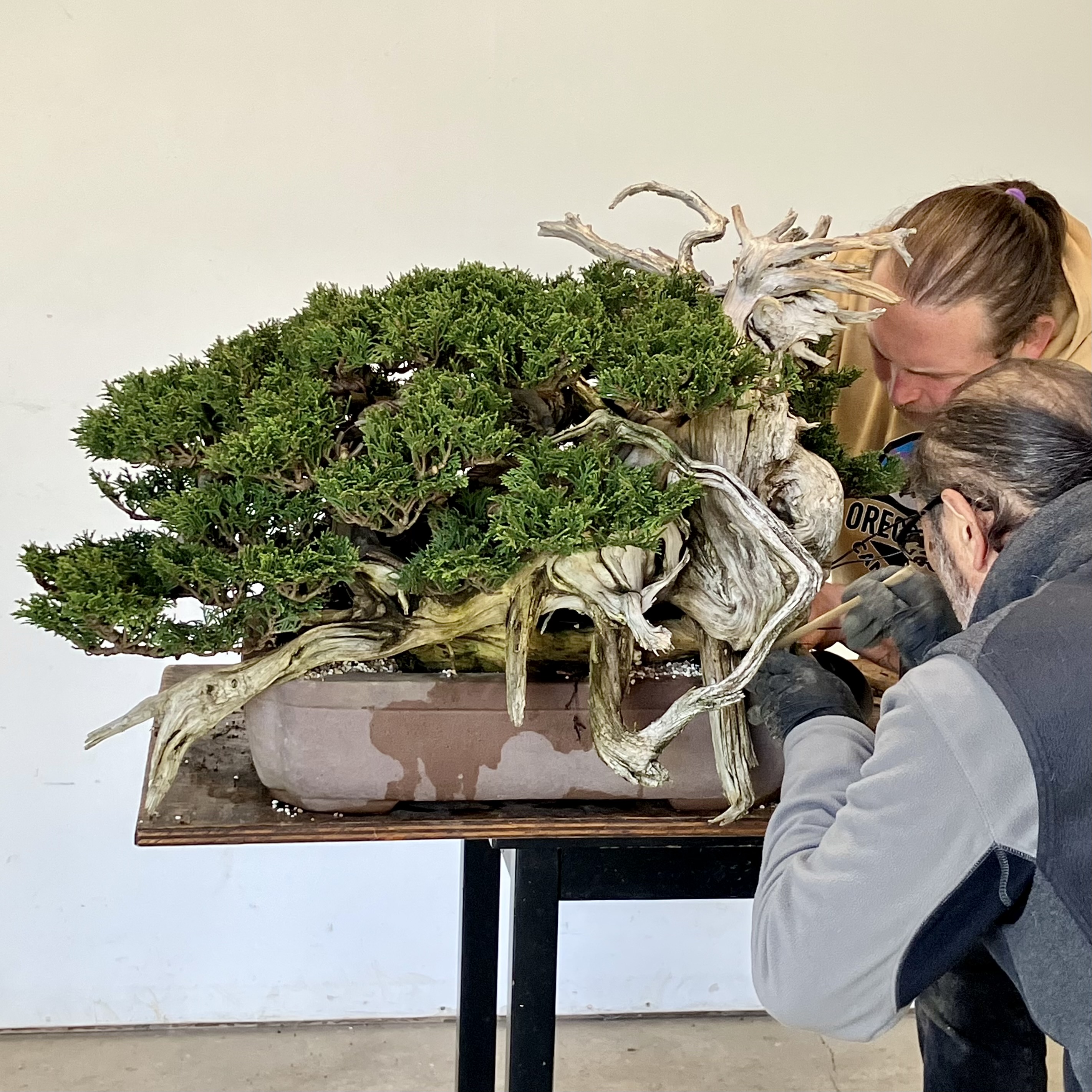
Already the foliage has a cupped finger-like presentation, not unlike old needle juniper or hinoki bonsai, though we’ve only pinched this tree for six years. Unlike junipers, Yellow Cedar can be pinched without weakening the plant.
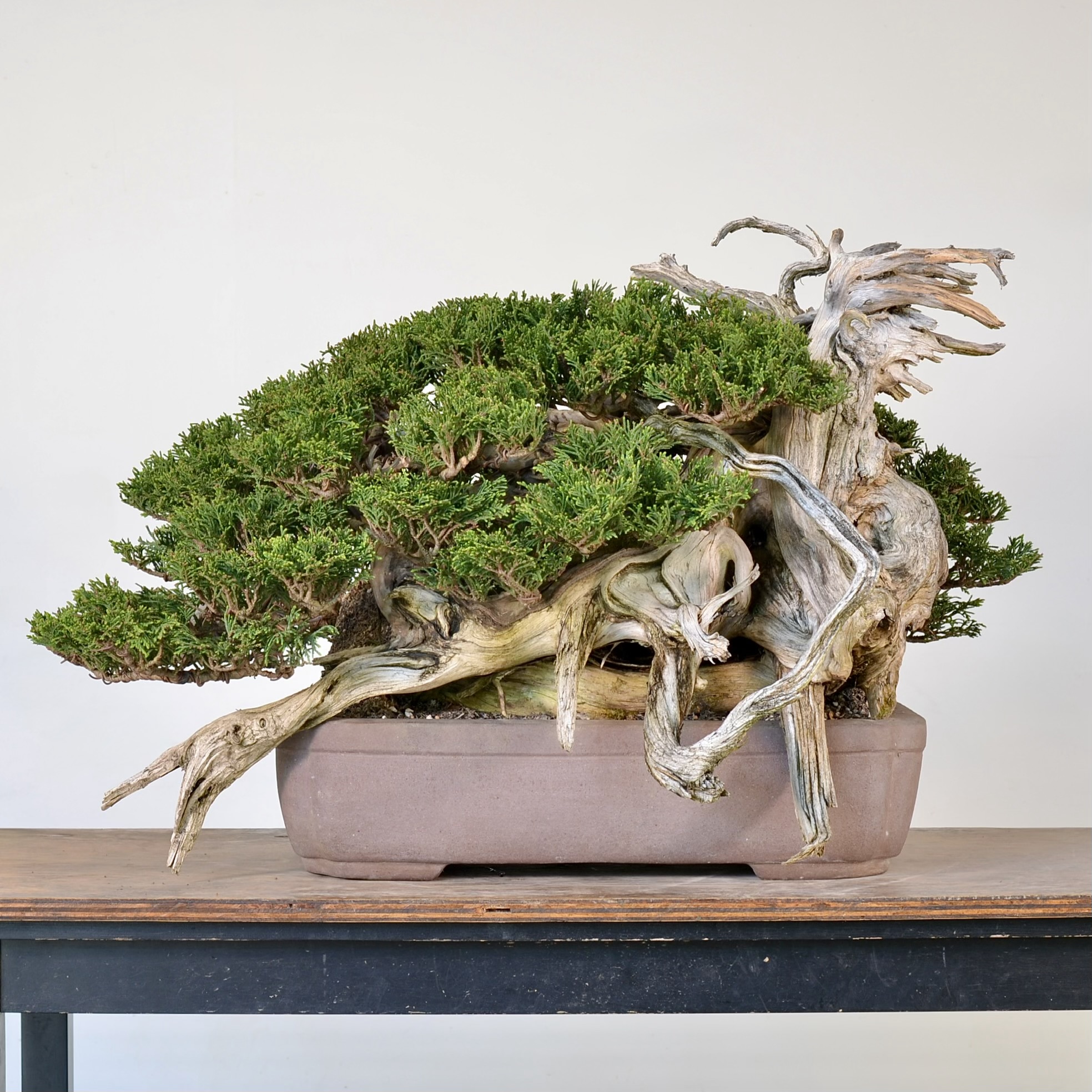
As it looks in early April 2026, after touching up branch placement. Interesting species for its quick foliage density achieved through 2x a year pinching.
For a brief look at what we started with…
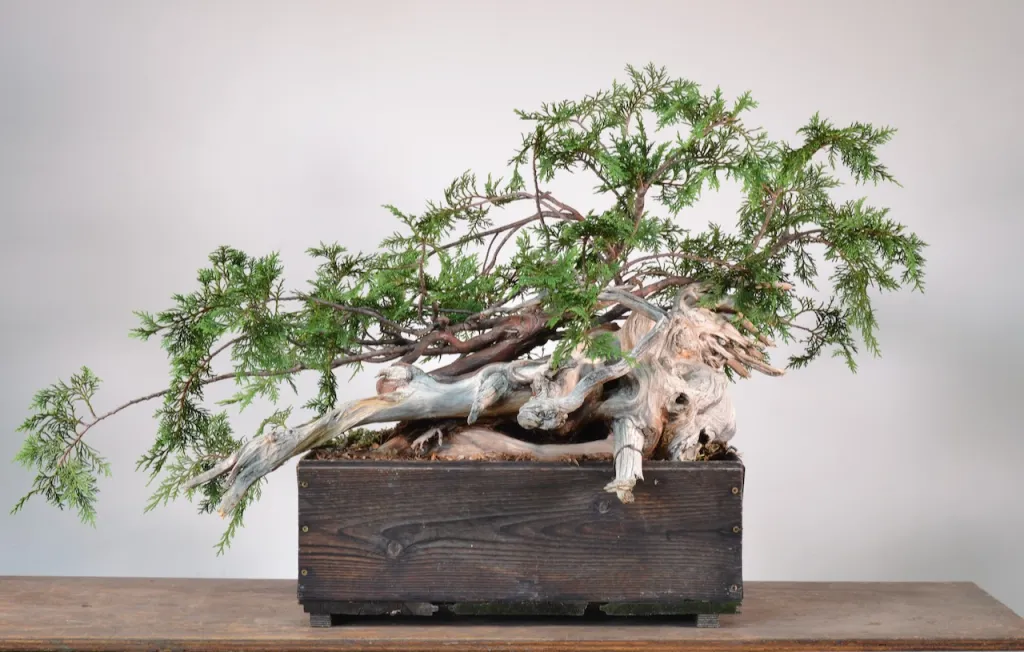
Here is the raw tree in a box in 2020. Anton Nijhuis collected the specimen in British Columbia and said it had been sitting in his garden a few years and no one wanted it. Yellow Cedar is a newish species for bonsai—certainly new to me at the time—so I took it.
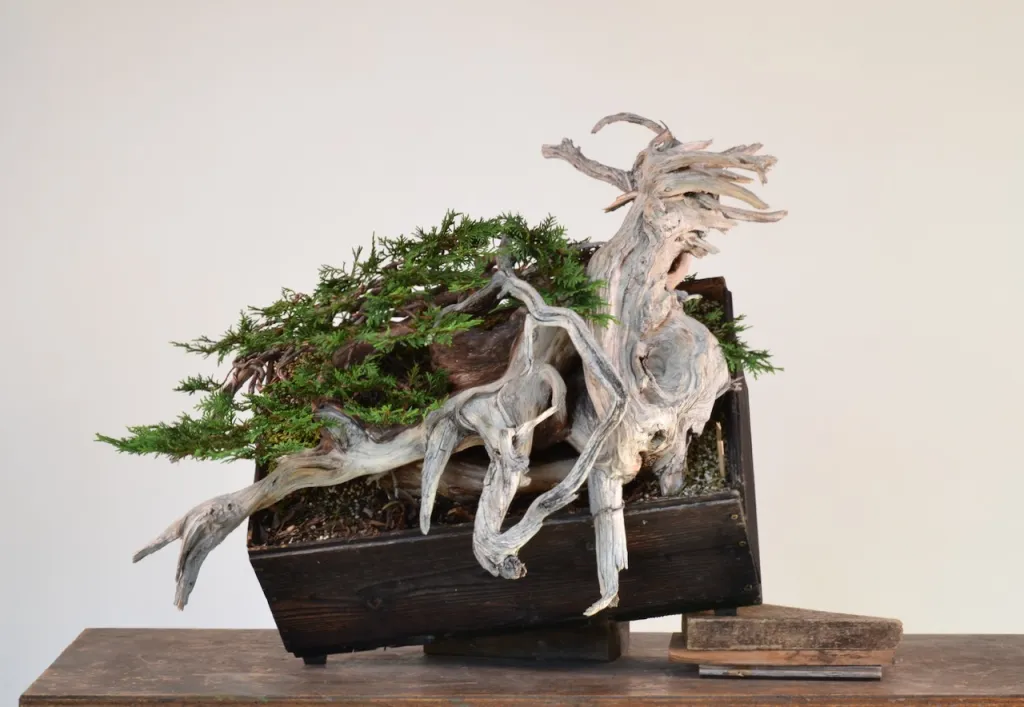
This is after the styling session in 2020. The wild snags of deadwood on this side (there’s none on the other) made for a simple front choice. We left the tree at this rakish inclination for six years while pinching it, and, distracted by other projects, finally got to potting it this spring.
For the full styling article: Snow Falling on a Yellow Cedar
A note on the species name. Yellow Cedar is a curiosity, including, apparently, to taxonomists. Since 1824 the genus has bobbled back and forth between Cupressus and Chamaecyparis. At the time this tree was styled, in 2020, Cupressus nootkatensis was its name, considered a cypress. Now it goes by Callitropsis nootkatensis.
April 2026 Bulletin Board:
- Some big news! Mr. Shinji Suzuki is coming to the Portland Art Museum on Sunday, July 19. He’ll also be presenting that week at our local bonsai group, the Bonsai Society Of Portland, and I’ll share more as plans firm up. Here’s some deets for the museum event: The Way of Bonsai
1 Comment
First… an amazing 6 year transformation. A couple of questions… looking forward over the next few years, how soon will you thin and style the tree now that you have potted at the right position. And next, what style and tone do you imagine the pot should be for display? Cheers to the team for all the great work. Mike