Japan 2026: Last Notes
A few final stories from my Japan trip.
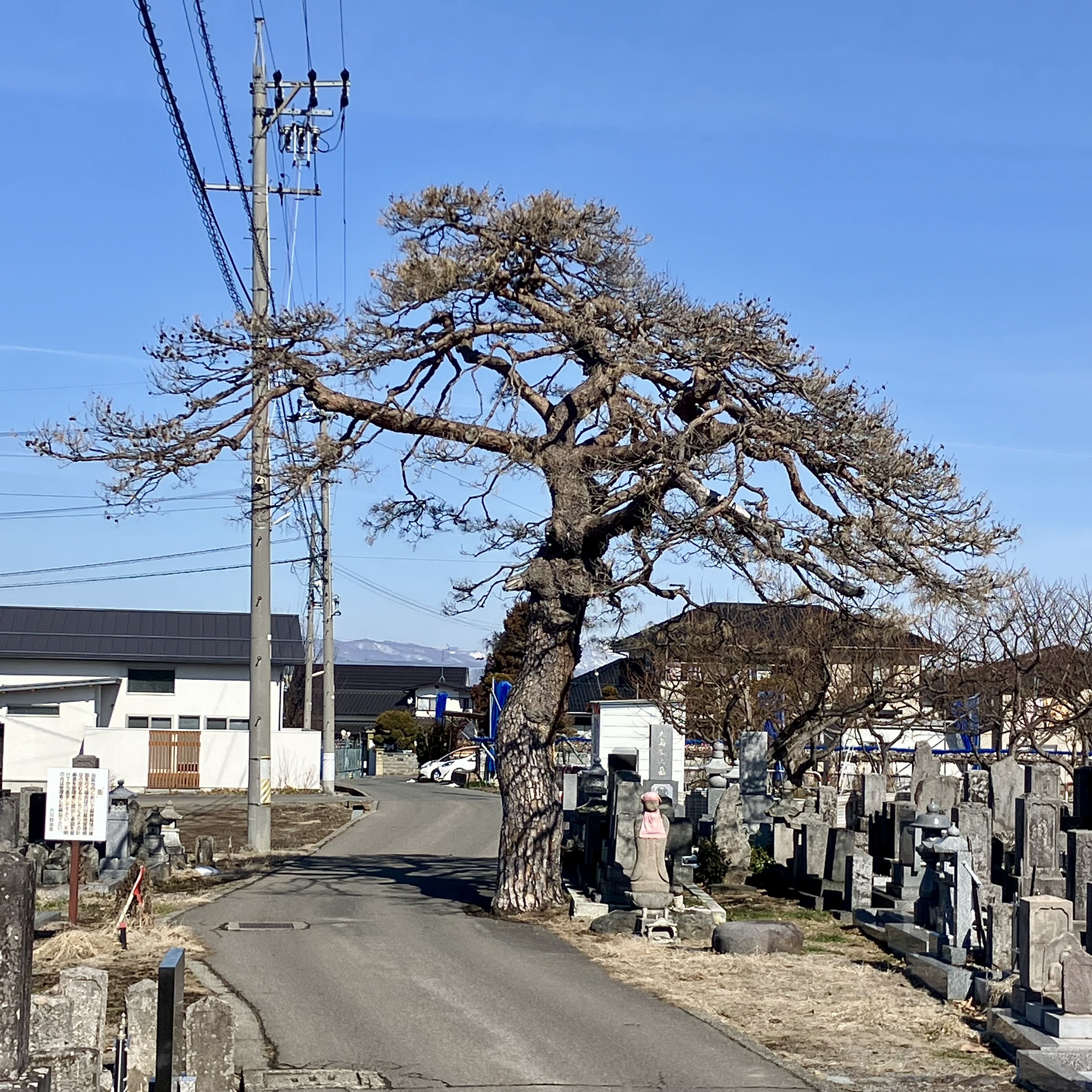
The first hour in Obuse was bittersweet.
You might recognize this tree from a photo in Post-dated: The Schooling of an Irreverent Bonsai Monk. Walking home after a long day I’d pat its trunk or raise my fist passing under it, and say some version of, you and me pal, we’ll make it.
When we arrived in Obuse I split off to visit a small temple at the edge of town. I often went there as an apprentice, finding these quiet temples (some were Shinto shrines) restful. They drew me in.
On my way to the temple I didn’t realize I’d crossed the road I’d taken daily to and from work. I glanced left and stopped. Here was my tree.
But it was dead.
I stood there breathing. My tree was dead, my brother tree. We’d kept each other going, or at least, it had kept me going.
My memory of Obuse is no longer true. Not true for today. In my absence the place is changing. And next time I go, my tree may be gone entirely.
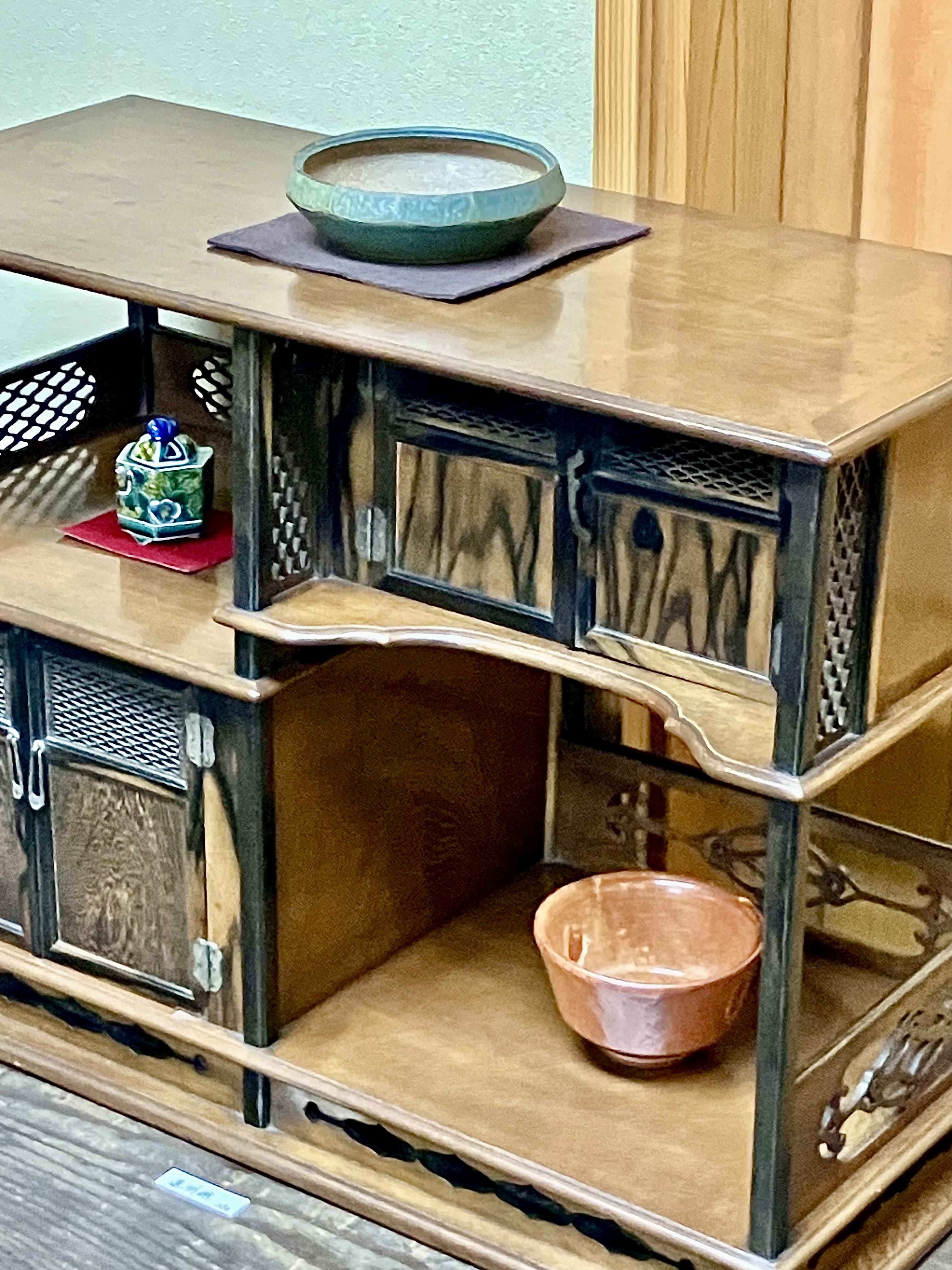
The next stop cheered me up.
Reunited with my group, we went to Mr. Suzuki’s garden. He met us in the teahouse, and brought out two pots, setting them on this wooden stand.
I knew these pots!
The blue one is a bonsai pot I’d given Mr. Suzuki in the states in 2003, a few months before I started my apprenticeship. The bottom one was a gift on a return trip to Japan after my apprenticeship ended. It was from a kiln I fired around 2012, my last kiln. A winter tea bowl.
And he had them there in the teahouse.
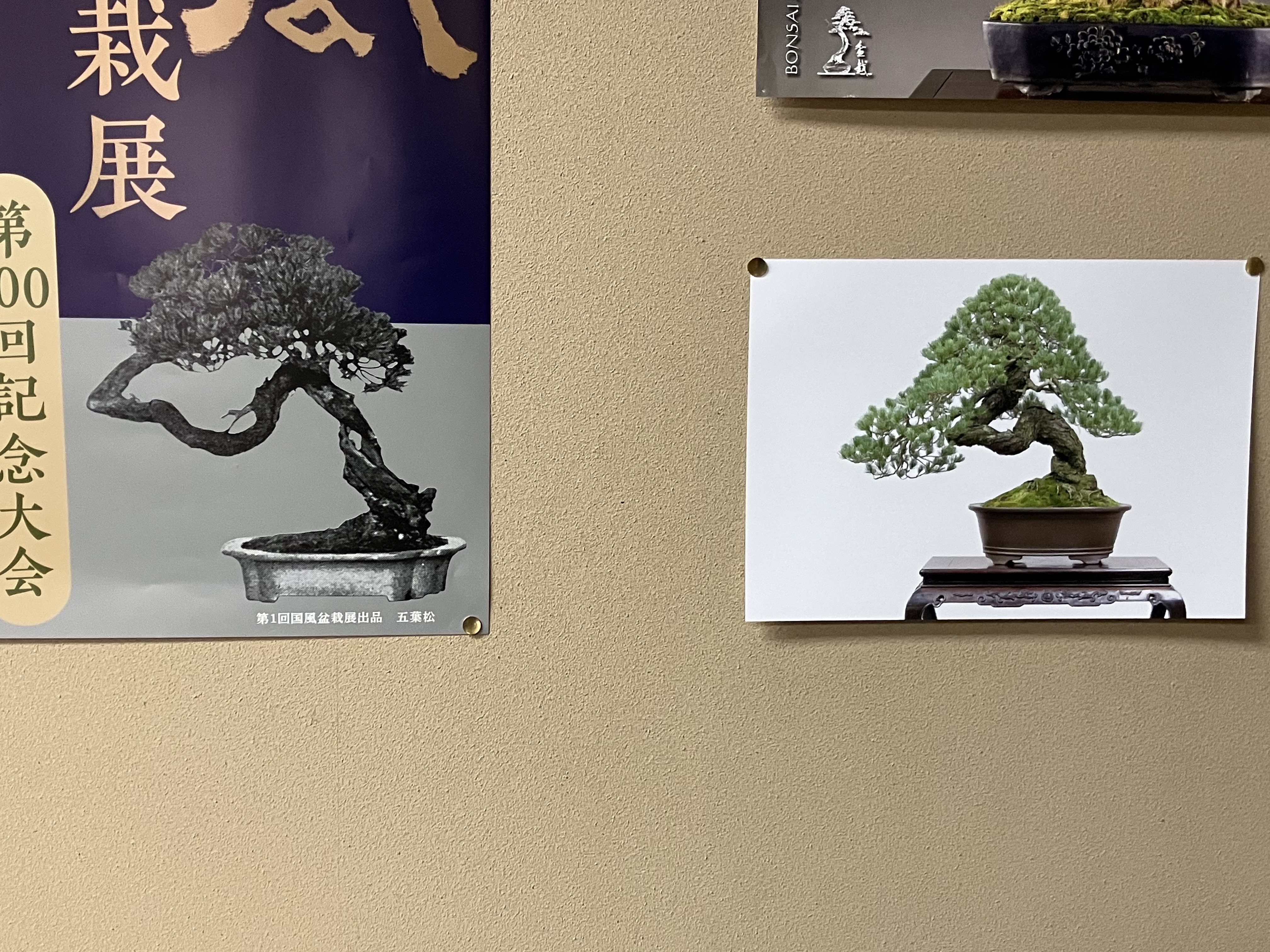
On a wall of the teahouse was a Japanese White Pine shown in the first Kokufu show, in 1934. The photo to the left is from that year, and on the right how it looked in this year’s Kokufu.
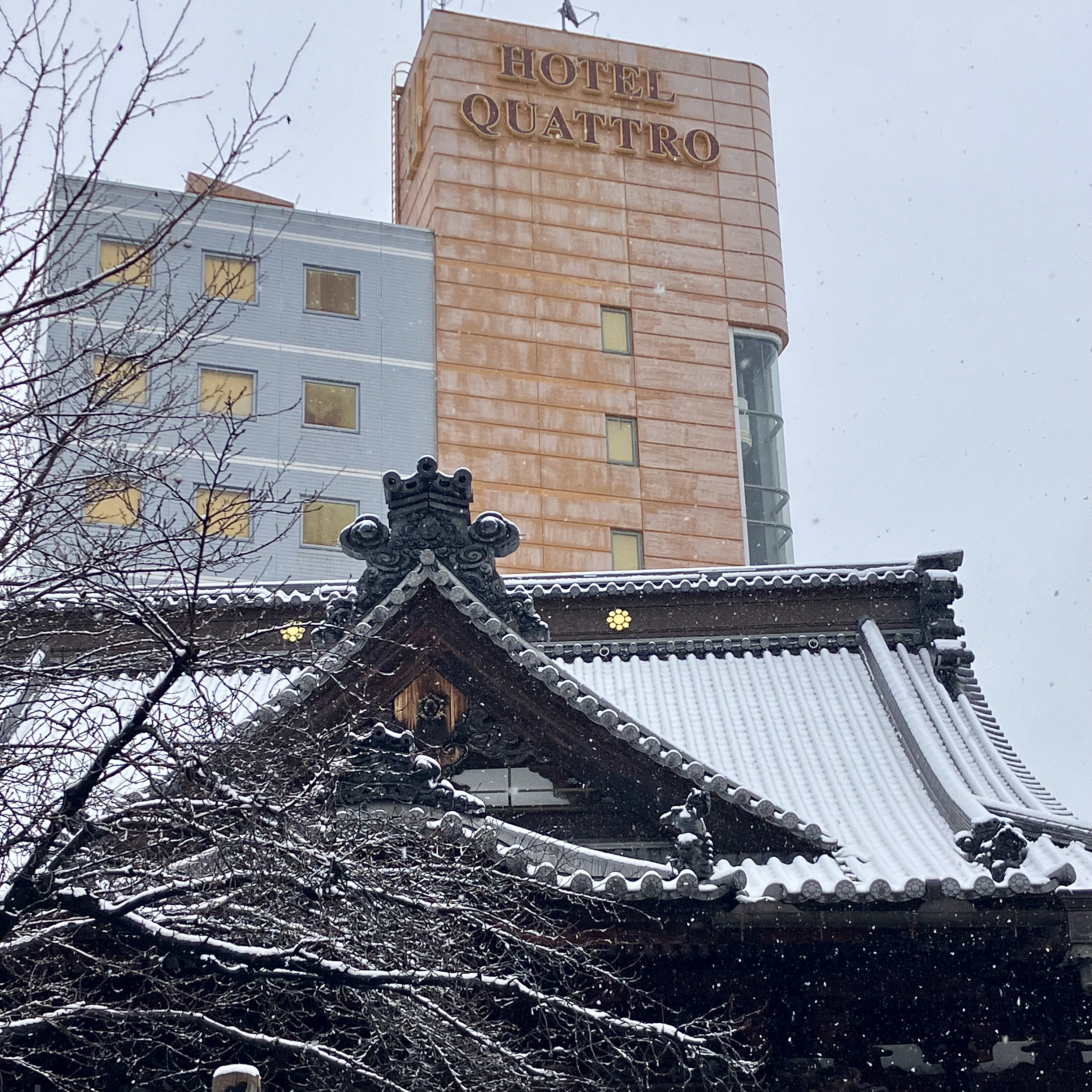
The next day our group split up for various adventures. My friend Evan Cordes and I stayed in Nagano to tour around a bit. This temple wasn’t on our itinerary, but it sums up the architectural chiaroscuro you can encounter in any urban Japan setting: an old temple, with a modern high-rise framing it.
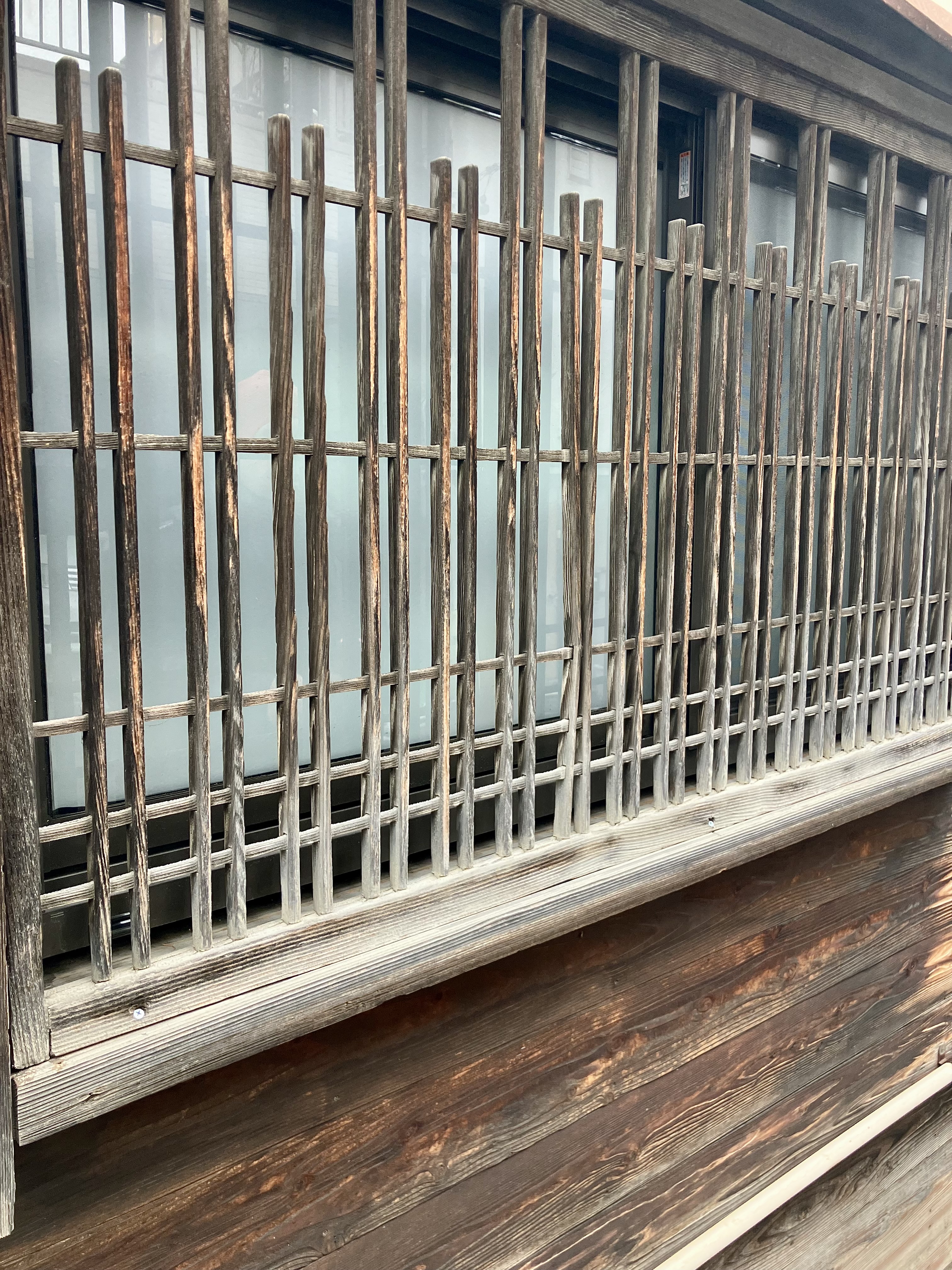
Any walk along the cold, snowy city streets of Nagano may pass by yakisuki—charred cryptomeria—on the older buildings. I fell in love with yakisugi while living in Japan 20 years ago, and had to have it for my tiny house siding. (Making it involved a lot of smoke and flames, loss of eyebrows, and even a run to the ER…a story in my forthcoming tiny house memoir.)
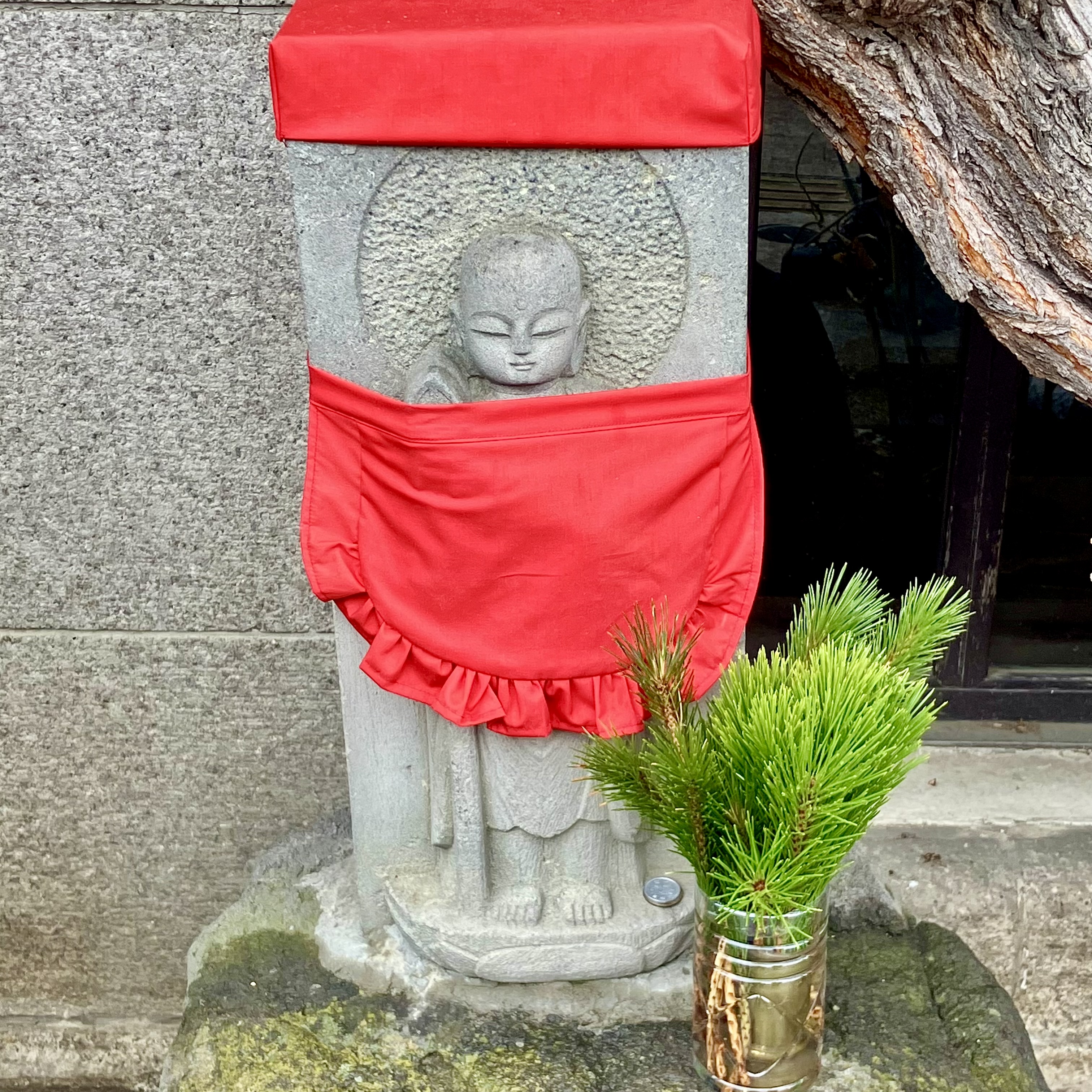
A Jizo statue with pine shoots. The red cloth is protective for children and travelers. The pine shoots are for longevity and good fortune.
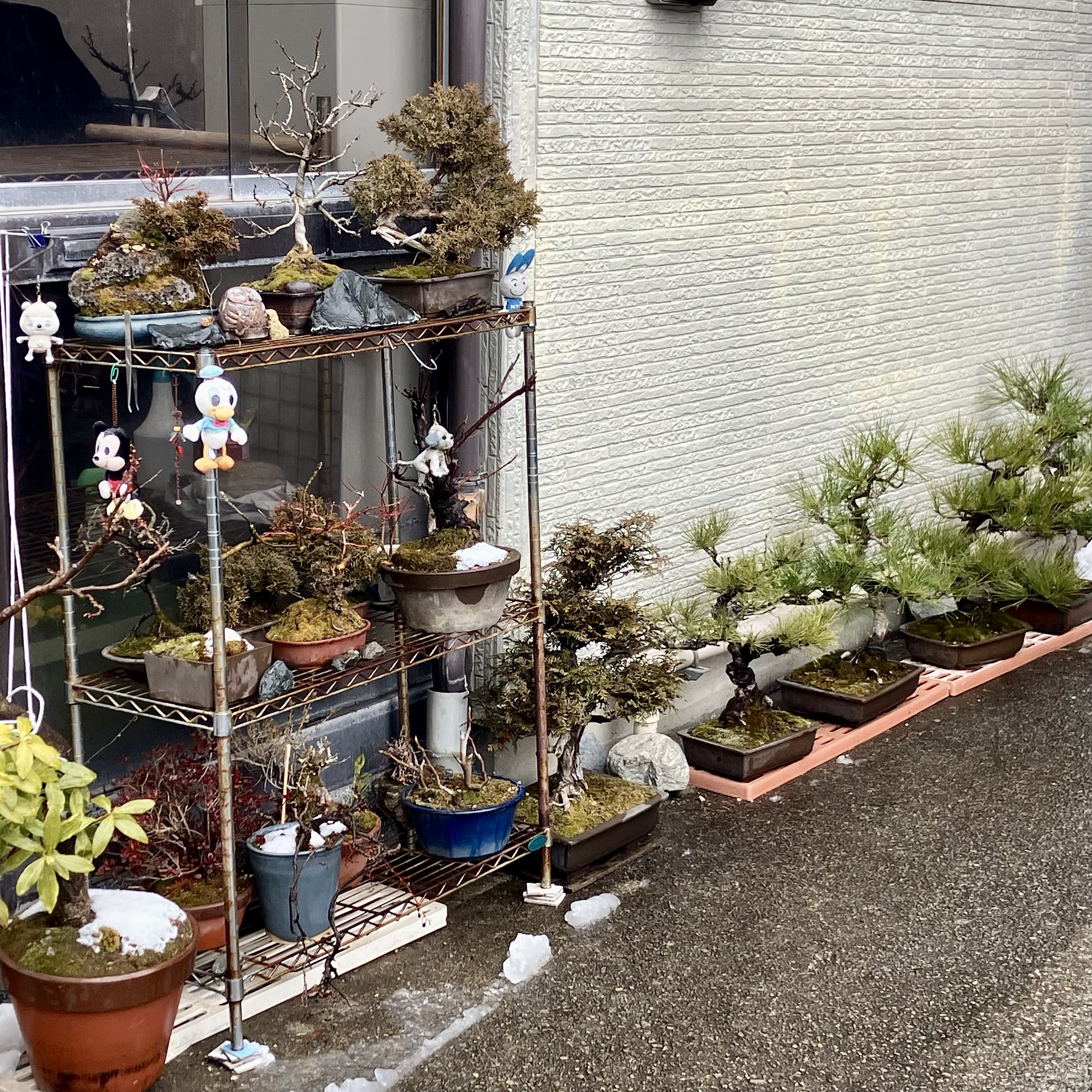
To the side of a house in Nagano we saw a common sight anywhere in Japan: bonsai. Dangling Disney characters optional.
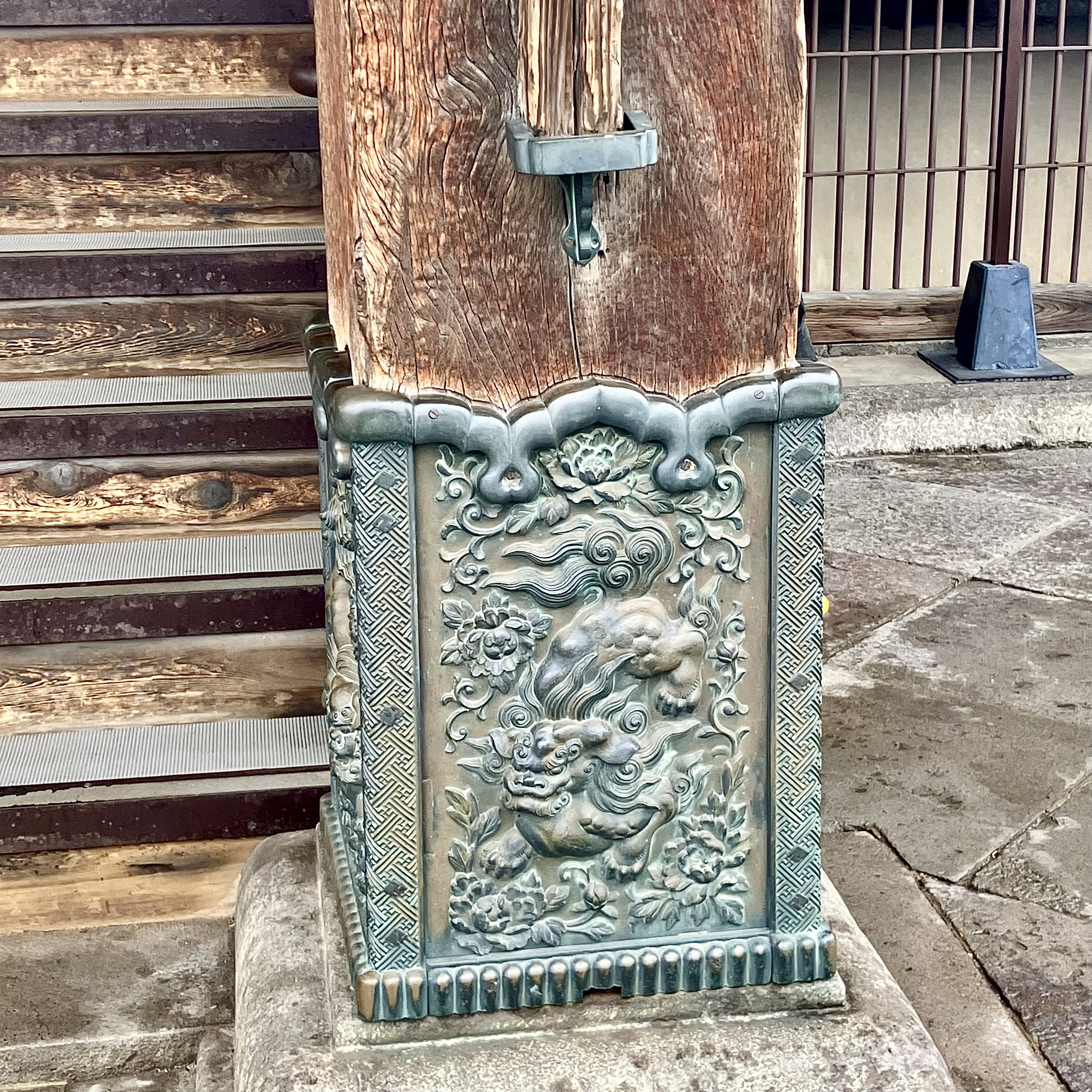
Metalwork on the Zenkoji temple. This is one of the oldest wooden buildings in Japan. Most of the older ones have burned down and been rebuilt, but this one dates to 1707.
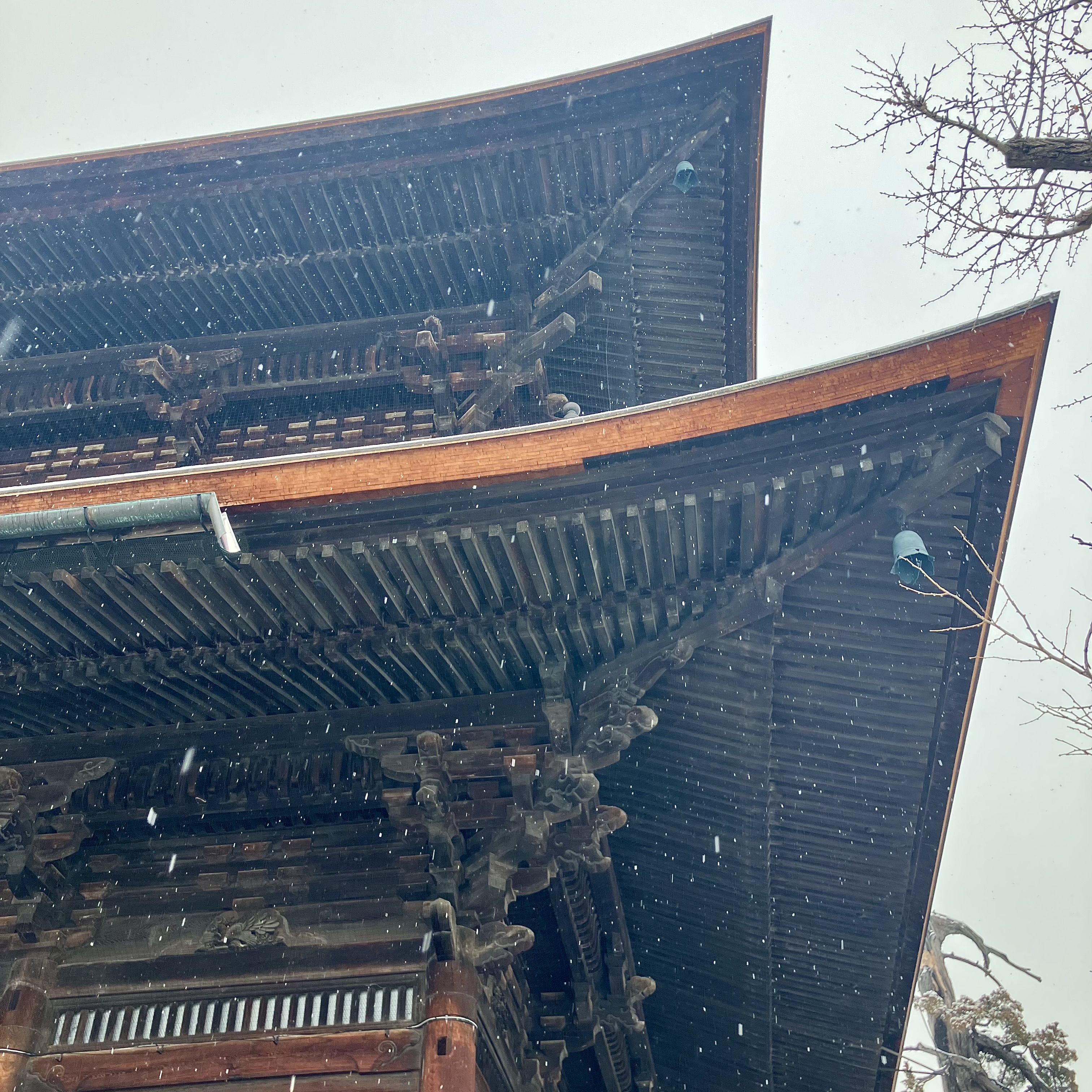
The roof of Zenkoji is itself worth a visit. The layers of wood that hold up that slope and overhang are part of a traditional system of carpentry called kigumi. It uses interlocking joints that shift and absorb stresses, like earthquake. Which can make you think of aikido, the Japanese martial art that redirects an opponents energy.
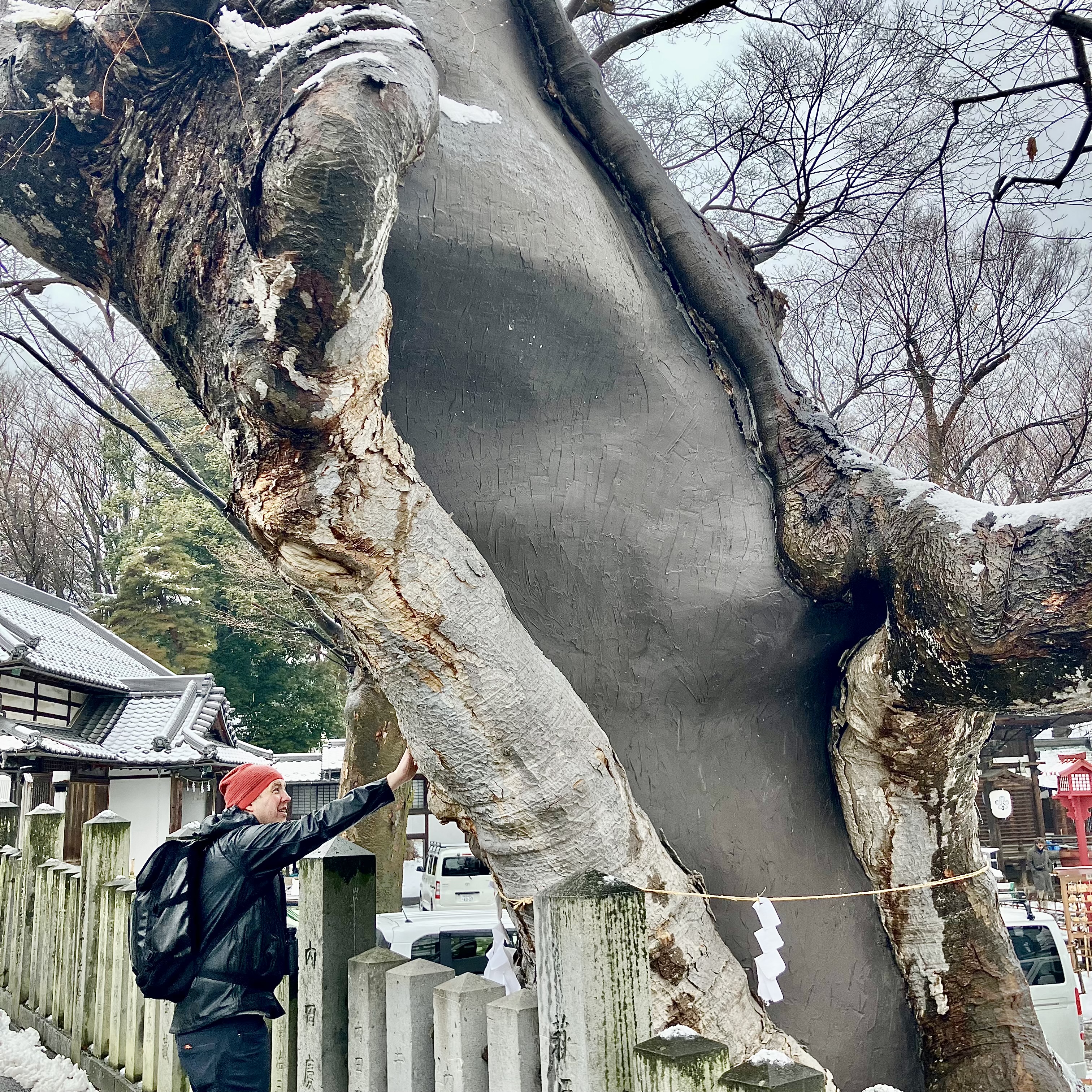
Evan with a ridiculous Zelkova. A concrete filling or something similar supports the hollowed trunk. The white paper zigzag in front of the trunk is called a shide. These protect from evil and purify a place, and its presence suggests the building beyond is a Shinto shrine.
A few other posts about my 2026 Japan trip:
4 Comments
Mr. Hagedorn,
Thank you for sharing your experience, insight, and memories in such a personal and meaningful way. It is this authenticity that truly distinguishes your blog posts from others.
May the Force be with you,
Mats
Ha! The Force, yes please, I could use some.
Thank you for the kind words…
Nice post! Unlike those with power cables… Are those cables everywhere in Japan? That was something I didn’t enjoy in my previous life.
Thanks for sharing.
Well I think there are as many as anywhere, but I didn’t really pay attention! Next time…