
Join us! (And learn more than how to make a group forest photo…)
In the Seasonal workshops you will acquire the confidence to use traditional techniques in your own way, as a launchpad for personal expression. The 2-day, multi-year program is based on learning by contrast. We contrast pot-grown and wild-collected, deciduous and conifer, young tree and old, from season to season.
Seasonal students work on a “teaching collection” that I’ve developed over many years, to offer what I had in Japan as an apprentice.
You may ask, why travel to study bonsai? The answer is that when the teacher travels, much less is learned than when the student travels. If a surgeon were to teach surgery in your kitchen, you wouldn’t learn as much as if you studied in a surgery room. The Seasonals offer absorption in an information-rich environment, which is how the apprentice studies.
The Seasonal workshops are perhaps a more distilled, palatable, and fun version of the long-term and stressed-out education I received as an apprentice from Kokufu and Prime Minister award-winning master Shinji Suzuki.
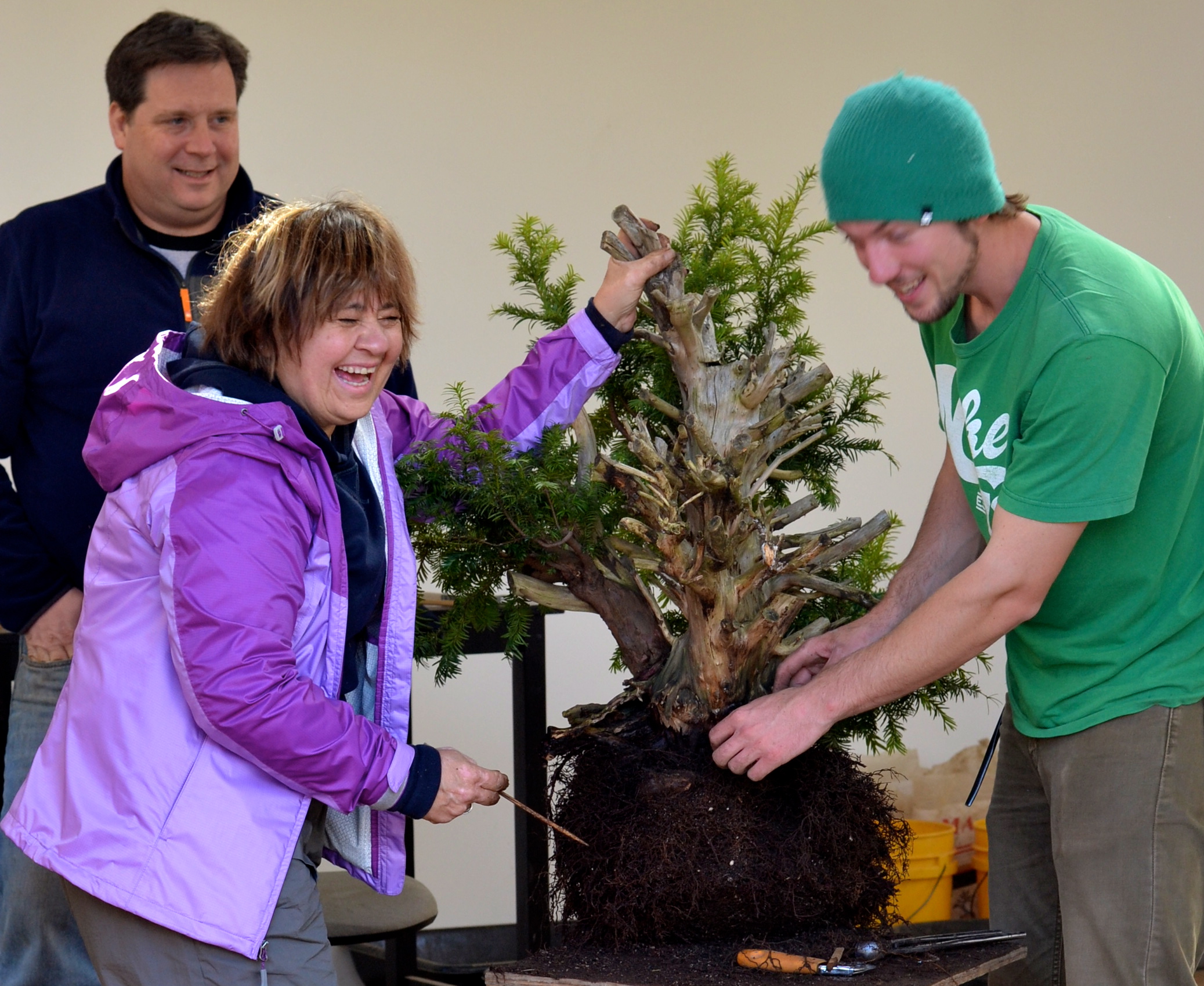


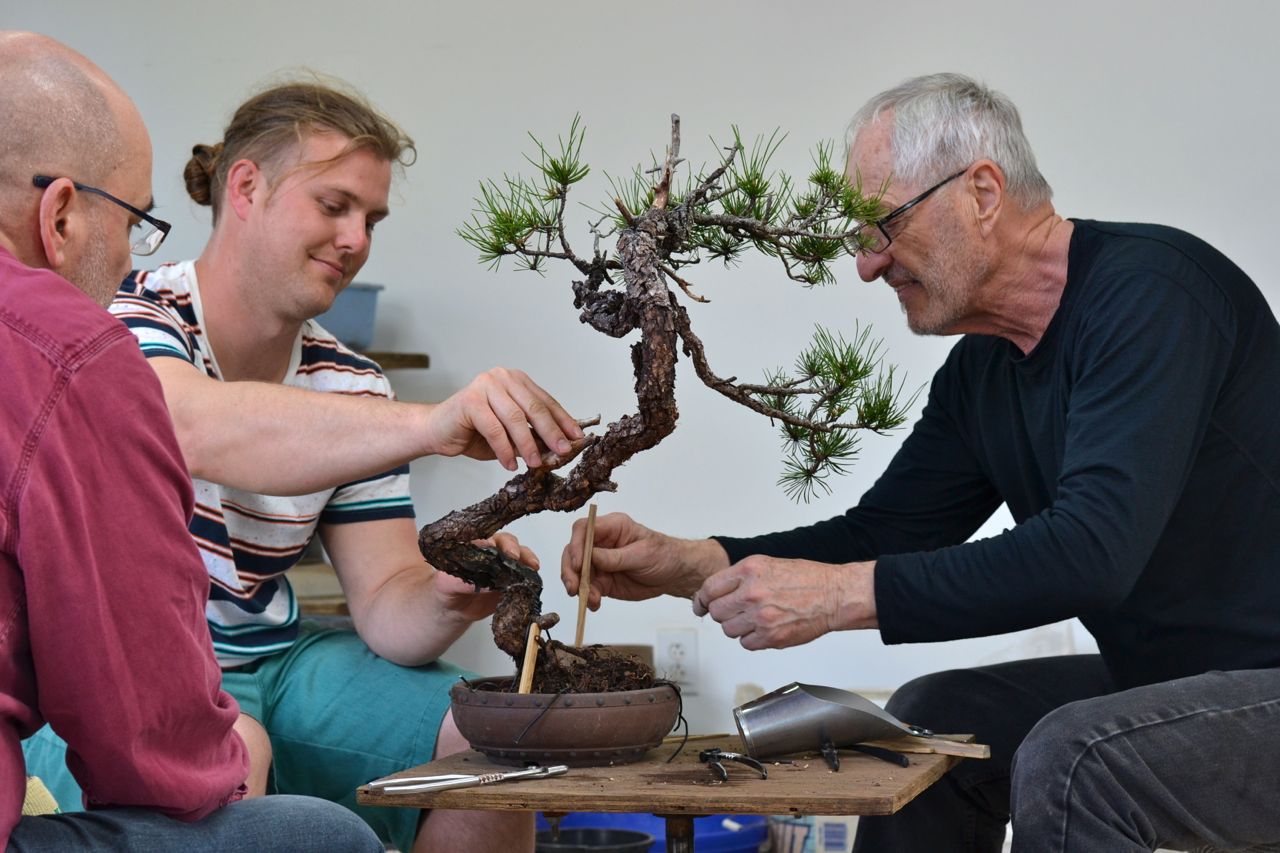

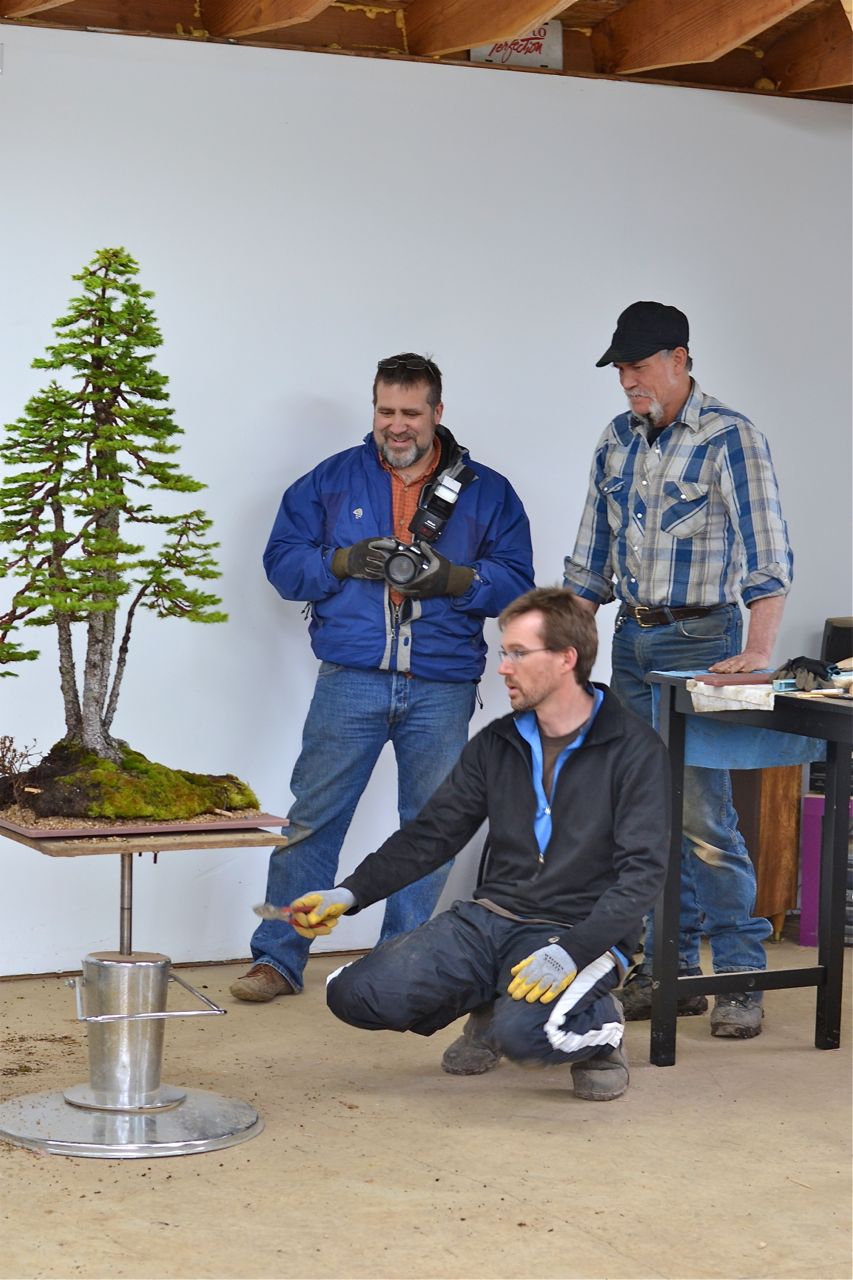
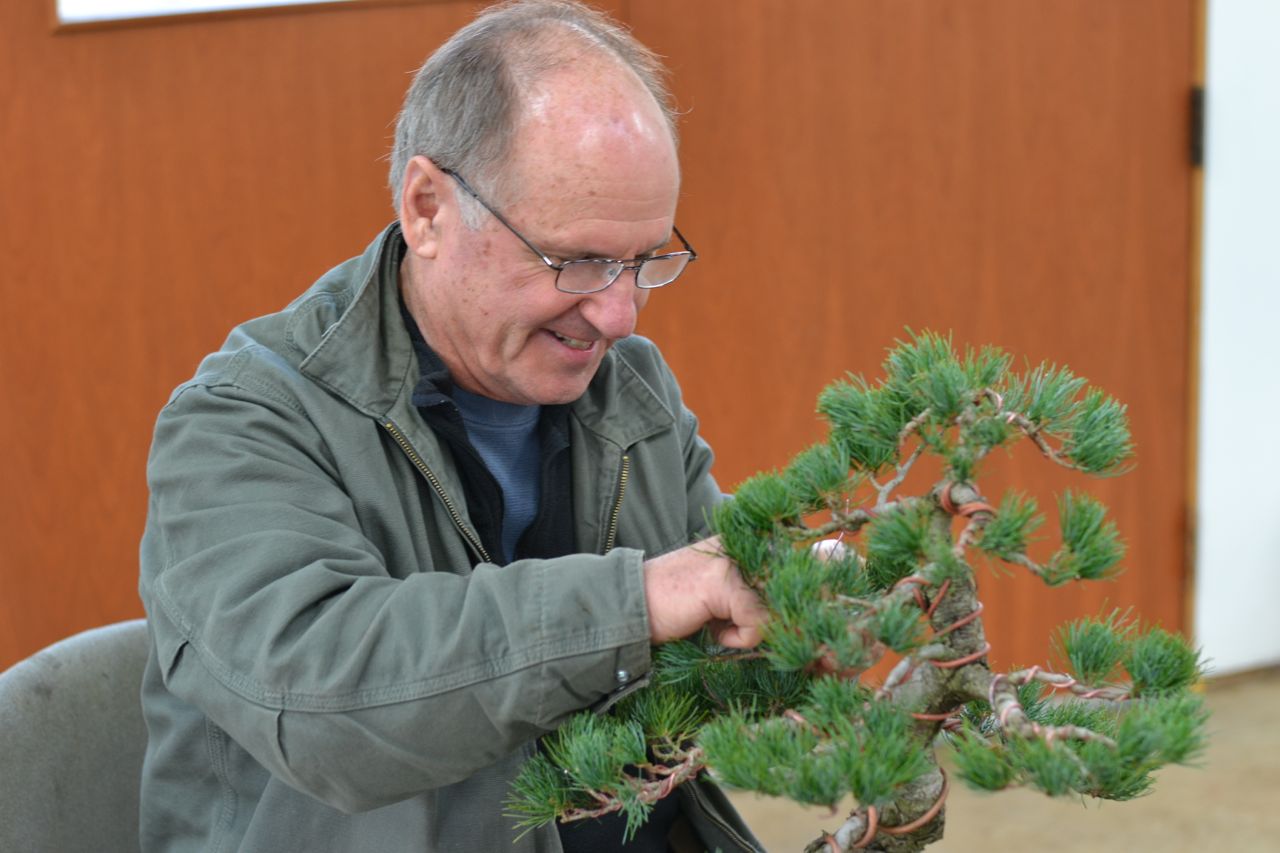
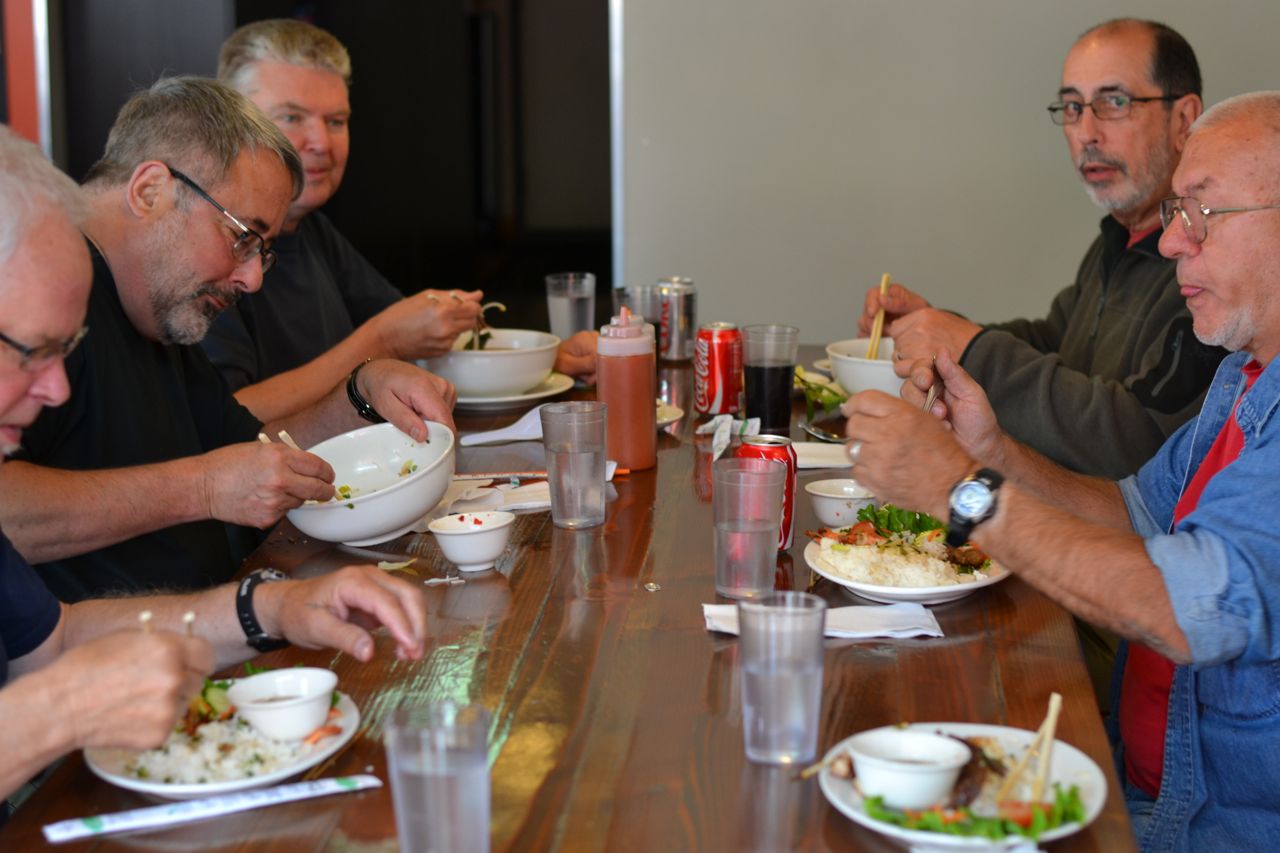
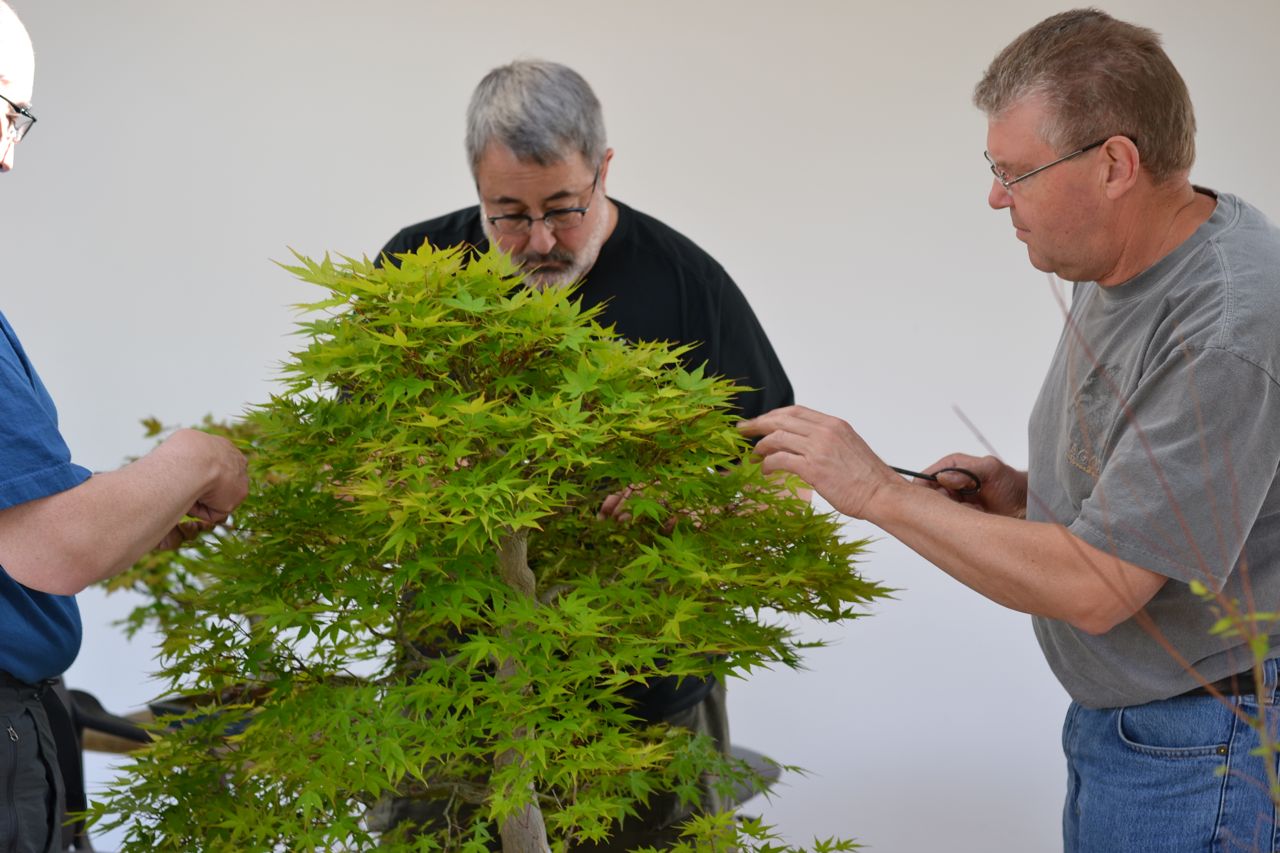


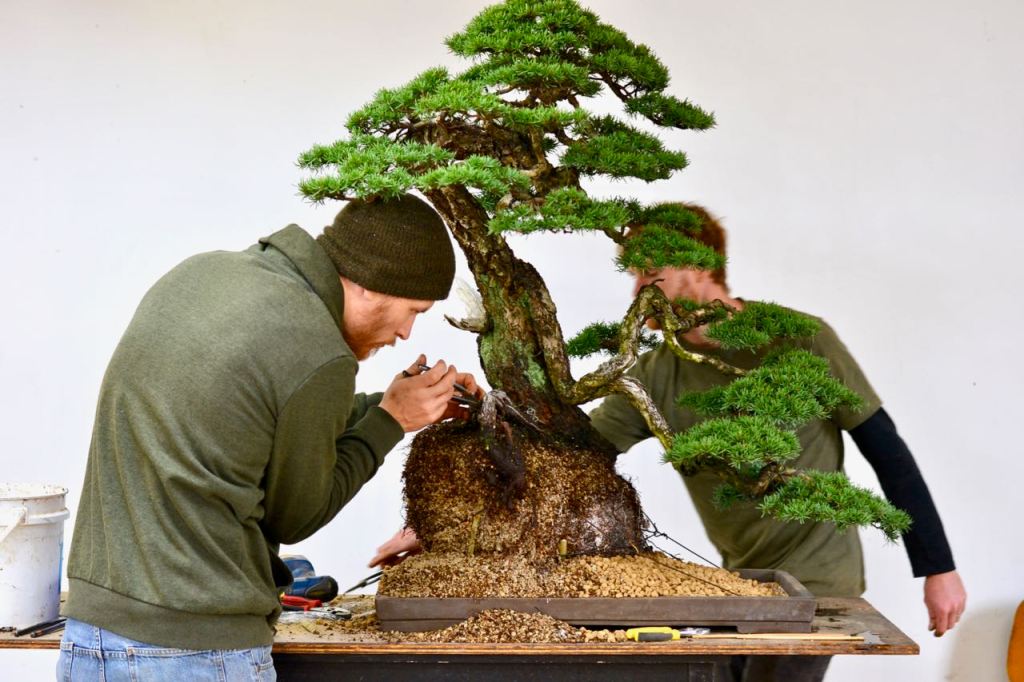
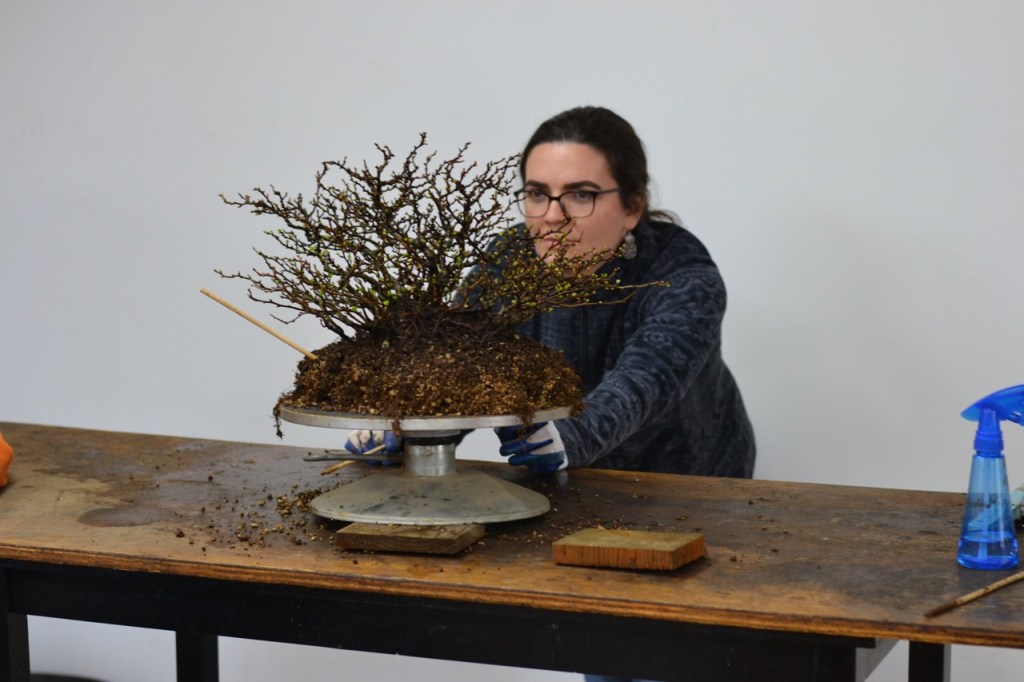
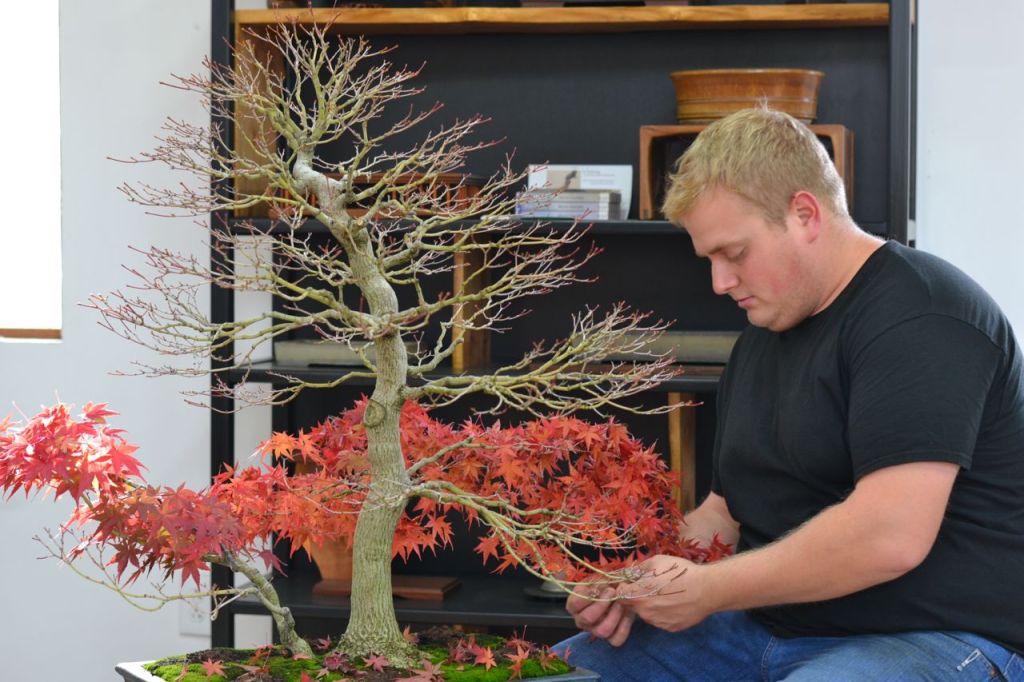
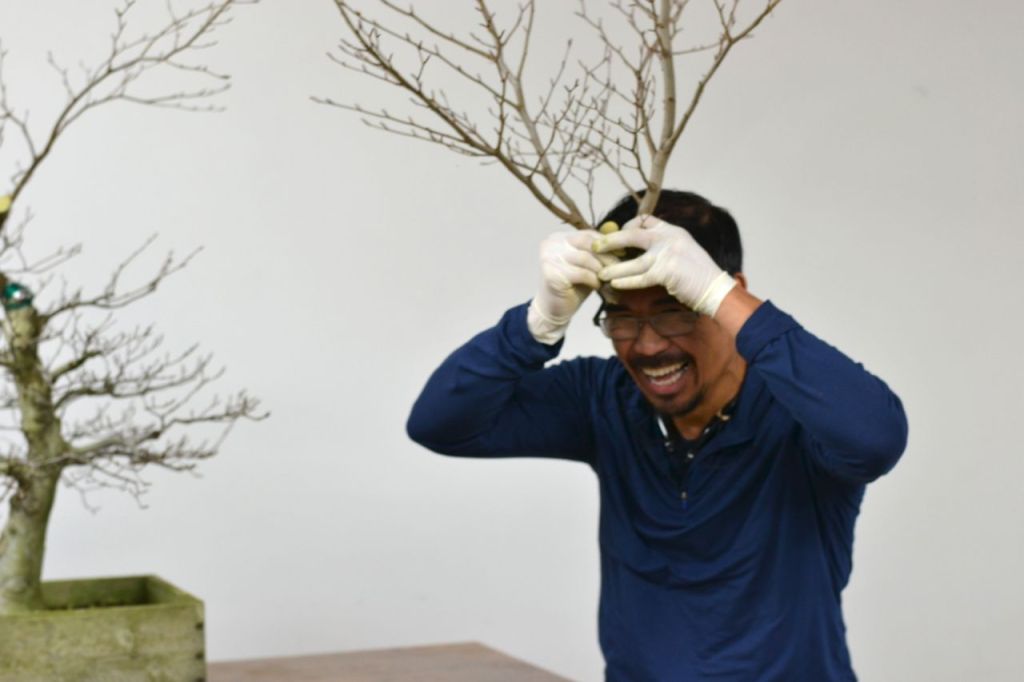

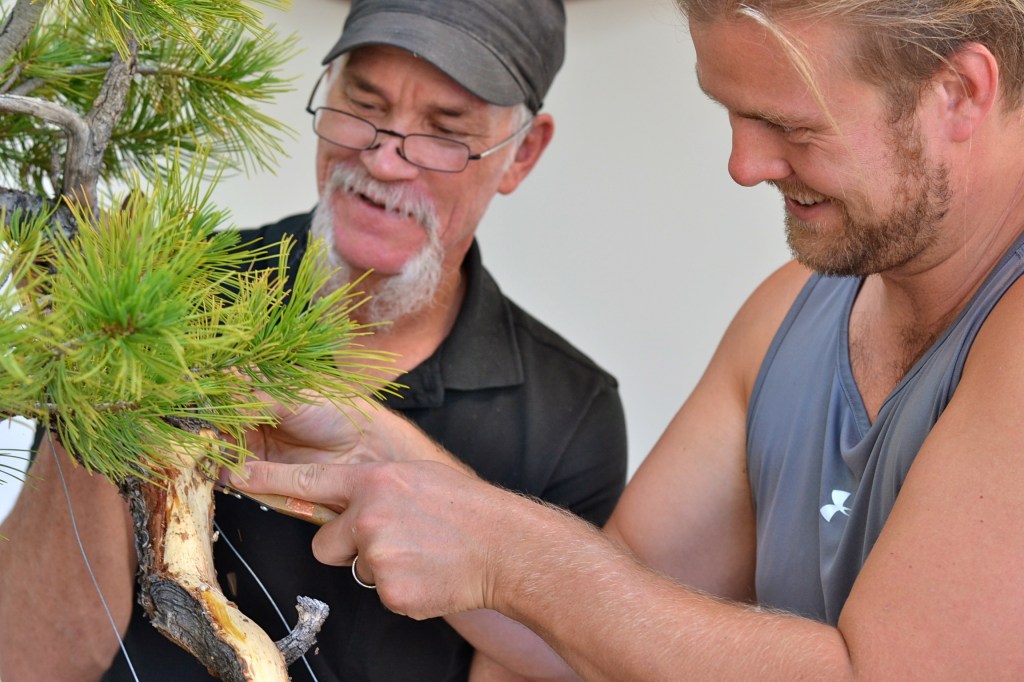
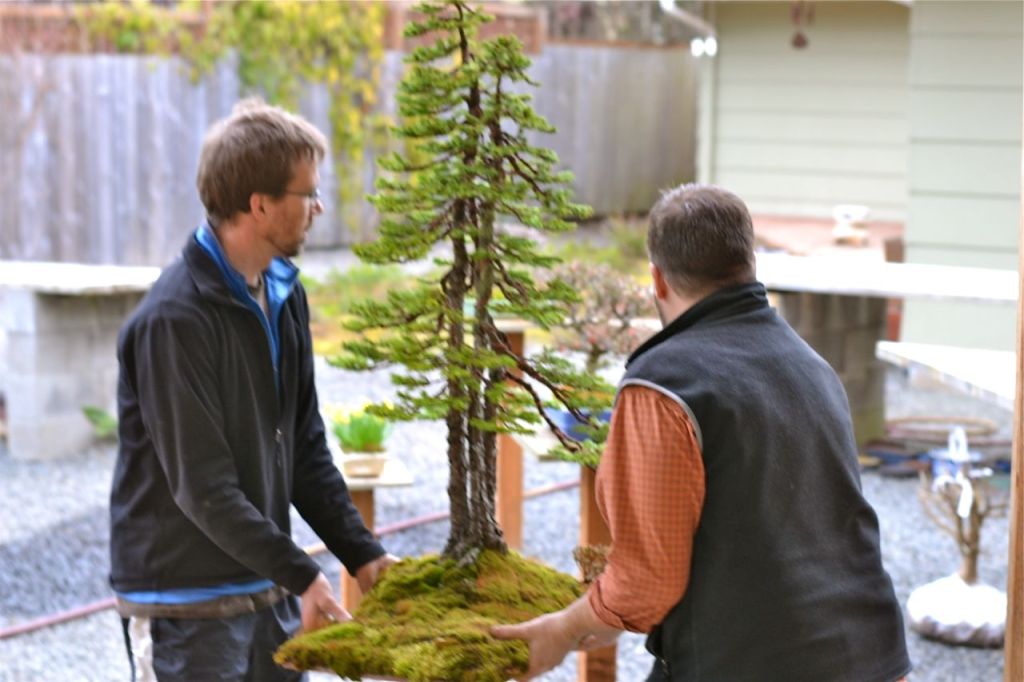
Many years of memories
In the Seasonals we cover a wide range of species:
- Ponderosa, Black, Red, White, Limber, and Scots Pines, Engelmann and Ezo Spruce, Japanese, Trident, and Vine Maples, Mountain and Western Hemlock, Rocky Mountain, Western, and Shimpaku Junipers, Stewartia, Winter Hazel, Satsuki Azalea, and ‘Chojubai’ Dwarf Flowering Quince.
Some of the topics covered are:
- Soils, Repotting, Diseases and Entomology, Positioning, Watering, Physiology, Running a Bonsai Yard, Wiring, Design, Developing Young and Old trees, Grafting, Growth Management, Japanese / Western Aesthetics, Yamadori / Pot-grown, Ceramics, Pot Choice, Display, Creating Accent Plants, Designing a Garden, and Creativity in Bonsai.
A Seasonal covers a whole range of species for one window of time. Then we shift to another window of time and different species. For instance, there is little to do with Azalea and Limber Pines in late May, but a fair bit with Black Pine and Trident Maple.
Class sizes are small. I’m dedicated to boutique-style teaching with a maximum of 4 students. Sessions need not be all crammed into one year, but as finances and lifestyle permit. Days start at 9 am and end around 5 pm.
Seasonals run 2 days, lunches included, $700 per Seasonal (discounted rate of $350 is available for students). Please send me an email (crataegusbonsai@gmail.com) with the session you wish to attend from the calendar, below, and once we’ve agreed on that, a $350 deposit reserves your spot. The deposit is refundable up to two months before a session starts. (I highly recommend paying by check because then you might get a postcard from me dripping in gratitude. I dislike the apps.)
There is a Best Western Plus nearby, and Air B+B’s are within walking distance. Tools provided.
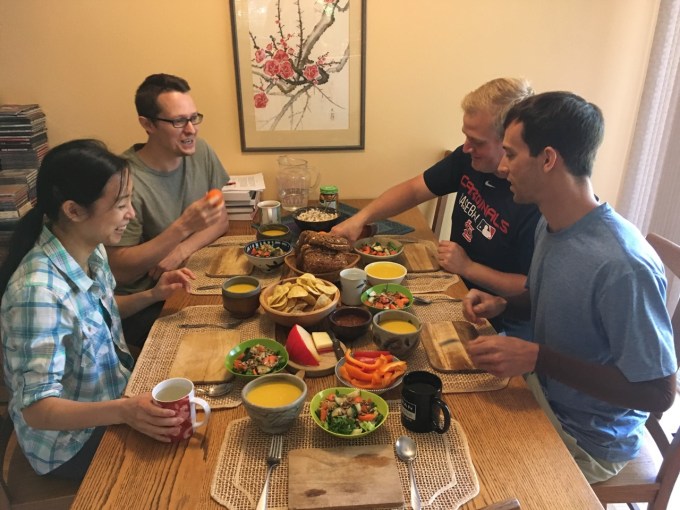
Lunches are inexpertly prepared by Chef Hagedorn
Although it’s recommended that new students start with a Winter Seasonal to acquire new repotting techniques and the foundation that this provides, any initiation time is fine. Skill levels are blended, with increasing level of challenge for returning students.
- Winter Seasonals: Focus on repotting young and old bonsai, deciduous and conifer, pot-grown and yamadori; design; soils; grafting; Japanese aesthetics
- Spring Seasonals: Focus on early year growth management; black pine decandling; deciduous defoliation, grafting; pest management; summer care and physiology
- Summer Seasonals: Focus on in-line deciduous wiring; junipers; shari creation; tree ranking; perfecting watering; display; accent plants
- Fall Seasonals: Focus on design; multiple-flush fall work; beginner and advanced wiring; pruning techniques; yamadori styling; white-out exercises
Thanks everyone for attending the 2025 Seasonal year!
The 2026 Seasonal dates:
(All 2026 sessions are full–however—cancellations do occur, and we do keep a waiting list. Feel free to contact to inquire about availability.)
- Winter Seasonals
- February 20-21
- March 6-7
- Spring Seasonals
- May 29-30
- June 5-6
- Summer Seasonals
- July 31-August 1
- (August TBA)
- Fall Seasonals:
- October 23-24
- November 6-7
Please note that as of 2026 these are now 2-day sessions.
Please email for openings as they can fill rapidly: crataegusbonsai@gmail.com In your email, please share about your study history and goals. A waitlist is available.
The Seasonal program, now 18 years old, has served serious students around the world—join us!

A visit to the world-famous Portland Japanese Garden caps any visit to the Rose City